A blueprint atlas of everything worth understanding.
Real photographs, annotated like engineering drawings. Measurements, cross-sections, load paths, and the small mechanical truths that make each subject work — one sheet at a time.
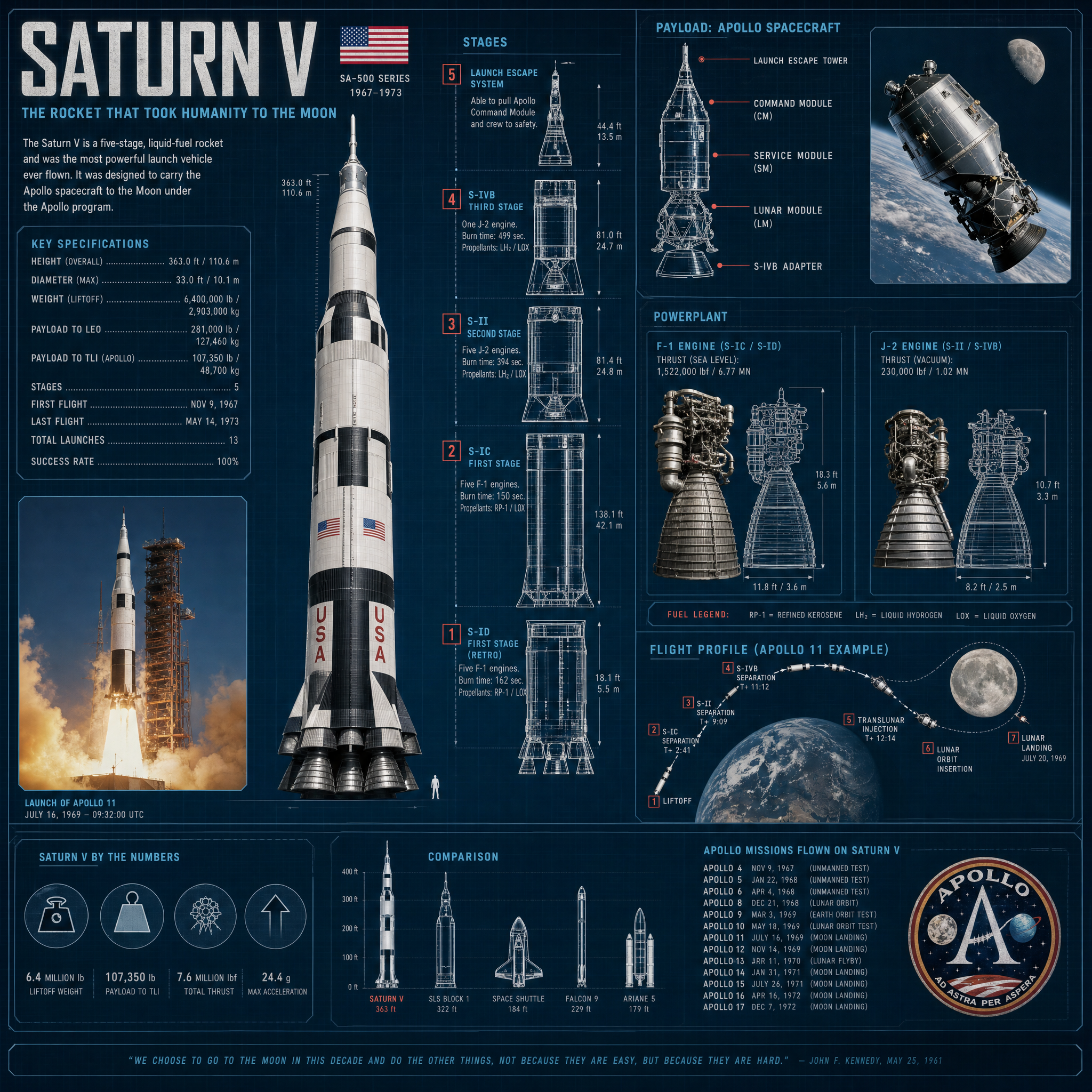
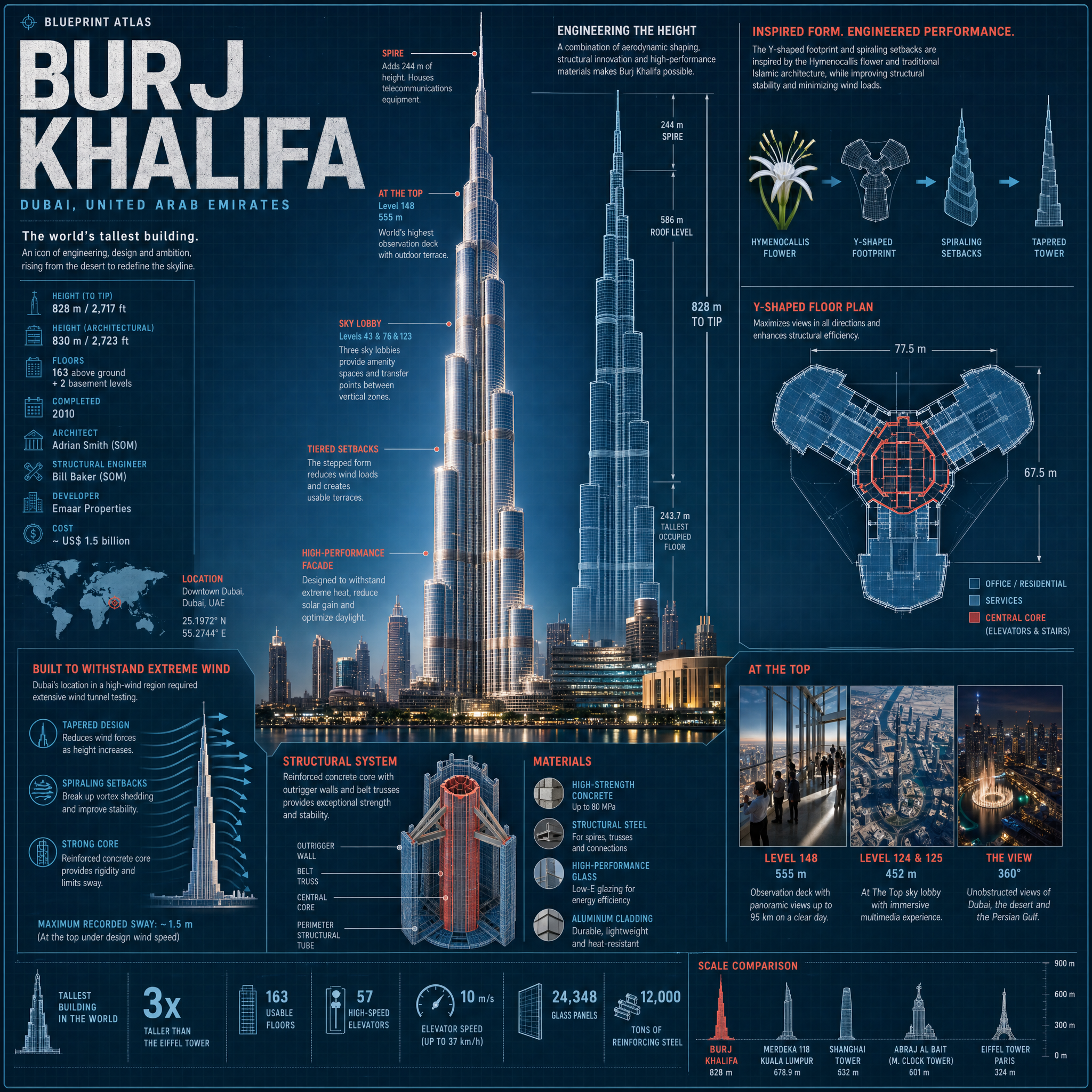
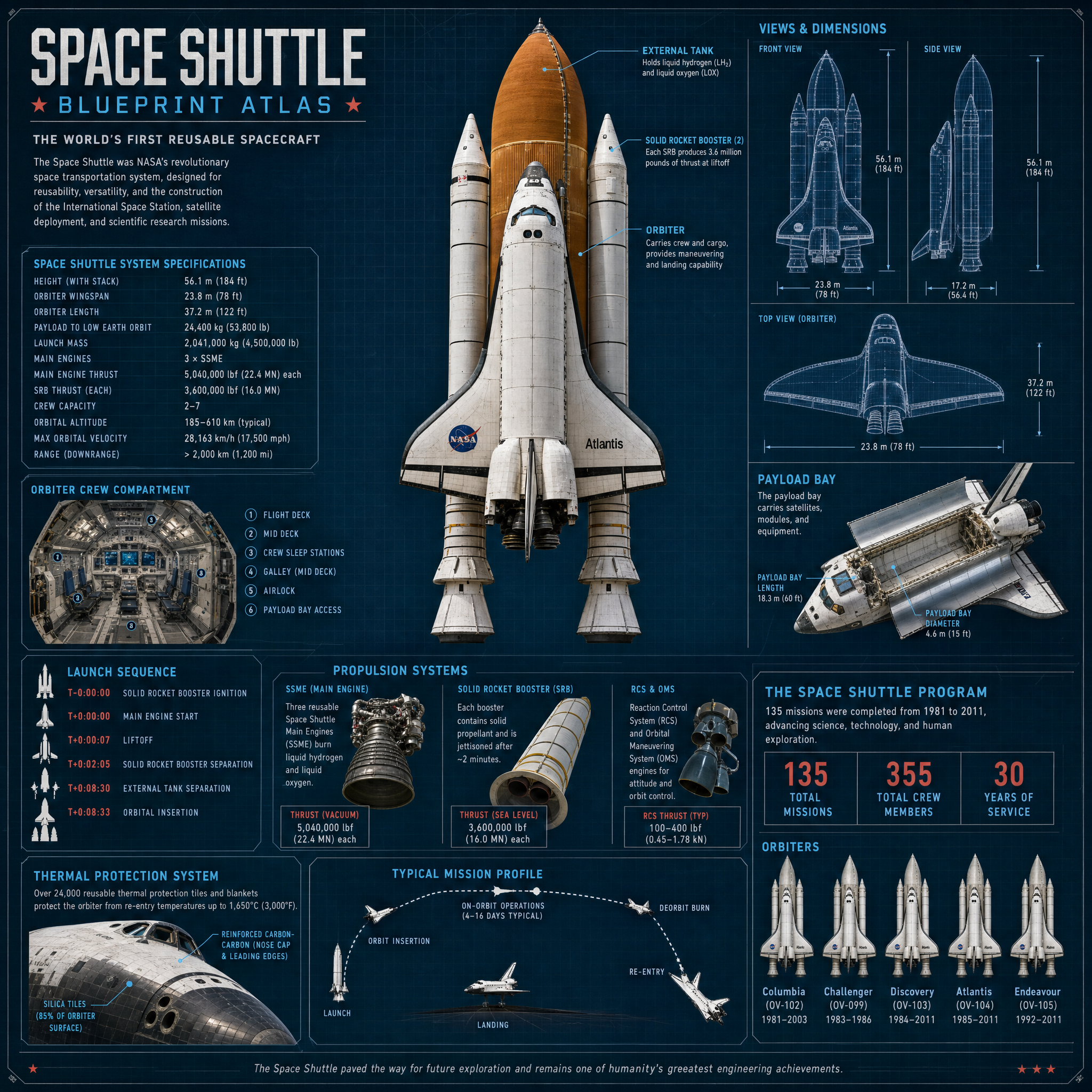
Twelve categories. Every sheet drawn.
Every category holds ten hand-annotated sheets — all twelve are complete and browsable.
01
Landmarks
Monuments, towers & world wonders
10 sheets available →
02
Vehicles
How the world moves
10 sheets available →
03
Historic Events
Moments that reshaped us
10 sheets available →
04
Animals
Anatomy of the living world
10 sheets available →
05
Plants & Trees
Botany in blueprint
10 sheets available →
06
Weapons & Armor
Historic mechanisms of force
10 sheets available →
07
Instruments
The physics of sound
10 sheets available →
08
Sports Equipment
Engineering the game
10 sheets available →
09
Space Objects
Planets, stars & probes
10 sheets available →
10
Inventions
Devices that changed history
10 sheets available →
11
Human Anatomy
Systems inside us
11 sheets available →
12
Tools & Machines
Levers, gears & power
10 sheets available →
13
Natural Phenomena
Forces of the Earth & sky
10 sheets available →
14
Famous Paintings
Masterpieces in annotation
10 sheets available →
15
Cables
Wires that wire the world
10 sheets available →
16
Electronic Components
Building blocks of every circuit
10 sheets available →
Selected from Landmarks & Vehicles.
Paris, France · 1889
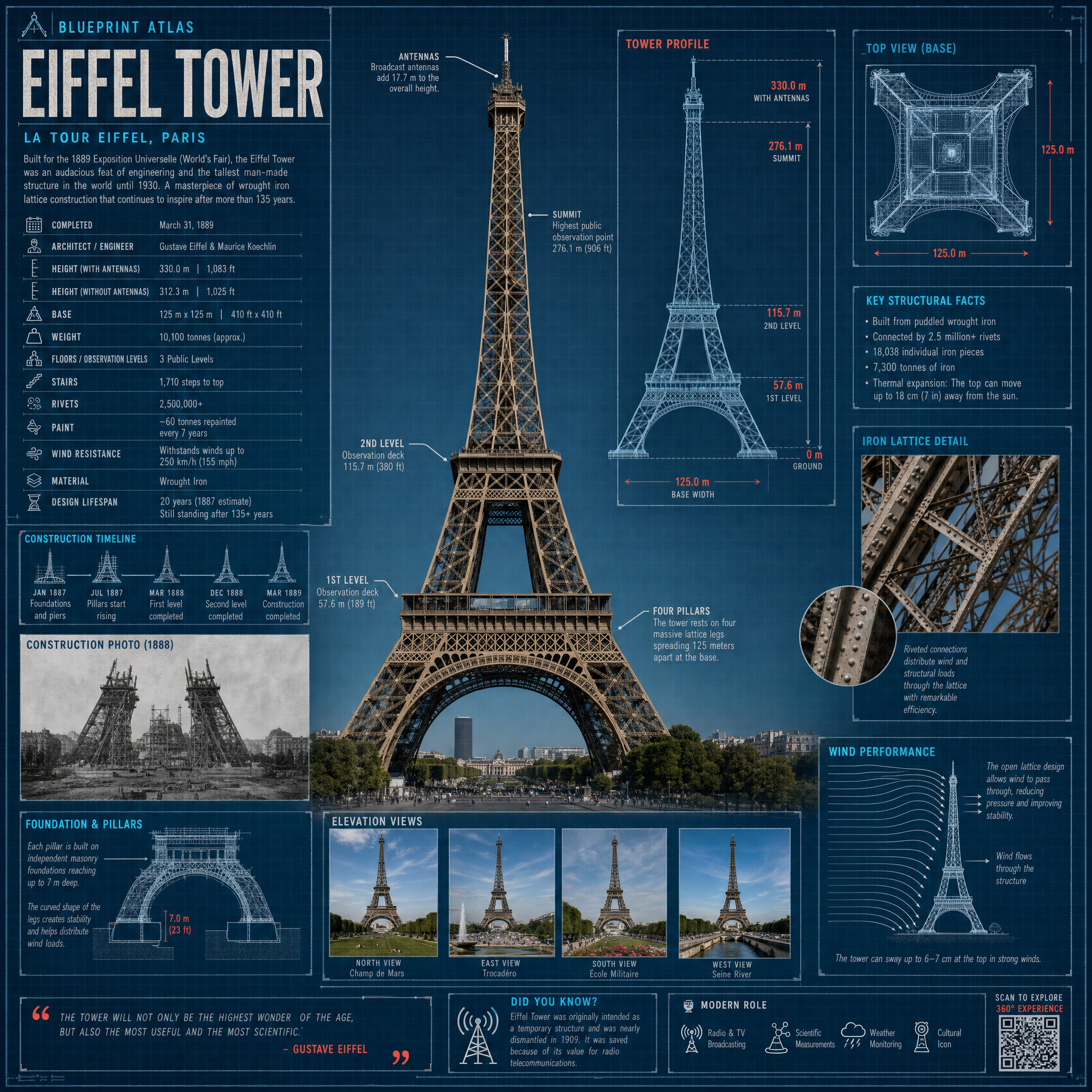
Eiffel Tower
A wrought-iron lattice tower on the Champ de Mars, designed by Gustave Eiffel for the 1889 World Fair. Its pin-jointed truss structure and curved legs distribute wind load gracefully to four cast-iron shoes.
Giza, Egypt · c. 2560 BC
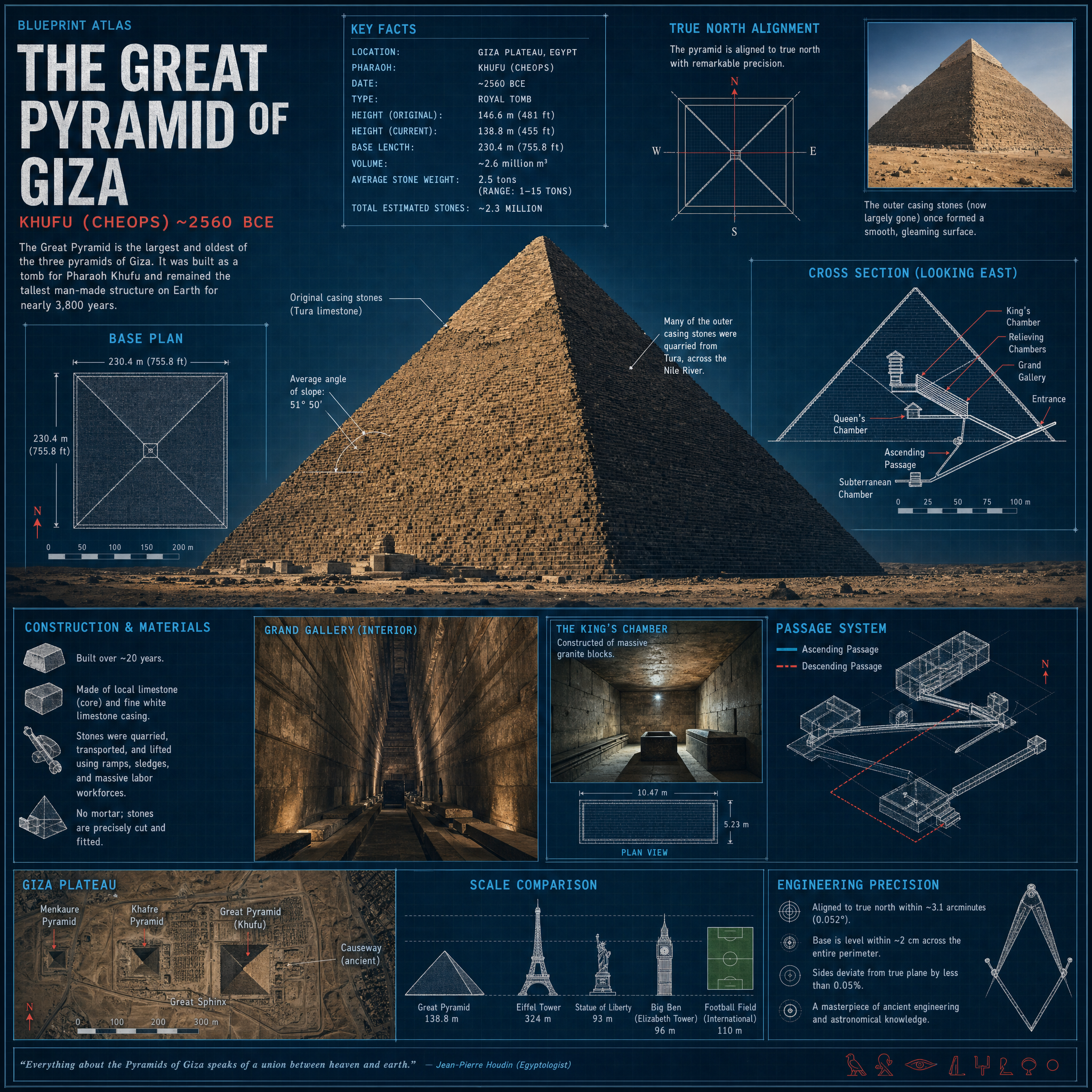
Great Pyramid of Giza
The oldest and largest of the three pyramids in the Giza complex, built as a tomb for Pharaoh Khufu. It was the tallest human-made structure for over 3,800 years and remains a marvel of ancient surveying.
Rome, Italy · 80 AD
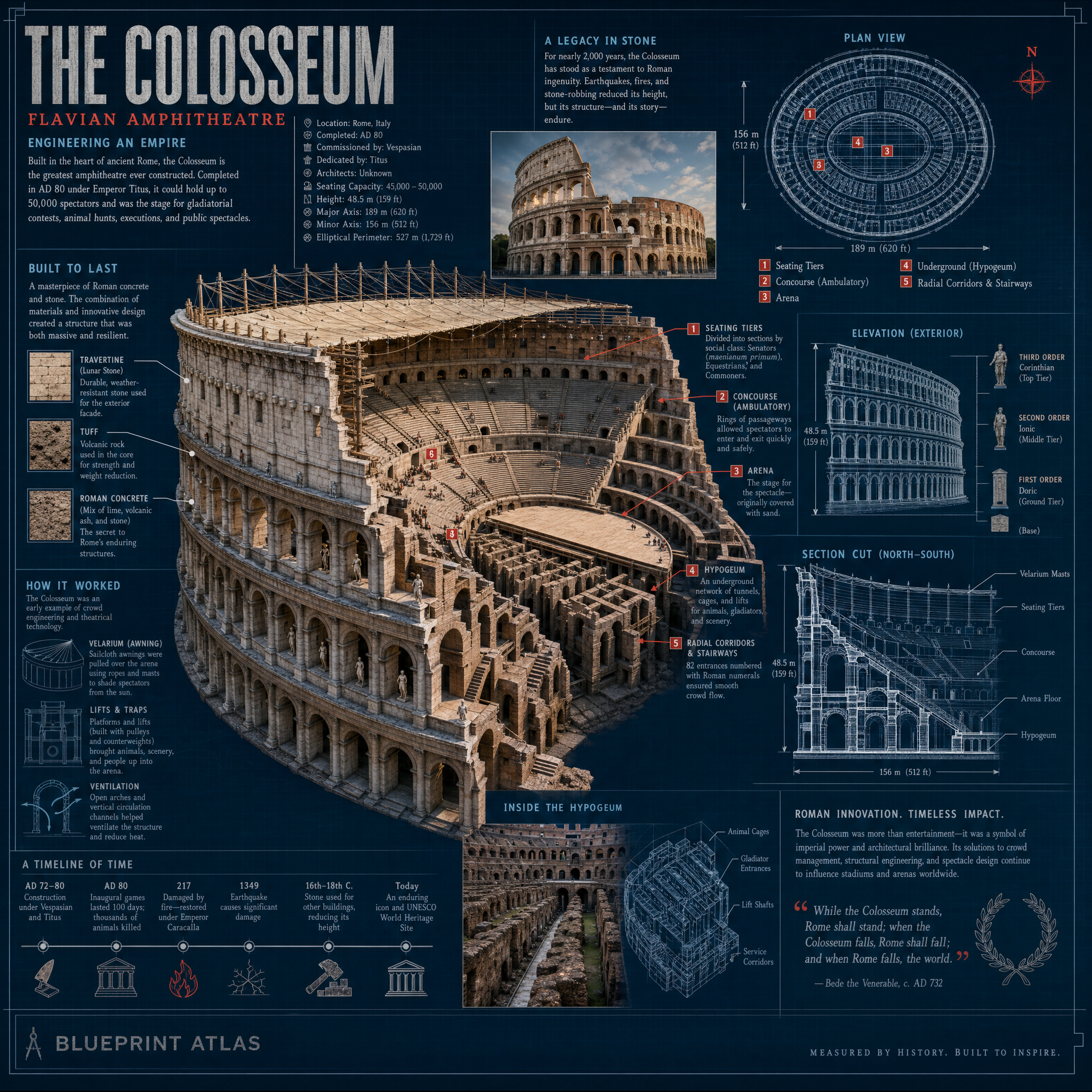
Colosseum
The largest amphitheatre ever built, an elliptical concrete-and-travertine icon of Imperial Rome. Its three tiers of arcades applied the Doric, Ionic, and Corinthian orders in sequence.
Wide-body airliner · 1969
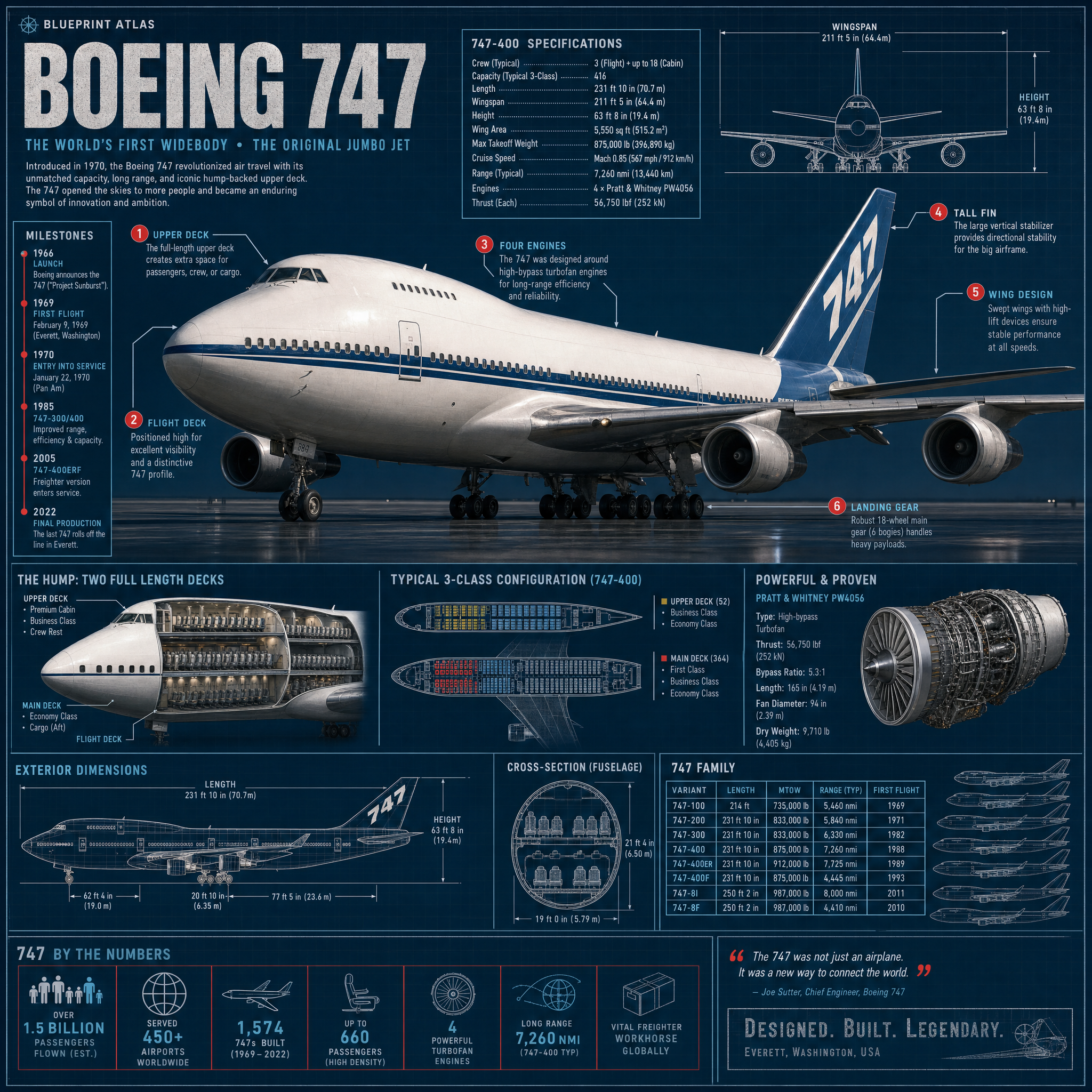
Boeing 747
The original jumbo jet, with a distinctive upper-deck hump and four high-bypass turbofan engines. It democratised long-haul air travel for nearly half a century.
Automobile · 1908
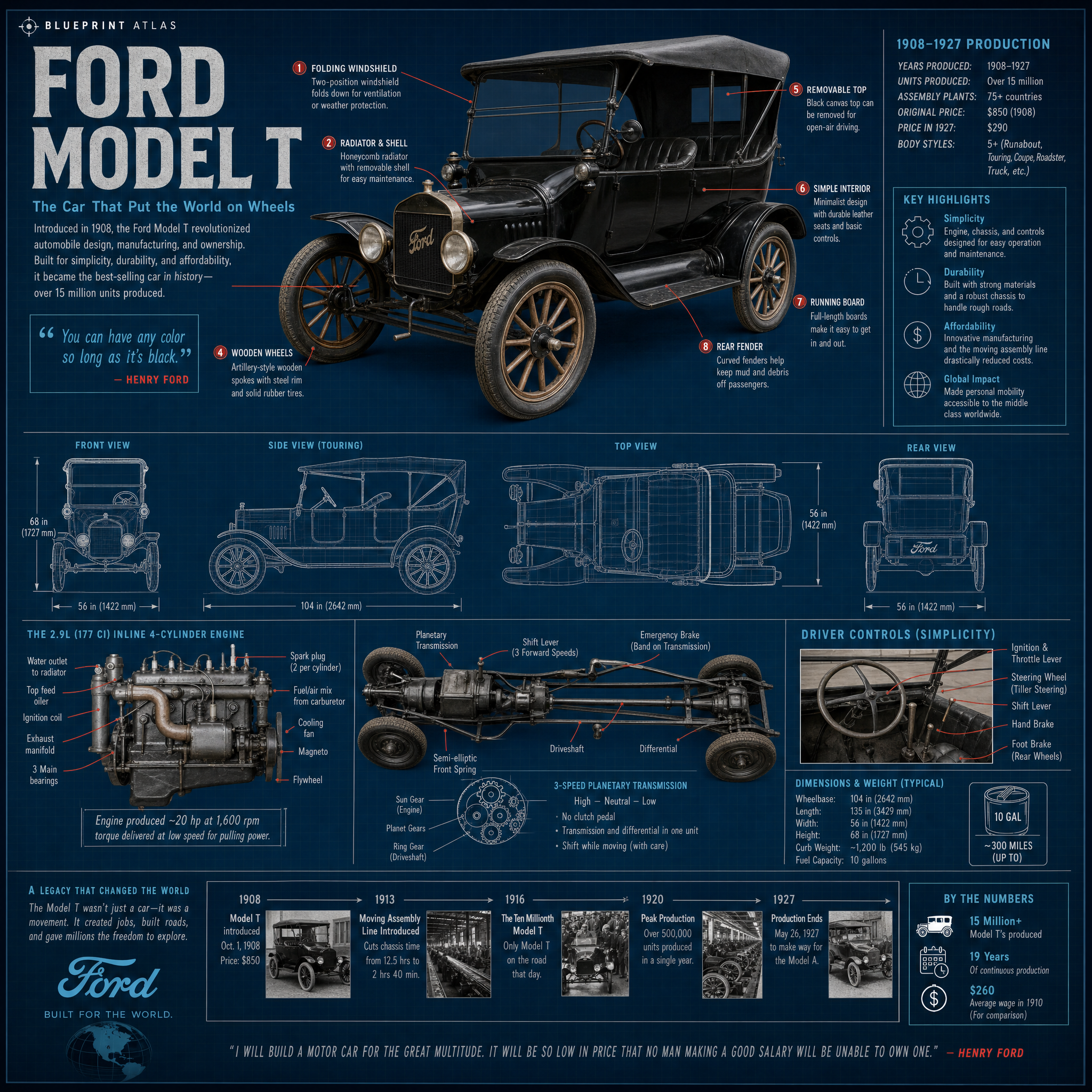
Ford Model T
The first affordable automobile, mass-produced on the moving assembly line pioneered by Henry Ford. It put the middle class on wheels and rewrote industrial manufacturing forever.
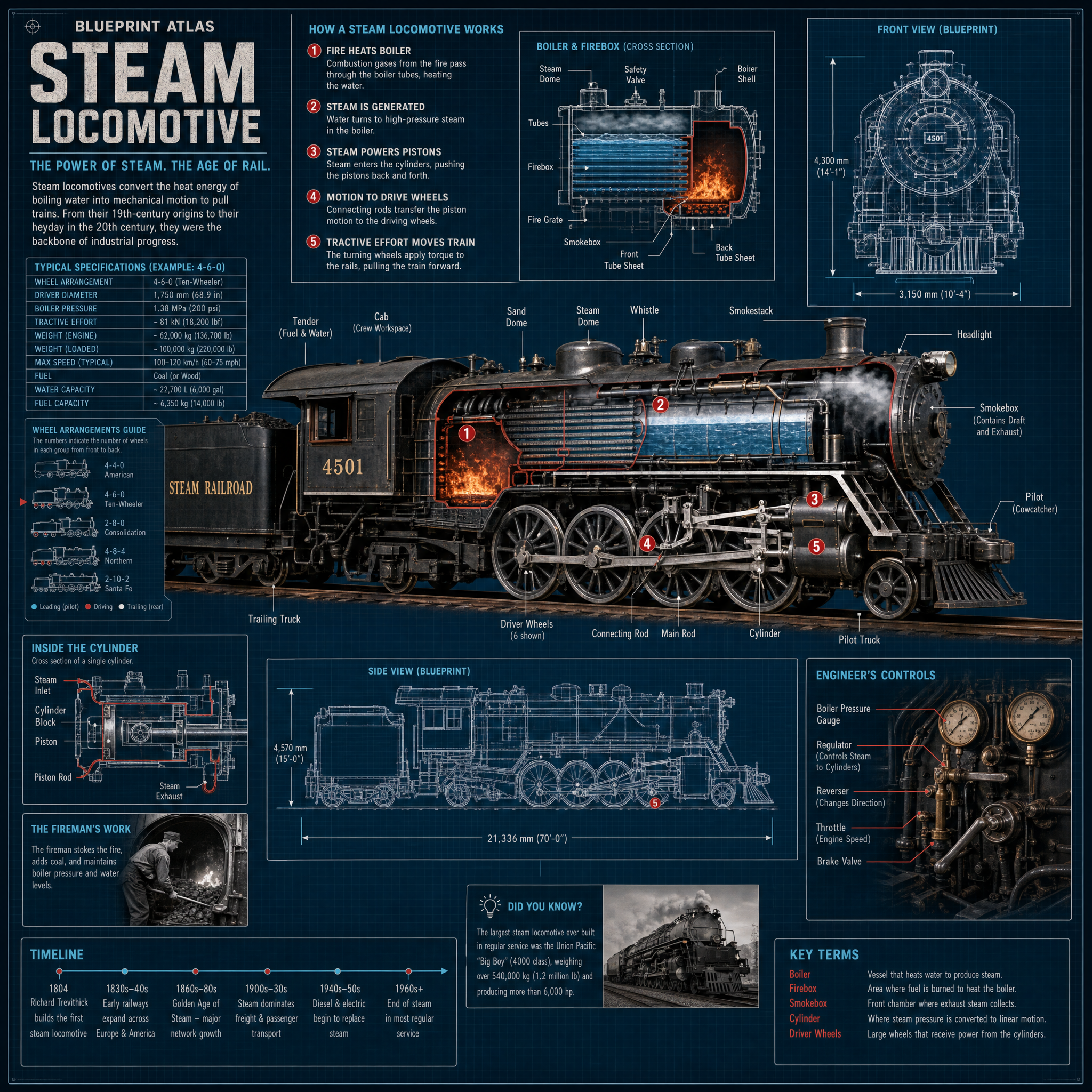
Flying Scotsman · 1923
Steam Locomotive
A coal-fired reciprocating steam engine that converts fuel into mechanical work through a firebox, boiler, cylinders, and driving wheels — the motive power that built the industrial age.
How a sheet gets drawn.
Each subject starts as a real photograph. Over it we lay the things you’d find in an engineer’s notebook: measurements, load-flow arrows, cross-sections, floor plans, and the callouts that name each part.
Step 01
Photograph
A real image, shot or sourced, with the subject clearly lit against its environment.
Step 02
Annotate
White chalk-style lines, brackets and callouts overlay the photograph.
Step 03
Measure
Primary dimensions, masses, and material specs are pinned to the drawing.
Step 04
Cross-section
An internal view explains the mechanism, structure or load path.