Revised 2026
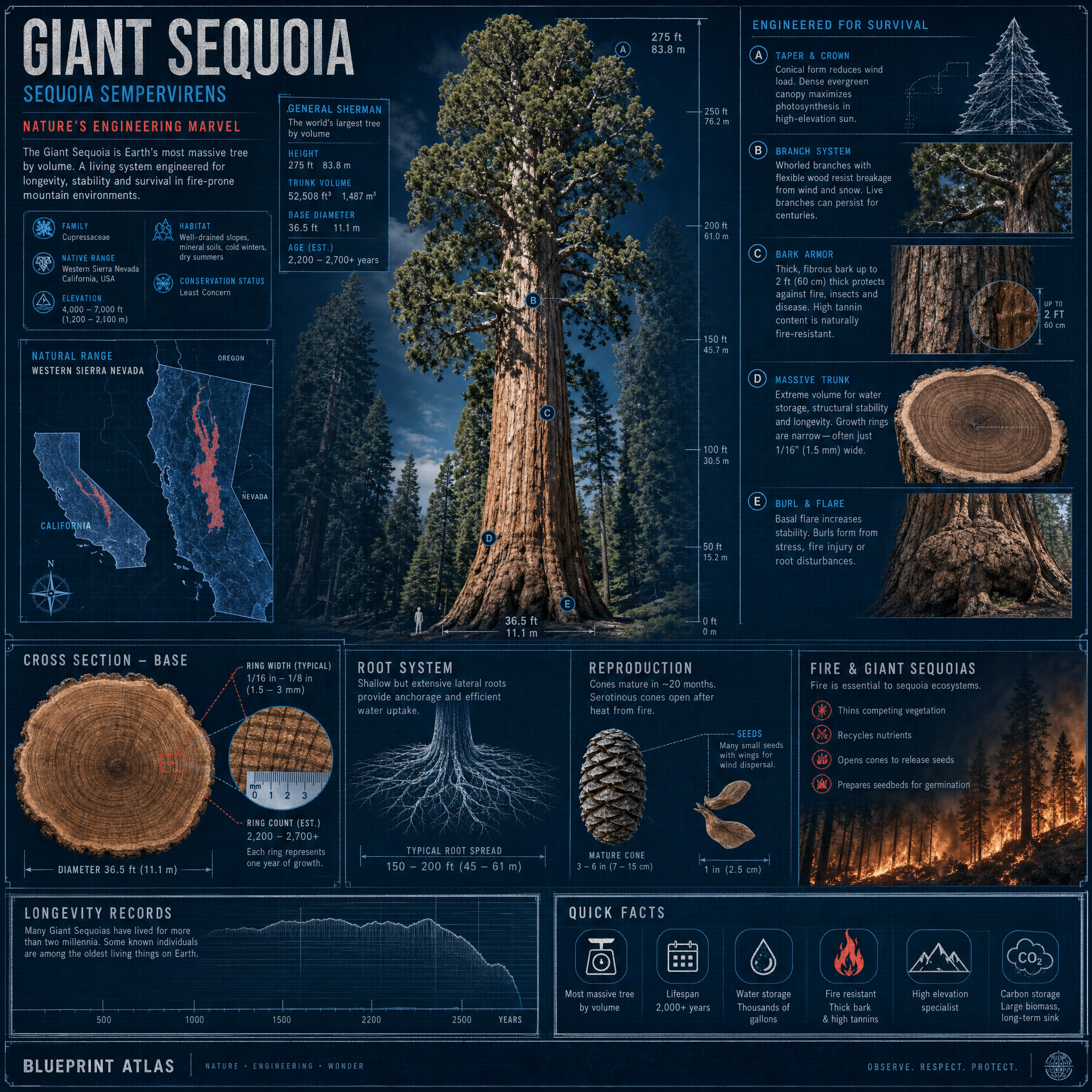
Sheet 001
Giant Sequoia
By sheer volume, nothing else comes close. A metre of fire-resistant bark, serotinous cones that only open in a wildfire, and a root system spread wide but shallow — exactly the strategy for a 2,000-tonne tree.
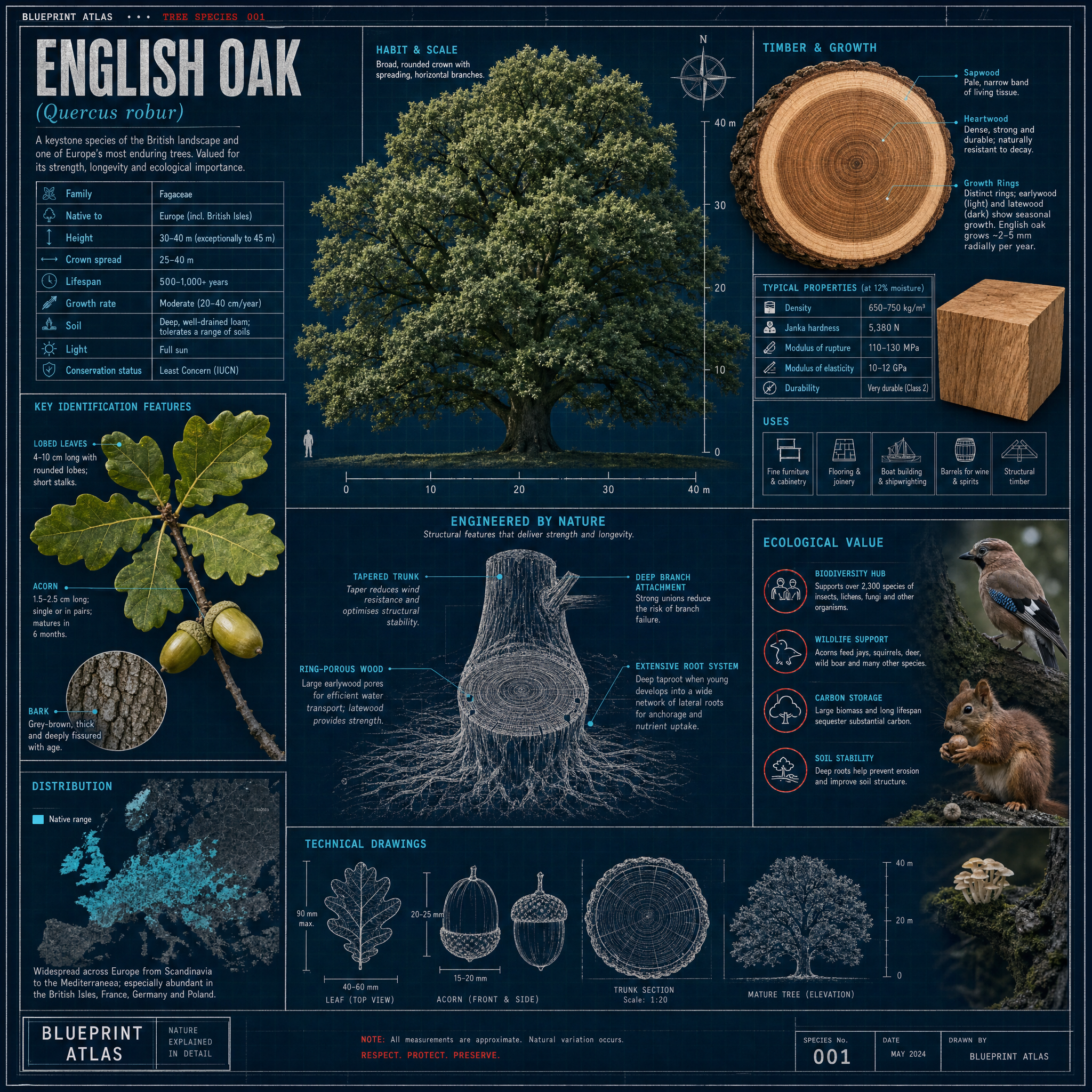
Sheet 002
English Oak
A mature oak is an ecosystem, not a tree. 2,300+ species of insects, birds, fungi, and lichen depend on it, and the annual growth rings in its heartwood are the standard timeline for European dendrochronology.
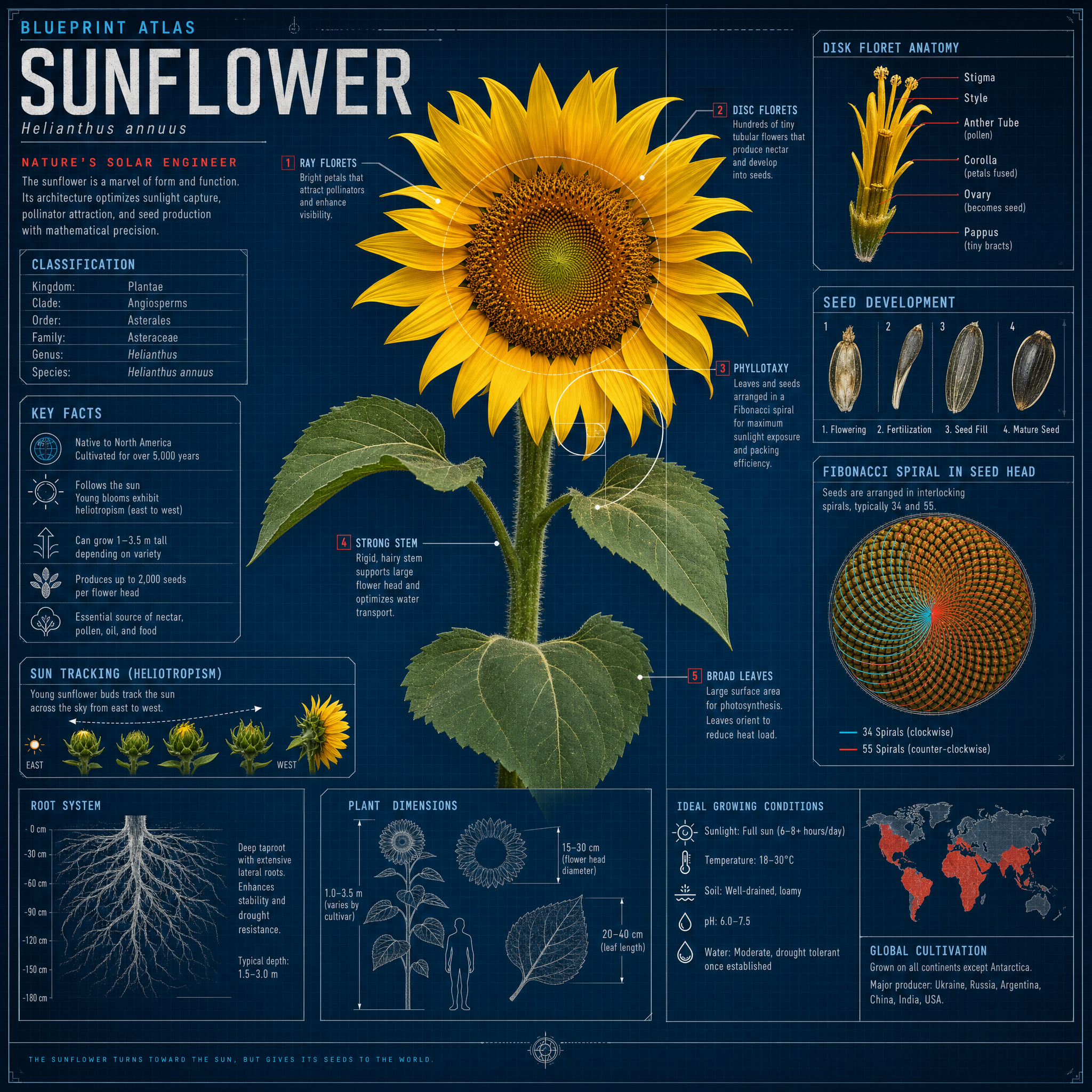
Sheet 003
Sunflower
Each seed sits on the golden angle from the last, packing the head with interlocking Fibonacci spirals. Young plants heliotrope — turning east-to-west with the sun each day.
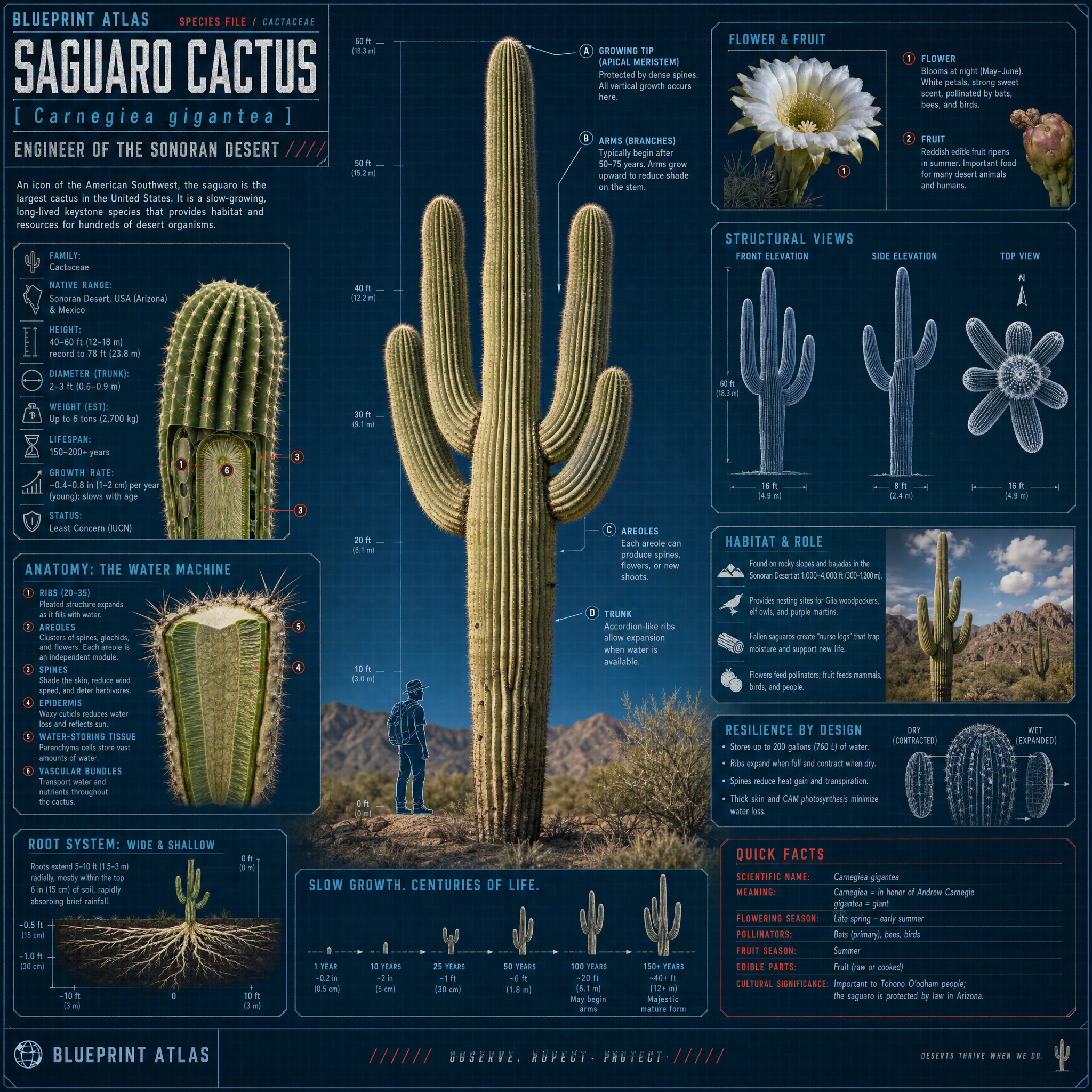
Sheet 004
Saguaro Cactus
Accordion-like pleats let the trunk swell after rain; a rigid wooden ribcage keeps it standing when dry. CAM photosynthesis keeps stomata closed through the blazing day to conserve water.
Sheet 005
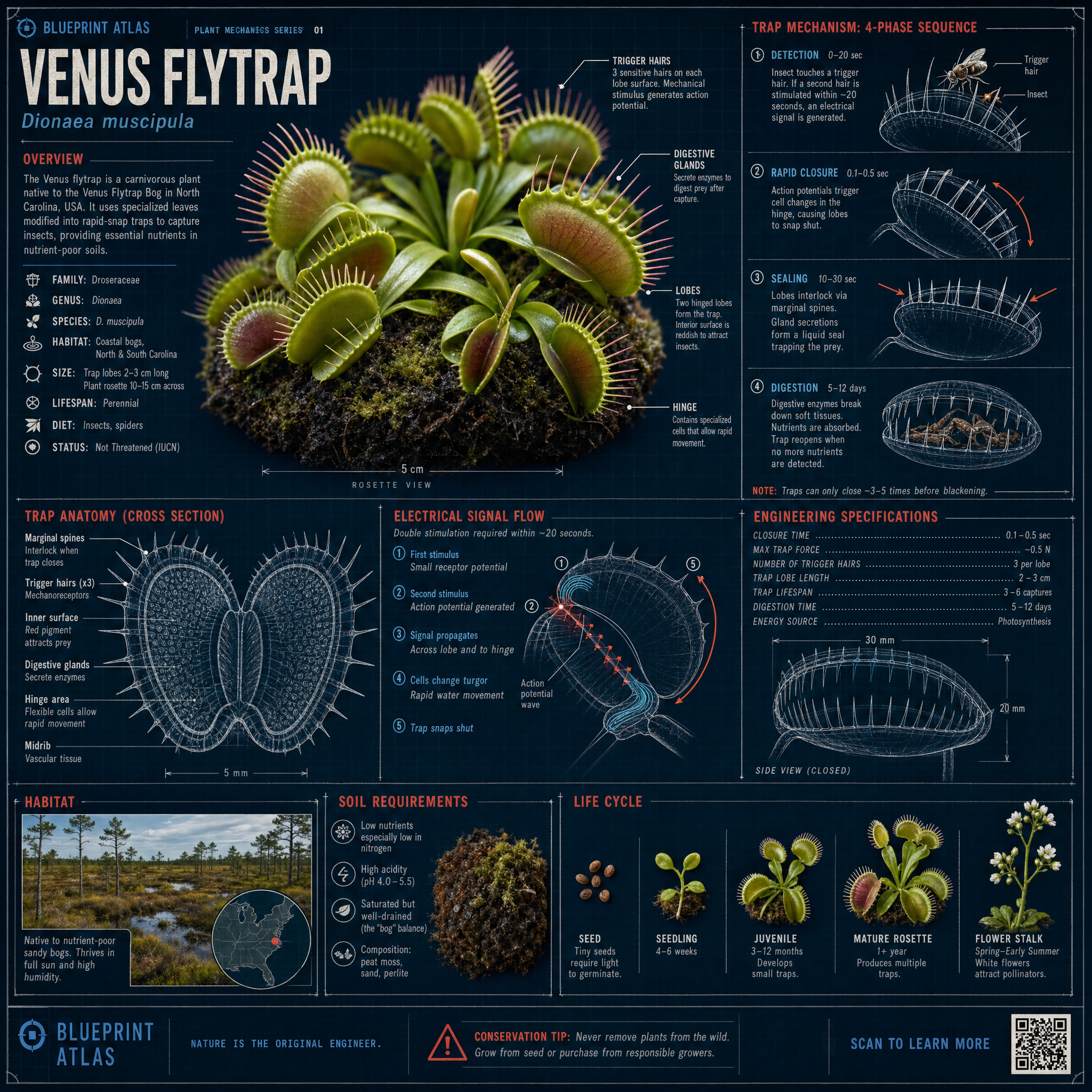
Venus Flytrap
Two touches on a trigger hair within 20 seconds short-circuit a plant-scale action potential, closing the trap. The trap then seals and digests its prey, harvesting the nitrogen missing from its boggy soil.
Sheet 006
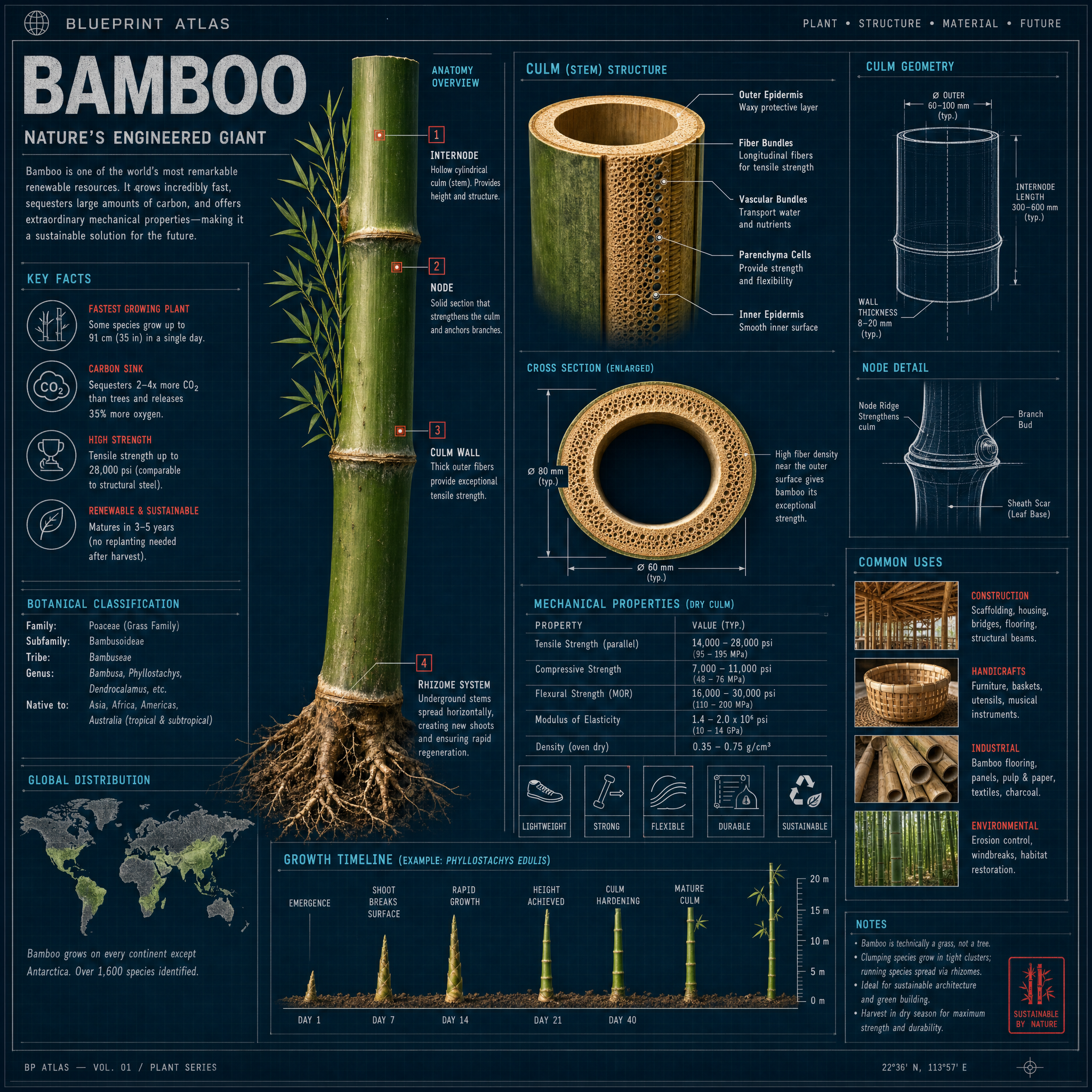
Bamboo
Technically a grass. Hollow, fiber-reinforced internodes give bamboo a strength-to-weight ratio that rivals steel, and the rhizome connects a whole grove as a single clonal organism.
Sheet 007
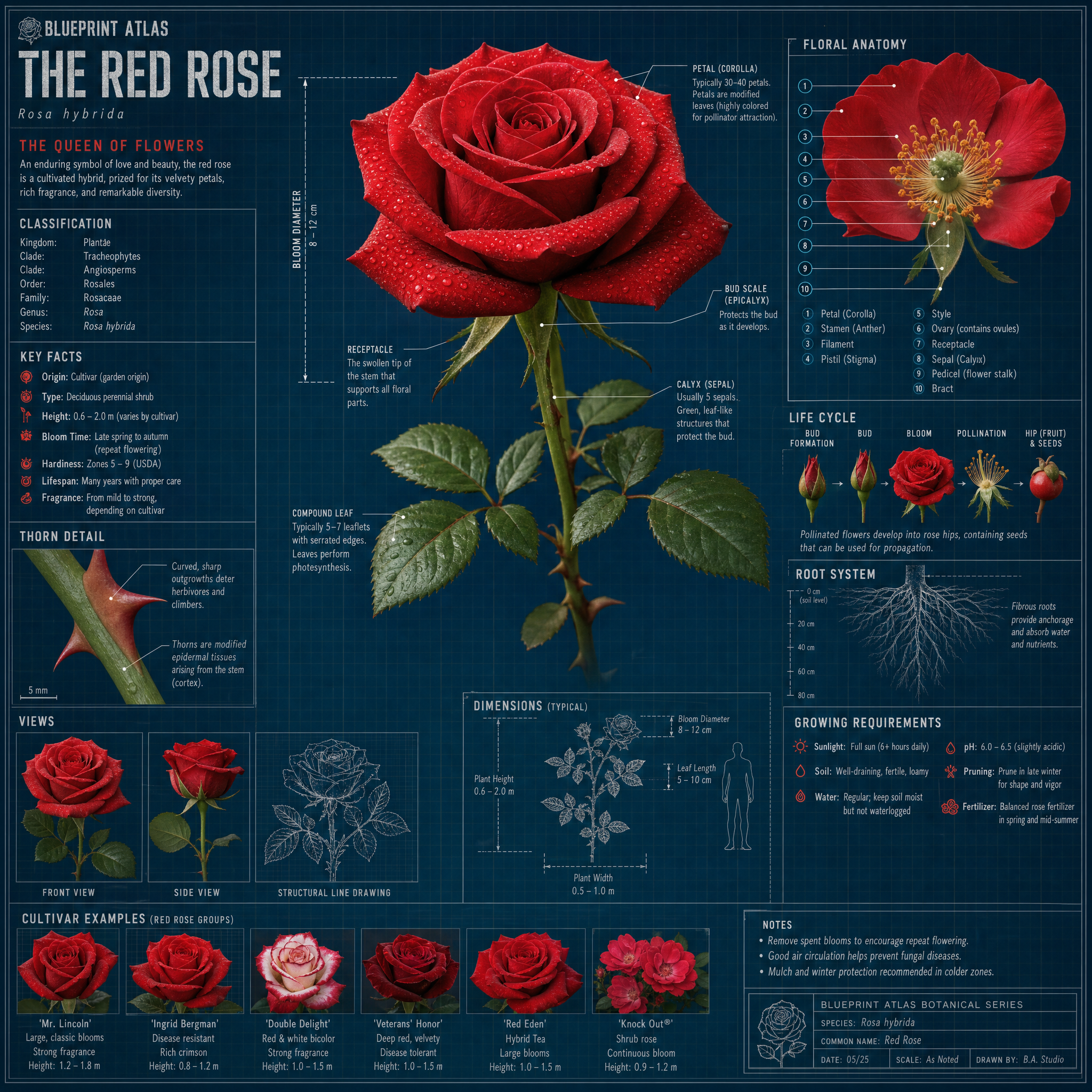
Red Rose
Anthocyanin pigments produce the red; thorns (properly, prickles) deter herbivores. Selectively bred for 5,000 years, roses are among the oldest ornamental plants of human civilisation.
Sheet 008
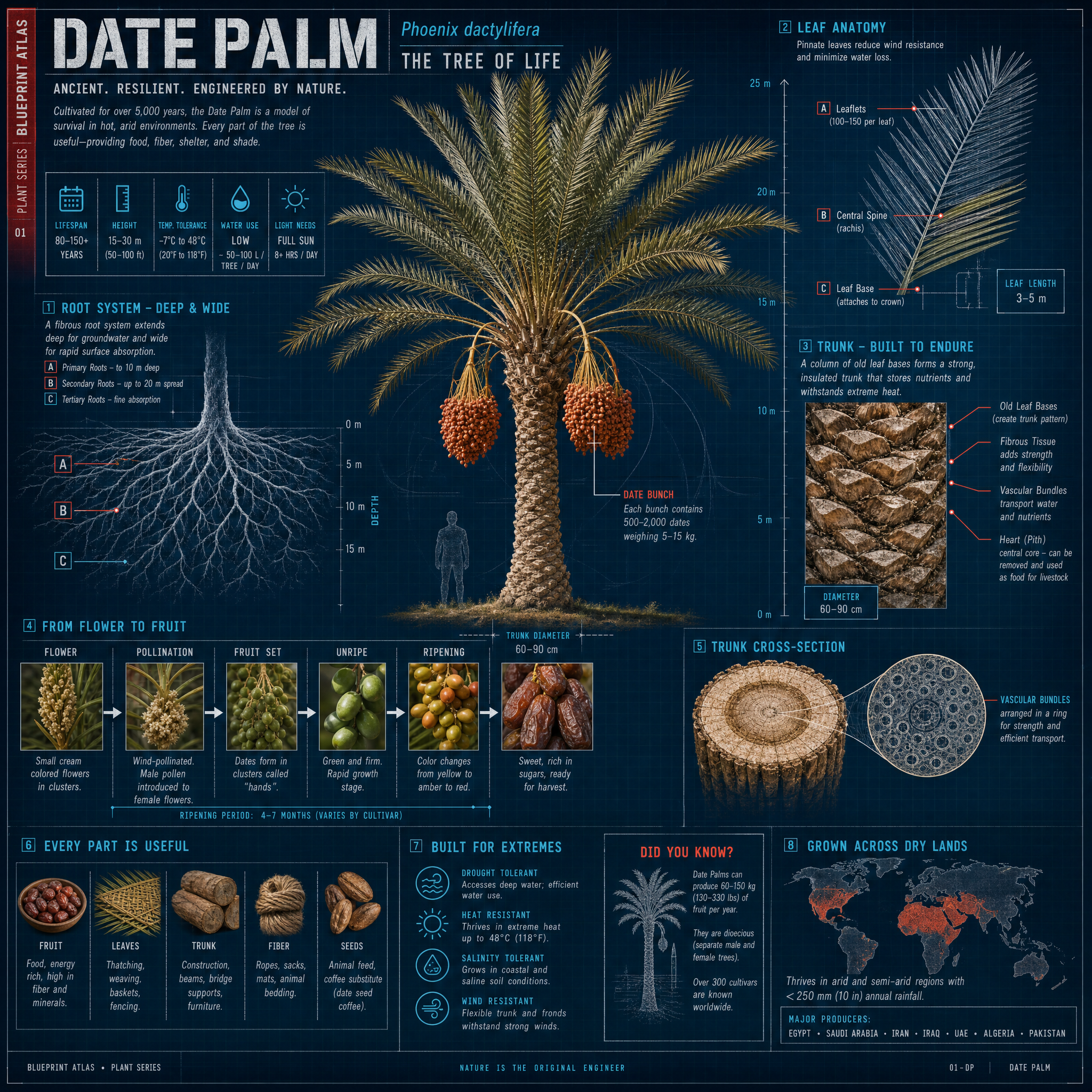
Date Palm
A monocot with no true secondary growth — the trunk is a lignified bundle of fibers. Male and female trees are separate; each date you eat is the result of carefully managed desert cross-pollination.
Sheet 009
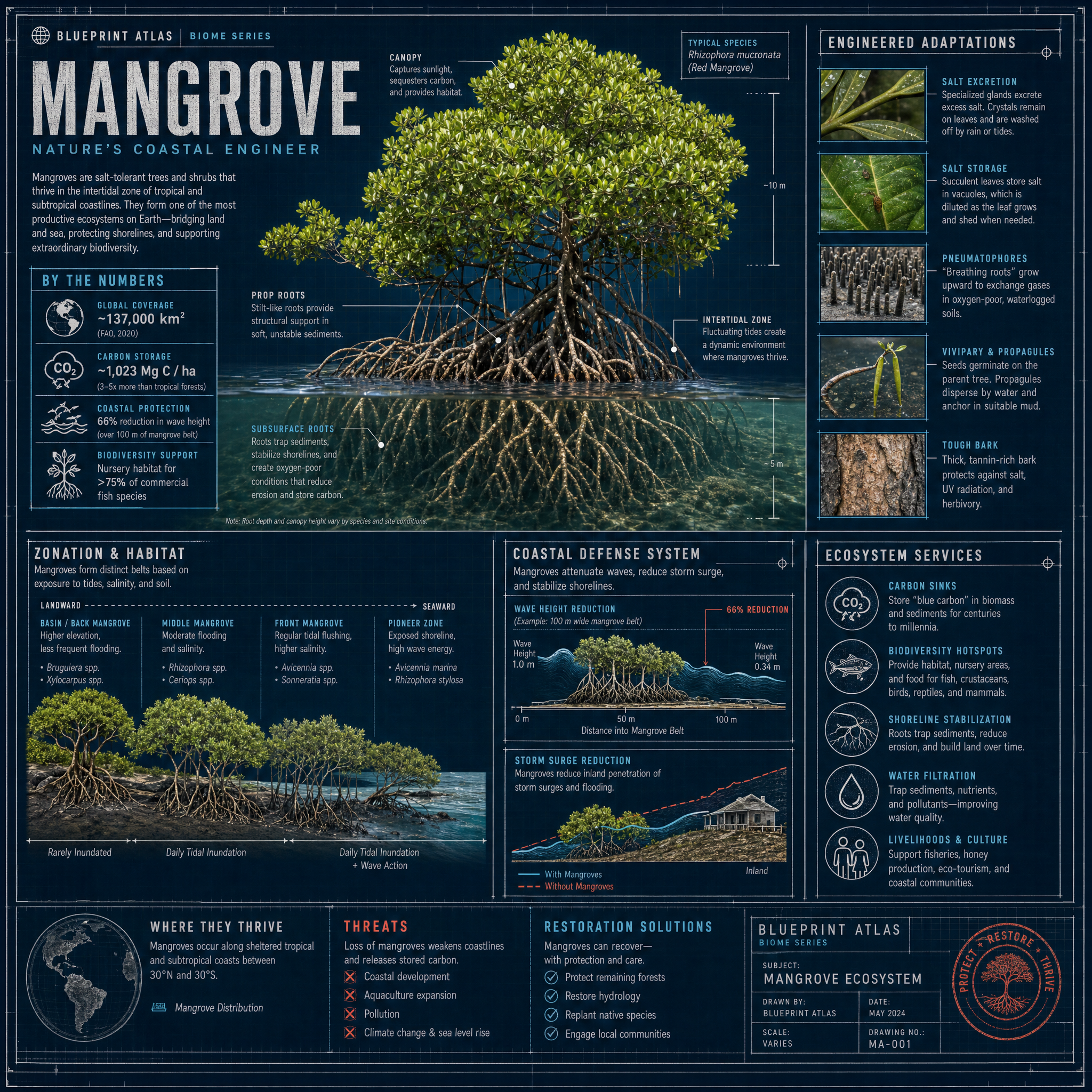
Mangrove
Stilt roots brace against the tide; pneumatophores breathe through mud; viviparous seedlings drop pre-sprouted into the water and float for up to a year before taking root on a new shoreline.
Sheet 010
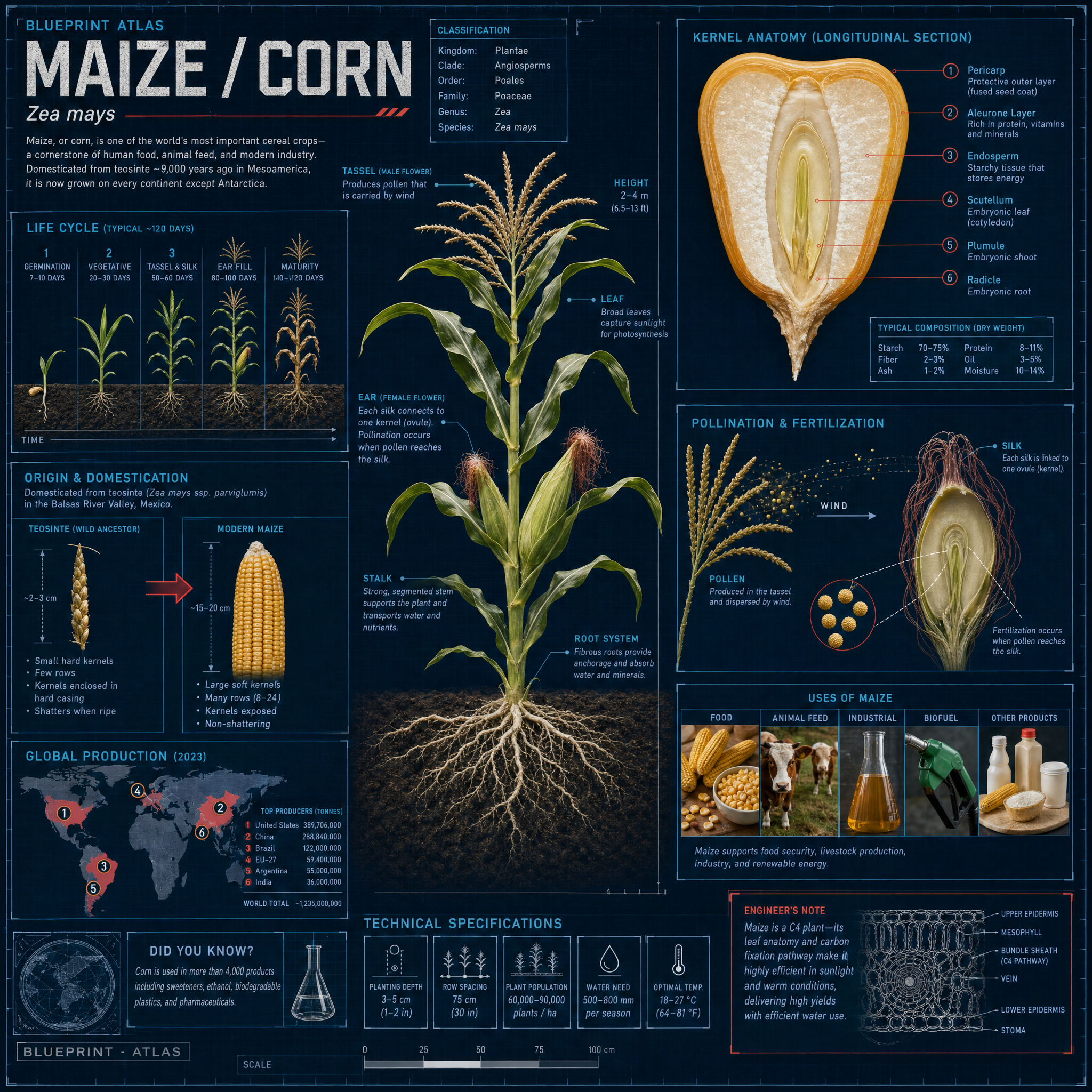
Maize / Corn
Every silk thread is the stigma of one future kernel; wind-blown pollen falls from the tassel onto the silks below. C4 photosynthesis makes maize one of the most efficient crops in hot, sunny climates.