Revised 2026
Sheet 001
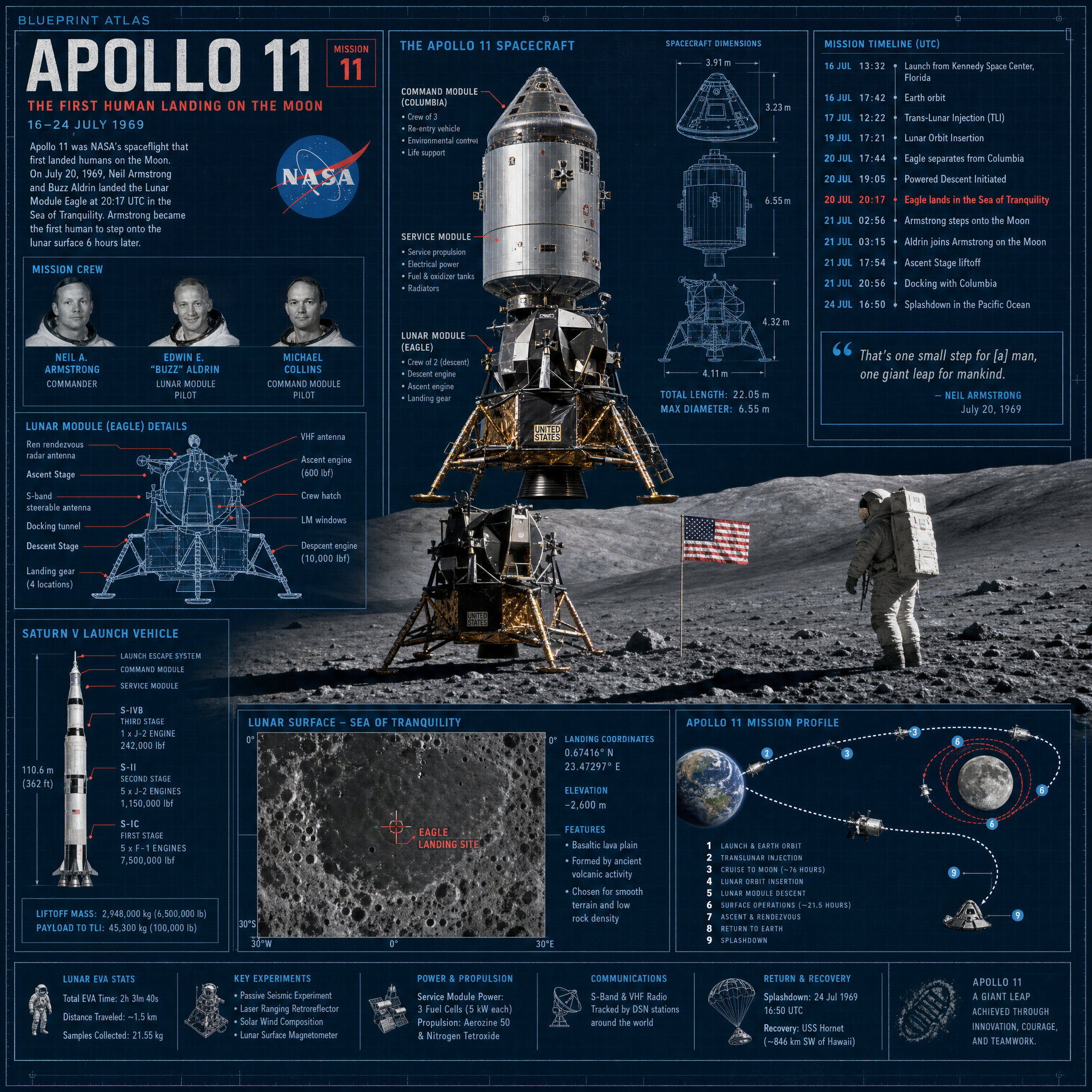
Apollo 11 Moon Landing
The first crewed lunar landing. Neil Armstrong and Buzz Aldrin descended to the Sea of Tranquility in the Lunar Module Eagle while Michael Collins orbited above — the culmination of a decade of Cold War engineering.

Sheet 002
Fall of the Berlin Wall
After a misannounced press conference, crowds flooded the border crossings and tore down the concrete and barbed-wire barrier that had divided Berlin since 1961 — the symbolic end of the Cold War in Europe.
Sheet 003
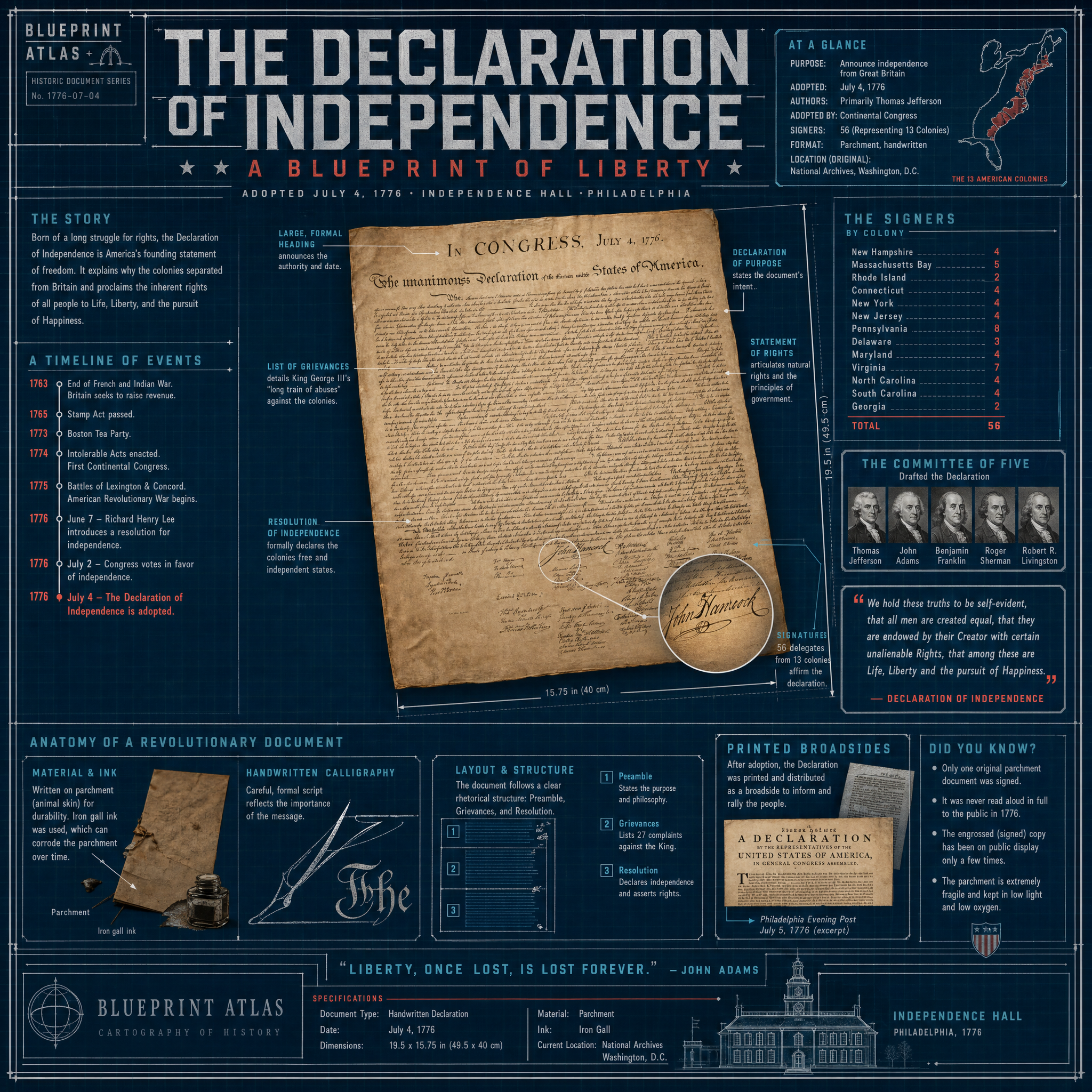
Declaration of Independence
The founding document of the United States, approved by the Second Continental Congress at Independence Hall. It asserted the thirteen colonies’ separation from Britain and codified the rights of life, liberty, and the pursuit of happiness.
Sheet 004
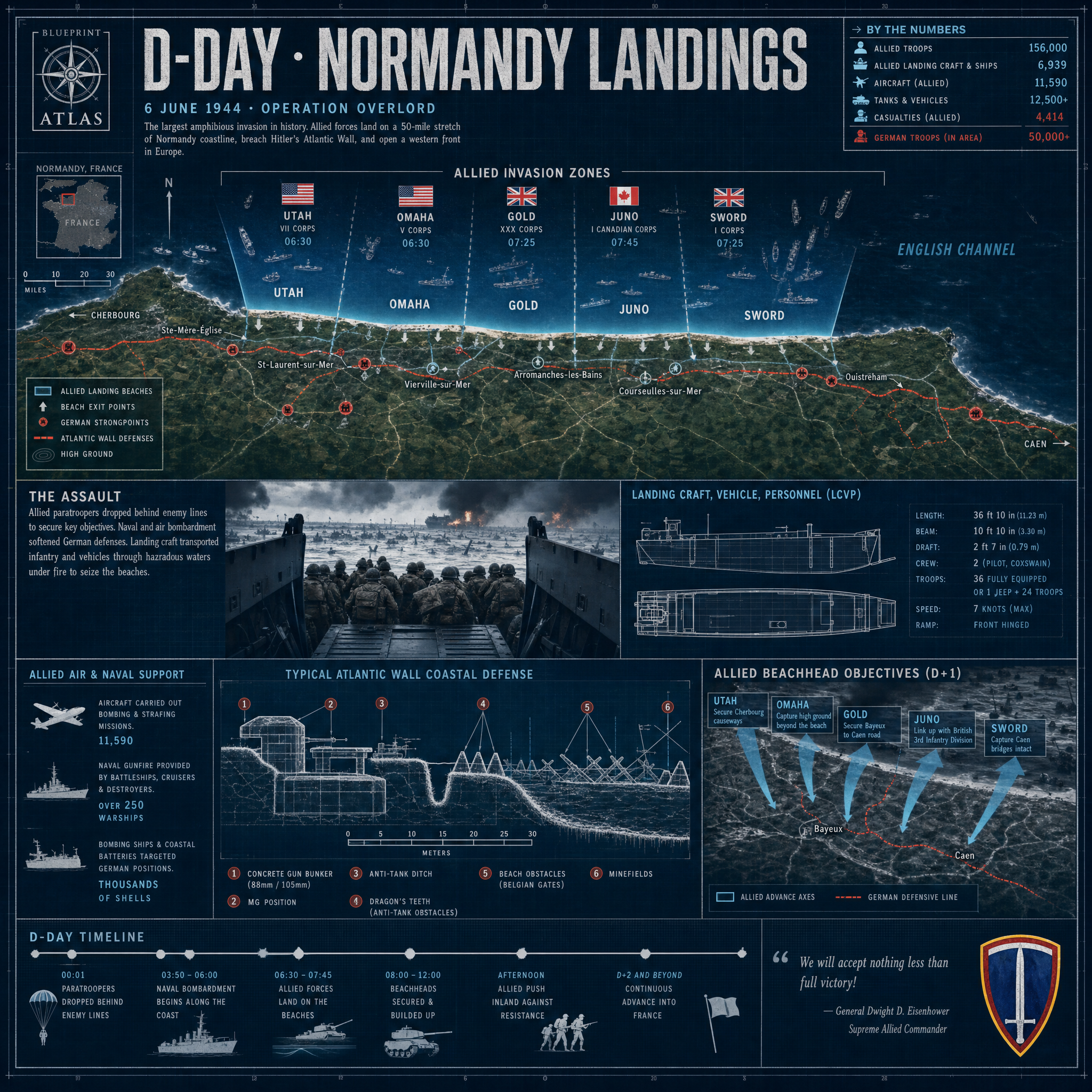
D-Day · Normandy Landings
Operation Overlord — the largest seaborne invasion in history. Allied forces stormed five beaches along the Normandy coast: Utah, Omaha, Gold, Juno, and Sword, opening the Western Front against Nazi Germany.
Sheet 005
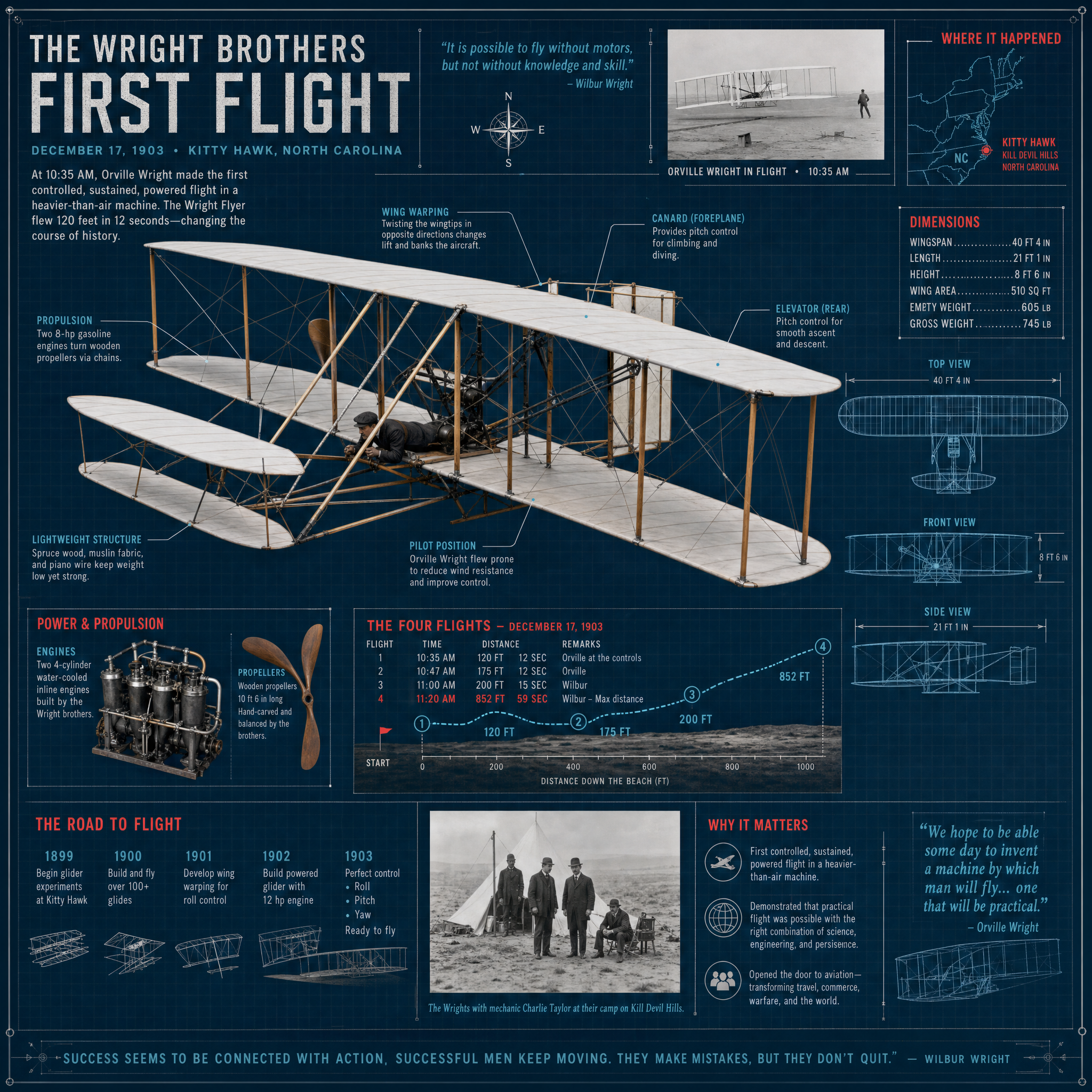
Wright Brothers First Flight
The first controlled, powered, heavier-than-air flight. Orville piloted the Wright Flyer off a wooden rail at Kill Devil Hills while Wilbur ran alongside — a 12-second hop that opened the aerial age.
Sheet 006
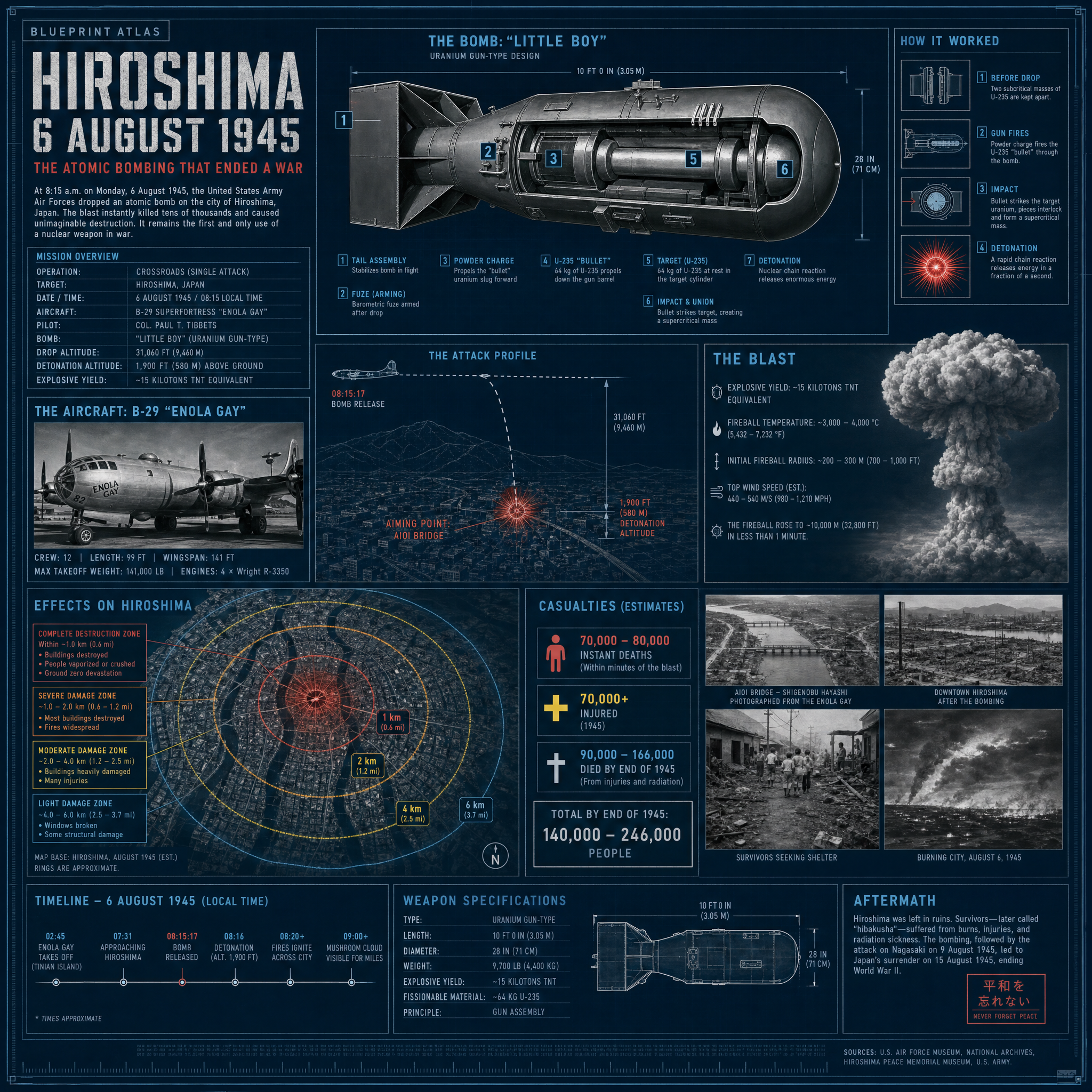
Hiroshima Atomic Bombing
The first use of an atomic weapon in war. A B-29 named Enola Gay dropped the uranium-235 gun-type device Little Boy, which detonated above the city and ushered in the nuclear age.
Sheet 007
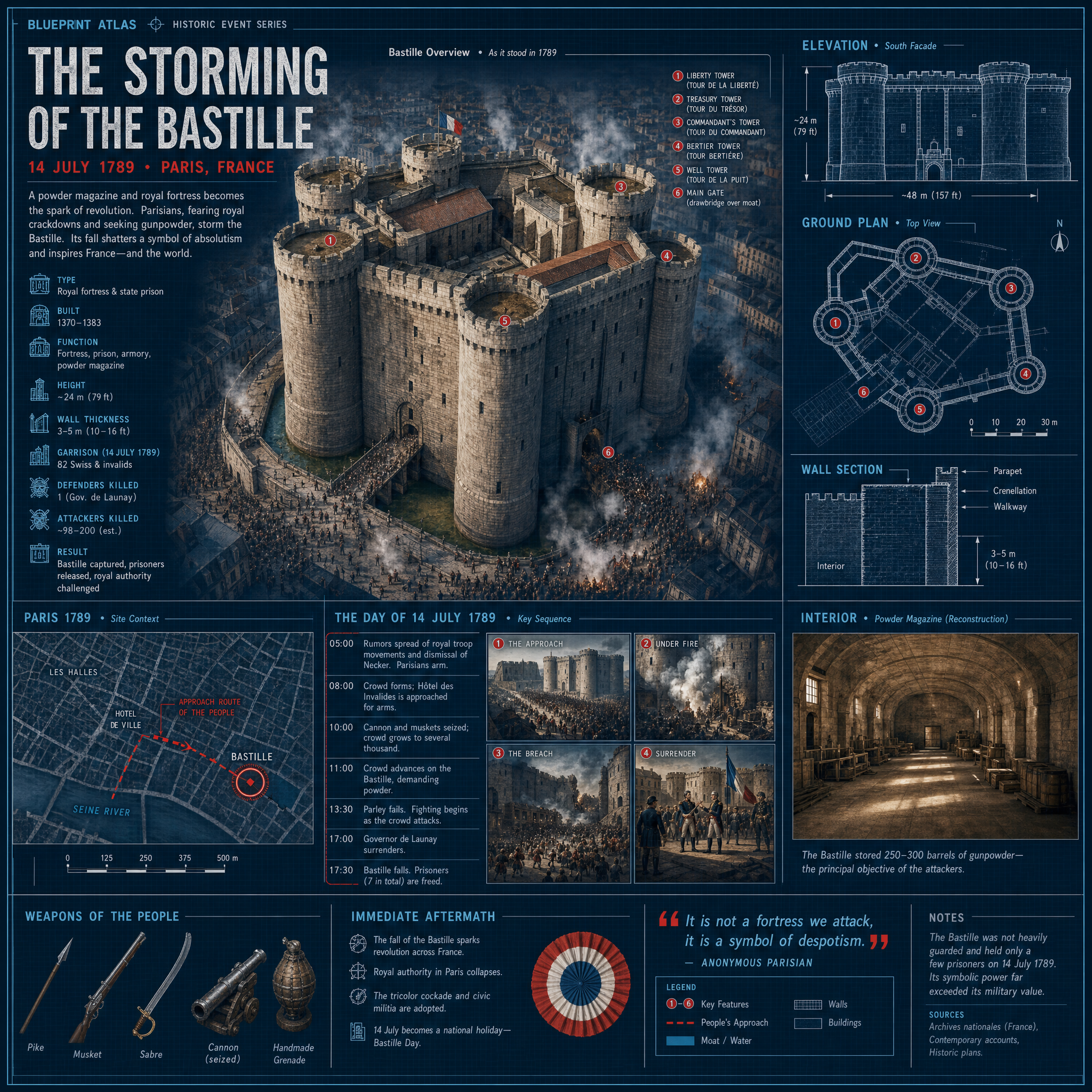
Storming of the Bastille
A Parisian crowd overran the medieval fortress-prison for its gunpowder stores, sparking the French Revolution. The date is now France’s national holiday and a universal symbol of popular uprising.
Sheet 008
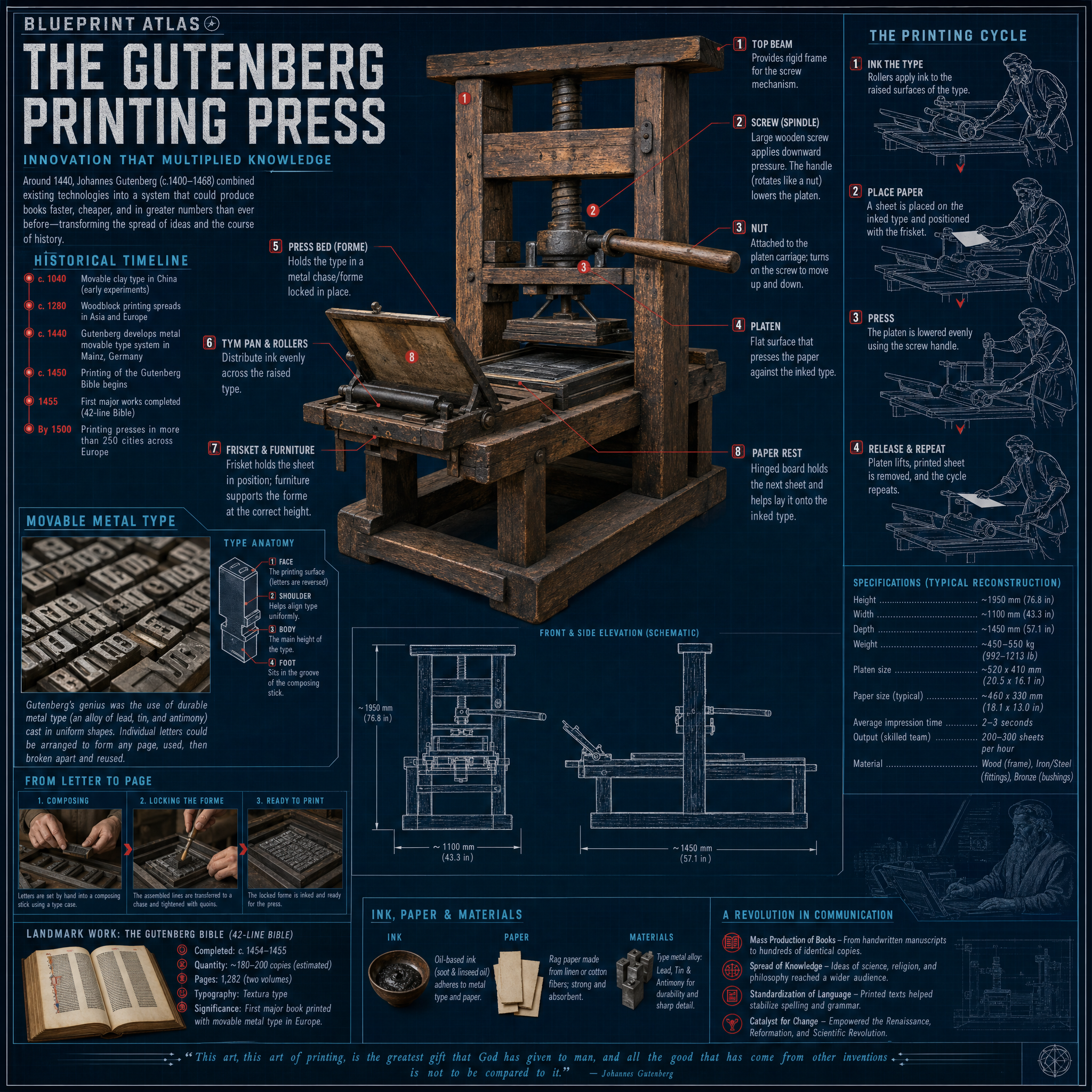
Gutenberg Printing Press
Johannes Gutenberg’s movable-type press fused the wine-press screw, oil-based ink, and reusable cast letters into a reproducible system. His 42-line Bible ignited mass literacy and reshaped Western thought.
Sheet 009
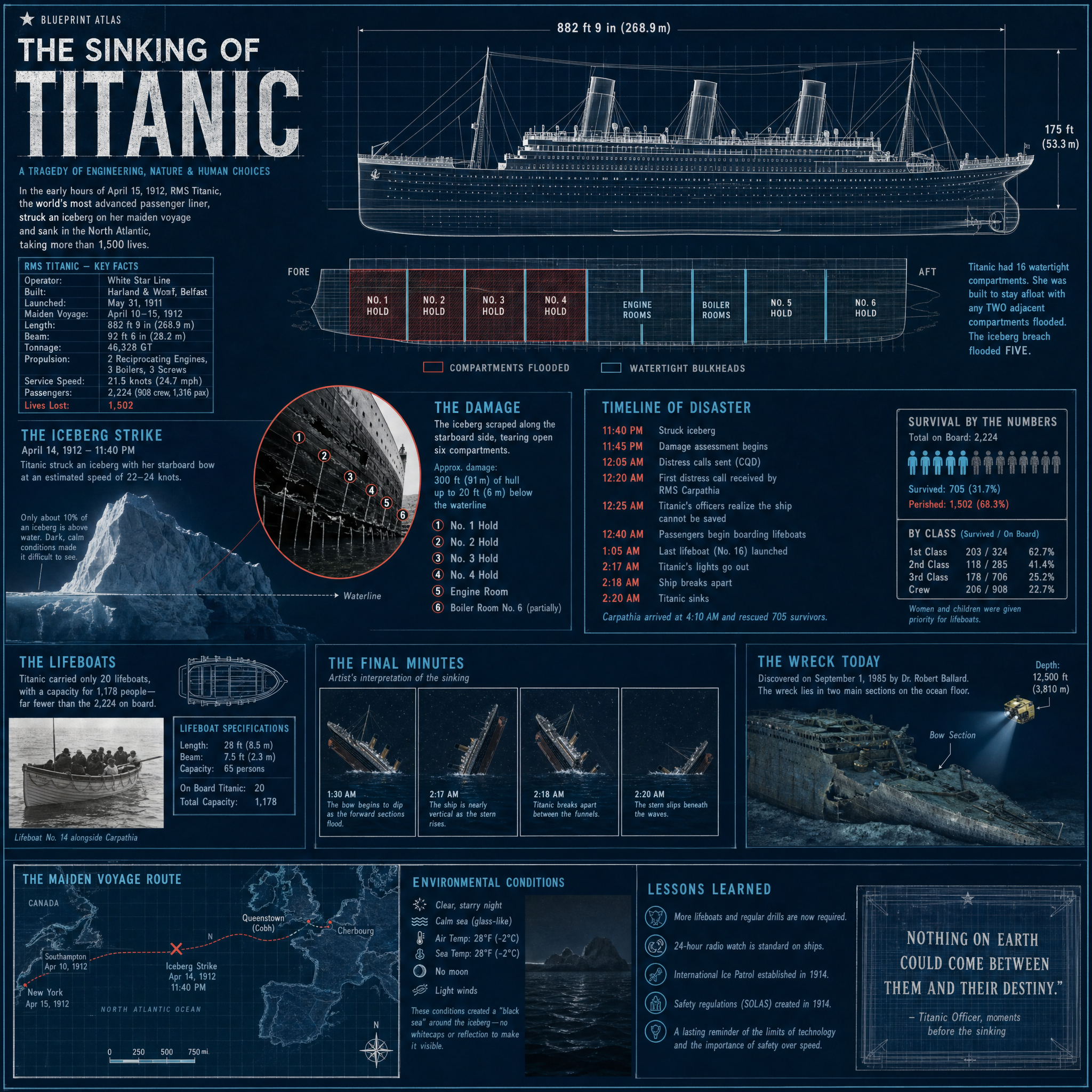
Sinking of the Titanic
On her maiden voyage from Southampton to New York, RMS Titanic struck an iceberg and sank in the North Atlantic. The disaster exposed the limits of contemporary naval engineering and rewrote maritime safety law.
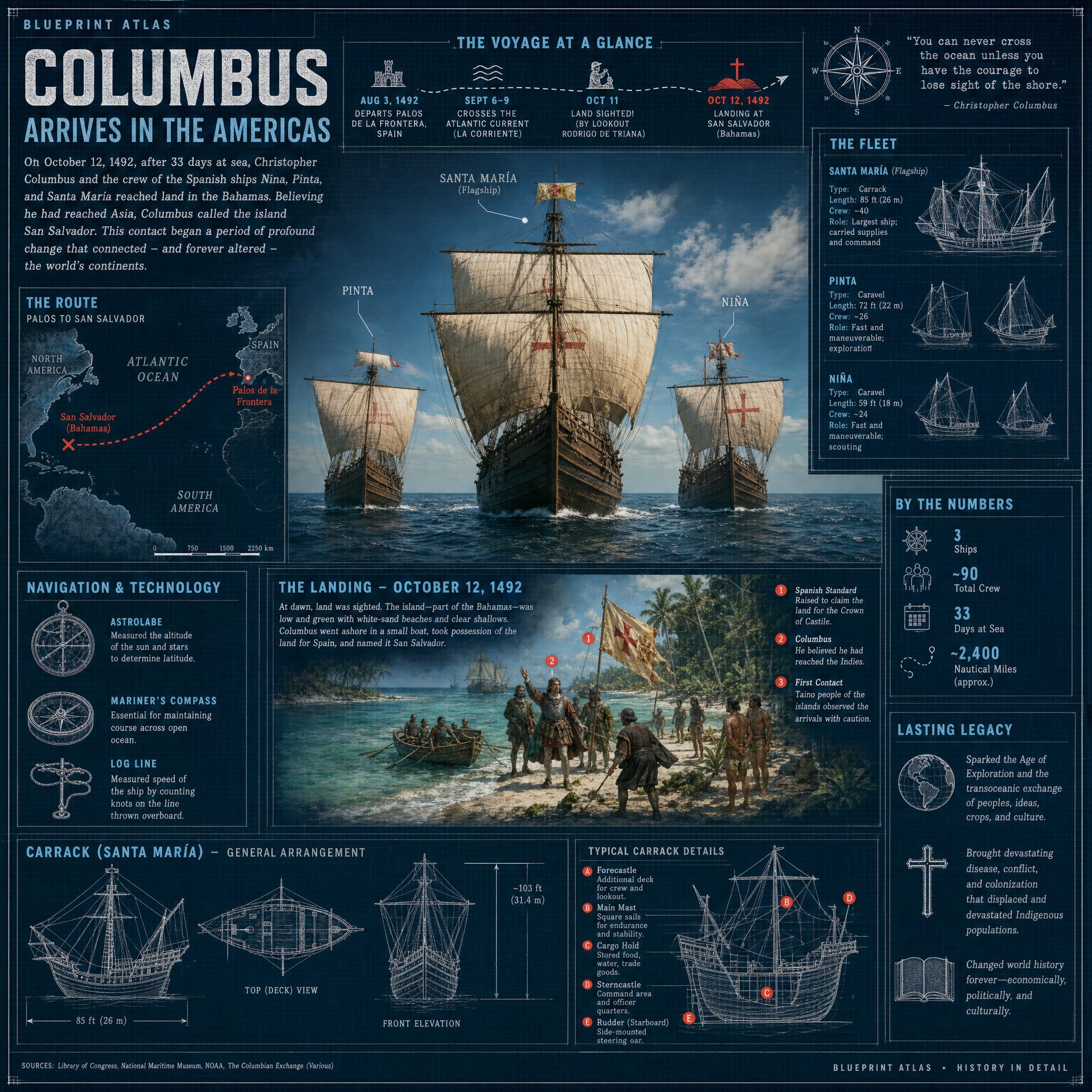
Sheet 010
Columbus Arrives in the Americas
Sailing for the Spanish Crown, Christopher Columbus made European landfall on a Bahamian island he named San Salvador, initiating the Columbian Exchange and permanently linking the hemispheres.