Revised 2026
Sheet 001
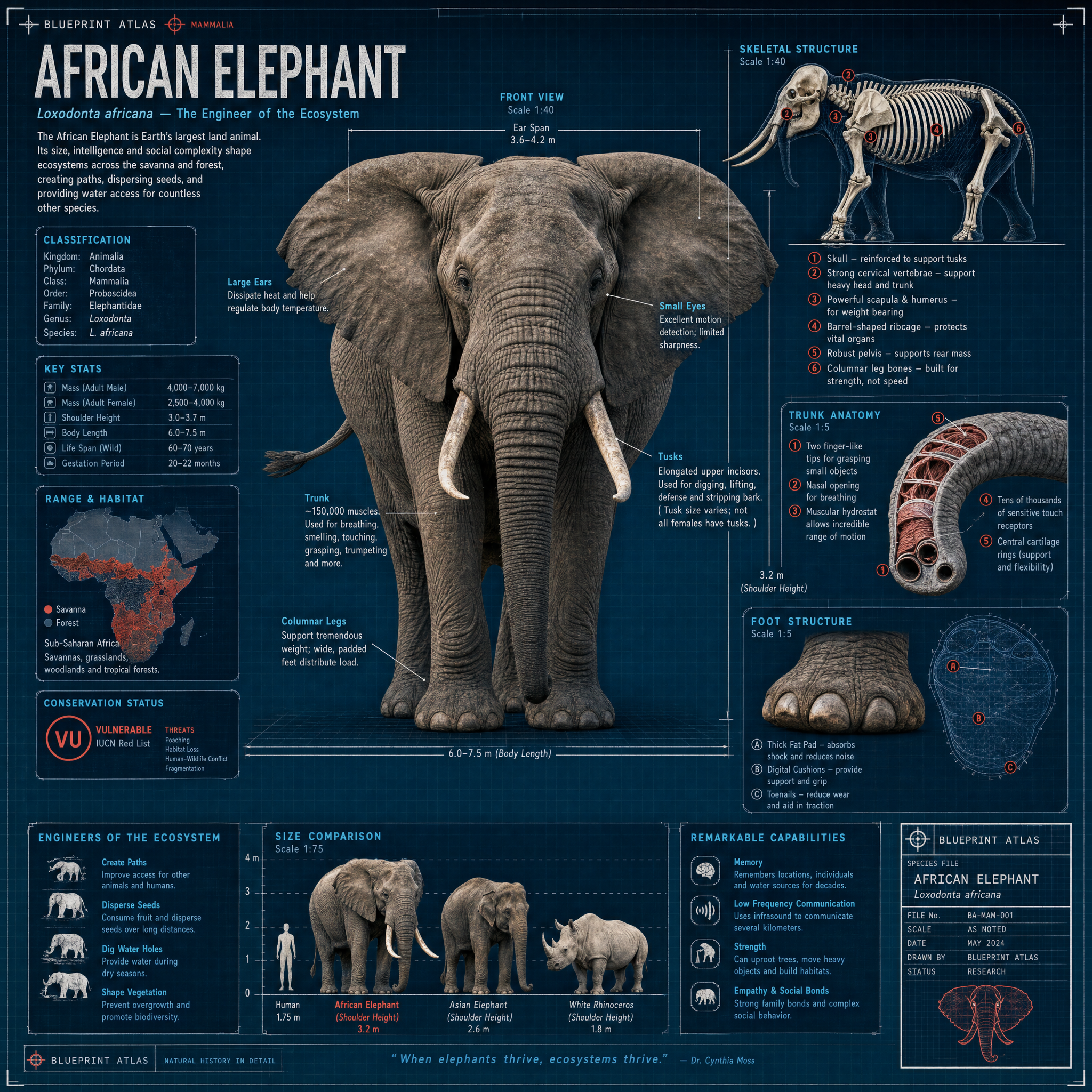
African Elephant
Columnar legs carry the heaviest land body on the planet. The trunk — a fused nose and upper lip — is precise enough to pluck a single blade of grass and strong enough to uproot a tree.
Sheet 002
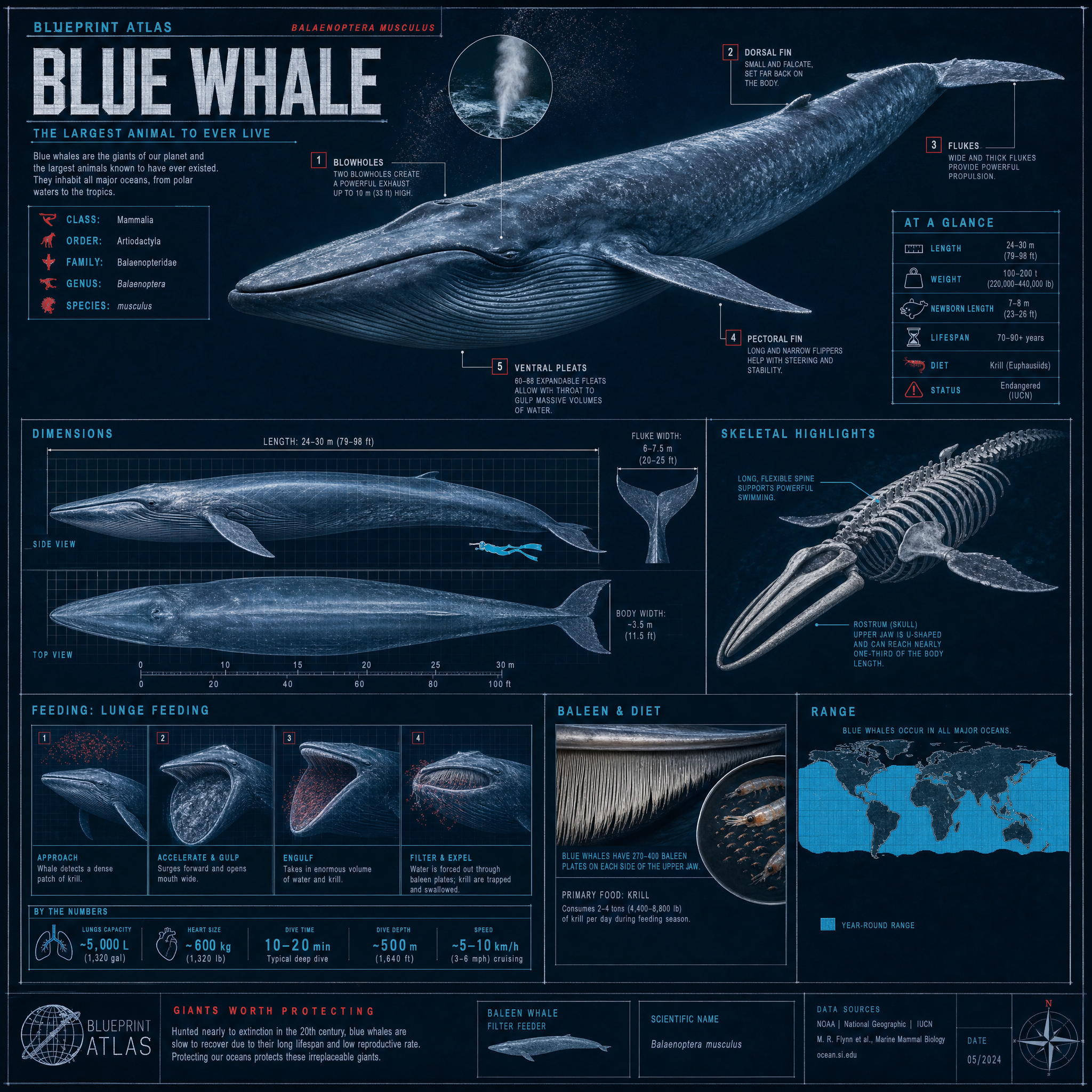
Blue Whale
No dinosaur ever came close. A blue whale’s heart is the size of a small car, its tongue weighs as much as an elephant, and its low-frequency calls cross whole ocean basins.
Sheet 003
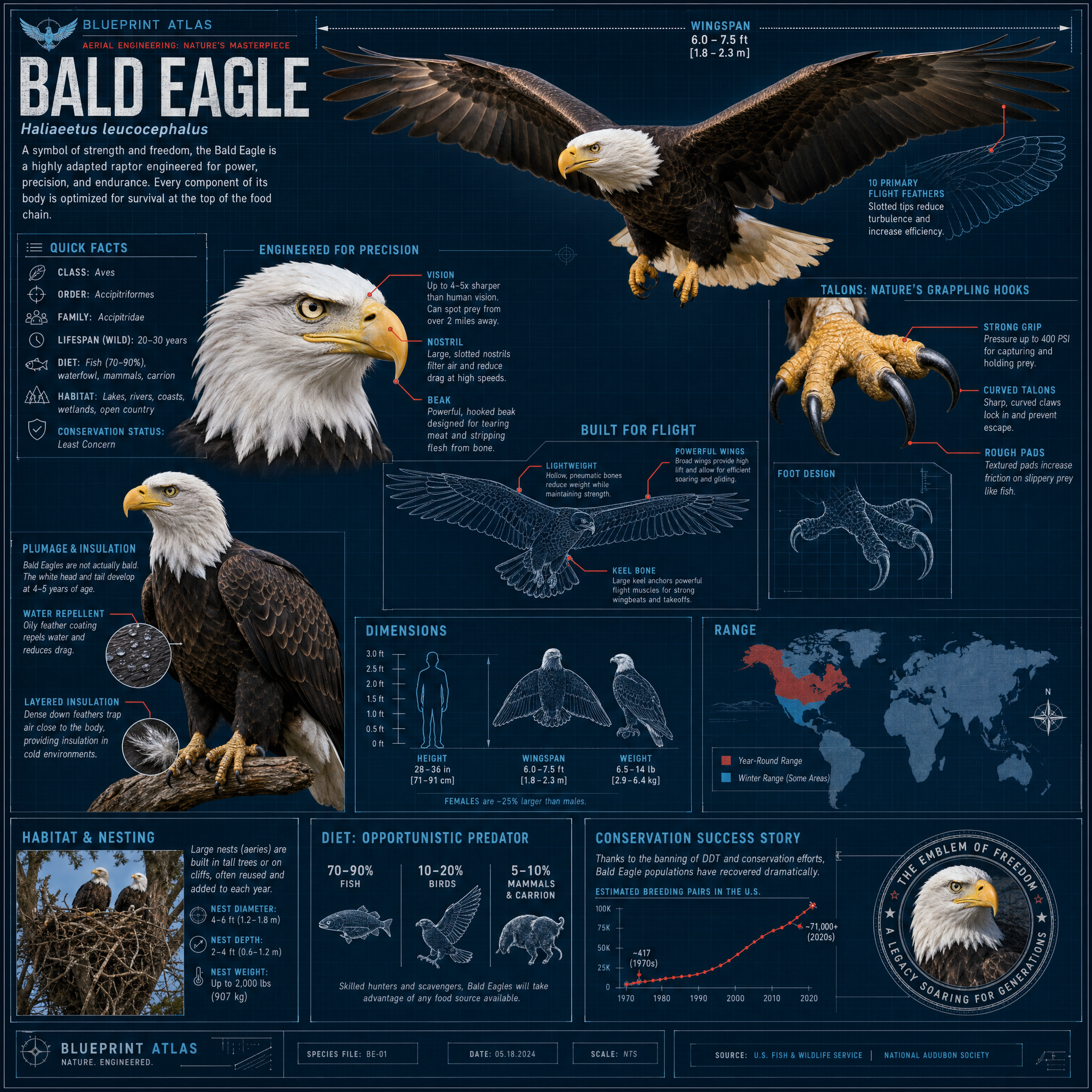
Bald Eagle
Hollow pneumatized bones, a keeled sternum, and airfoil-shaped feathers make the eagle light and powerful. Its eyes pack 7× the photoreceptor density of ours, spotting prey from a kilometre above.
Sheet 004
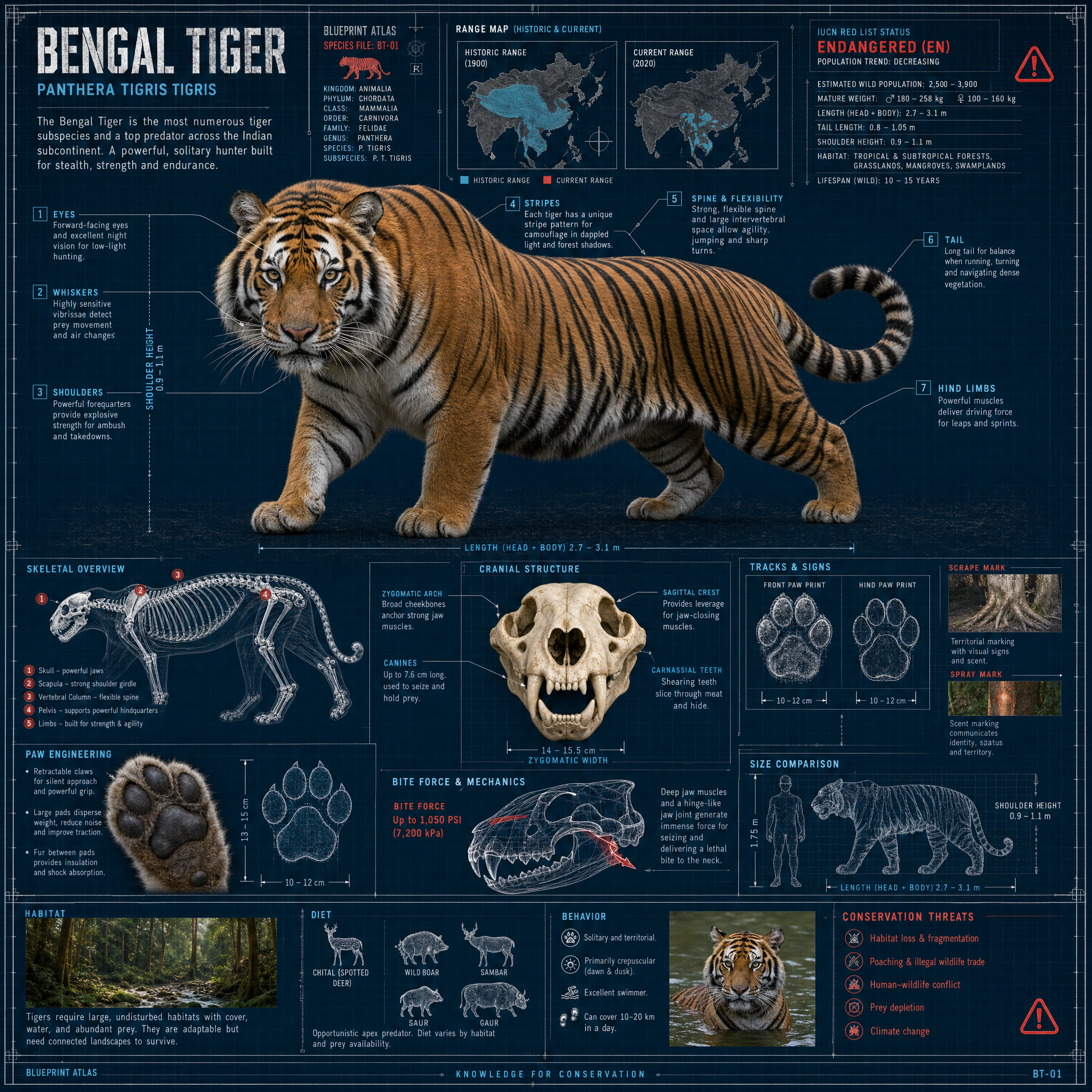
Bengal Tiger
A solitary ambush predator built for one explosive pounce. Retractable claws stay razor-sharp, striped camouflage breaks its silhouette in tall grass, and each tiger’s stripe pattern is as unique as a fingerprint.
Sheet 005
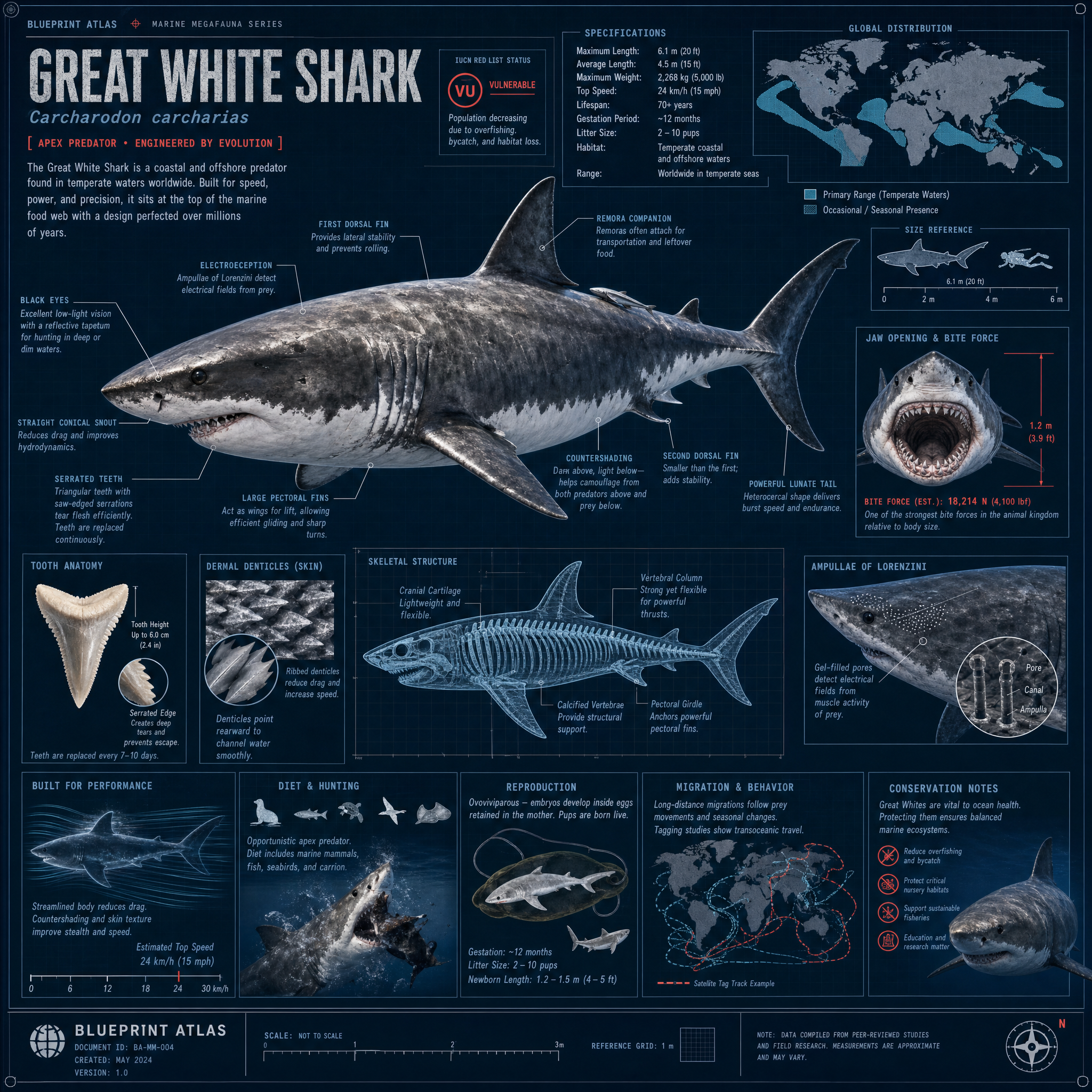
Great White Shark
A cartilaginous skeleton, ram ventilation through the gills, and ampullae of Lorenzini that sense the electric fields of muscle twitches make the great white a perfect product of 400 million years of tuning.
Sheet 006
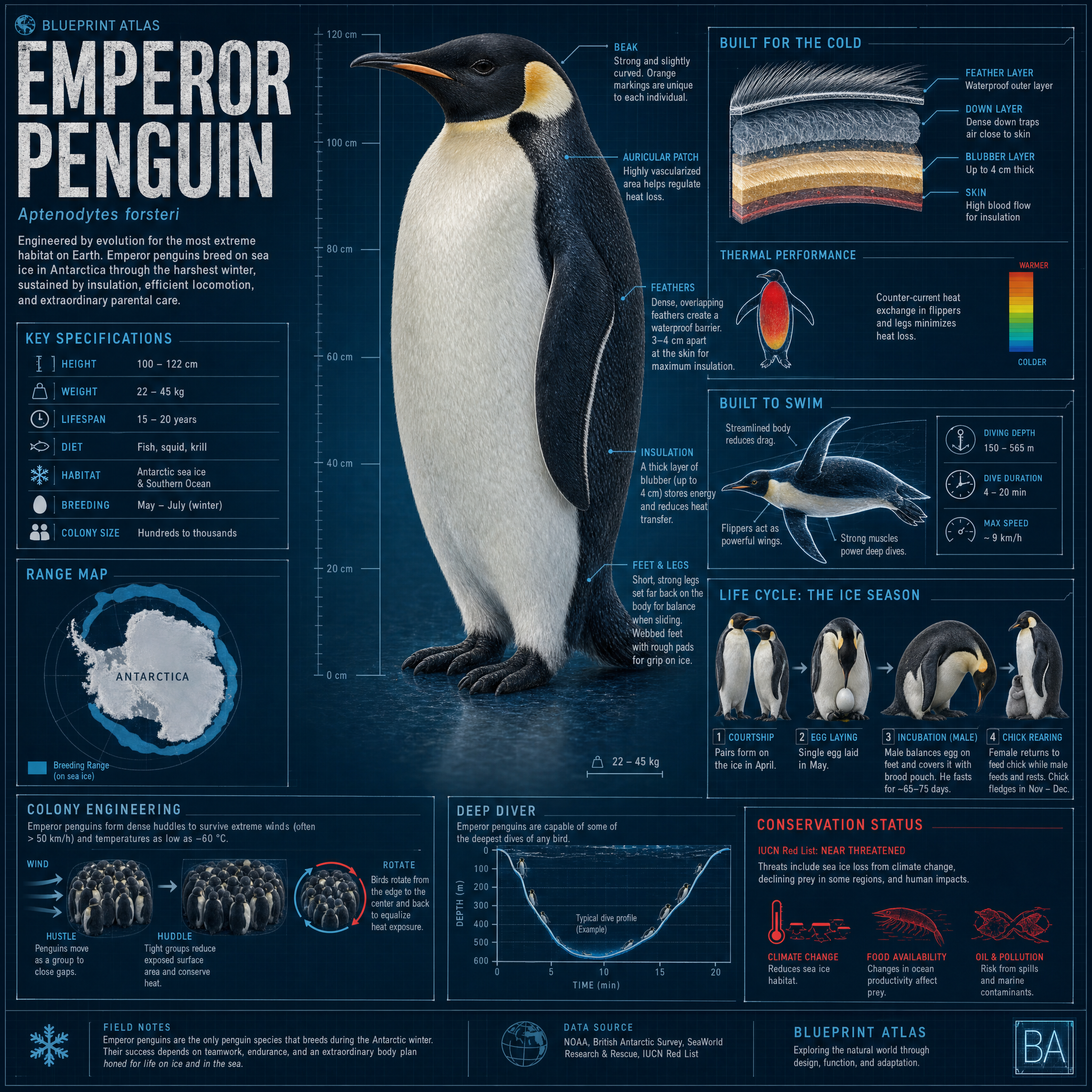
Emperor Penguin
A huddle of ten thousand emperor penguins rotates slowly — individuals on the cold edge shuffling inward every few minutes — turning the flock itself into a self-warming organism.
Sheet 007
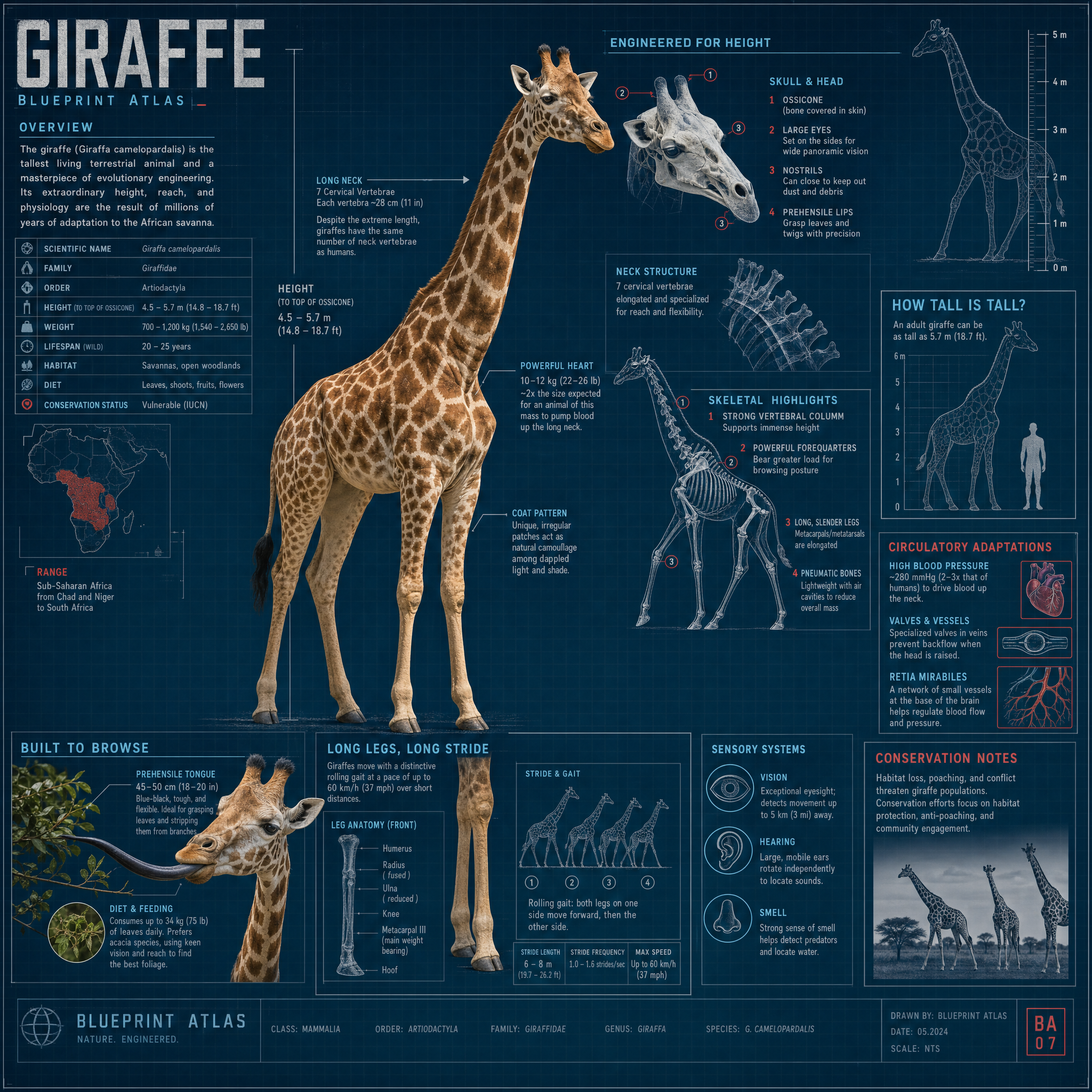
Giraffe
Only seven cervical vertebrae — the mammalian standard — each one massively elongated. A high-pressure heart and a valved jugular keep blood reaching the brain whether the giraffe is grazing or drinking.
Sheet 008
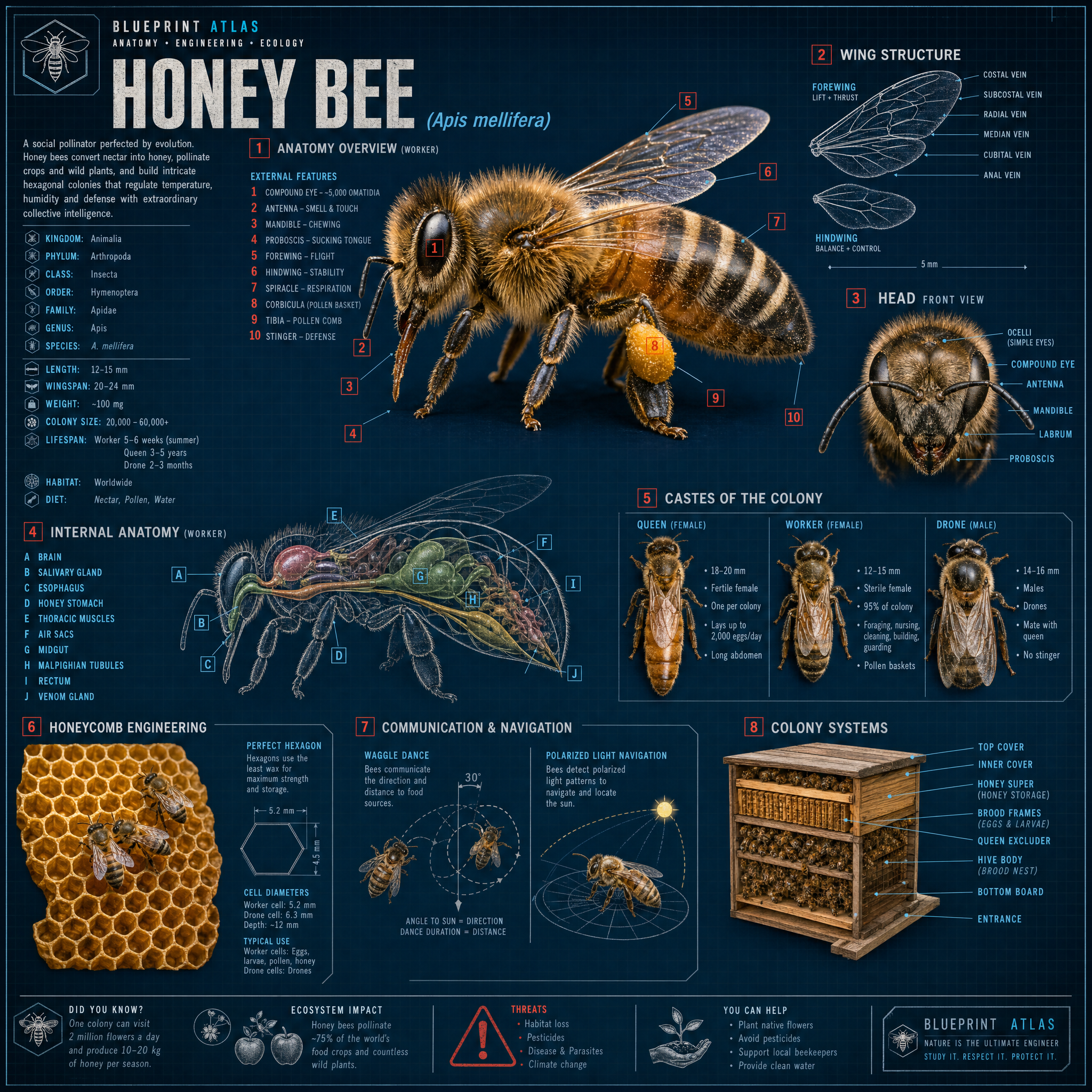
Honey Bee
An individual forager lives 6 weeks; the hive lives indefinitely. Hexagonal wax cells minimise building material, the waggle dance encodes direction and distance, and the entire colony thermoregulates to ±0.5 °C.
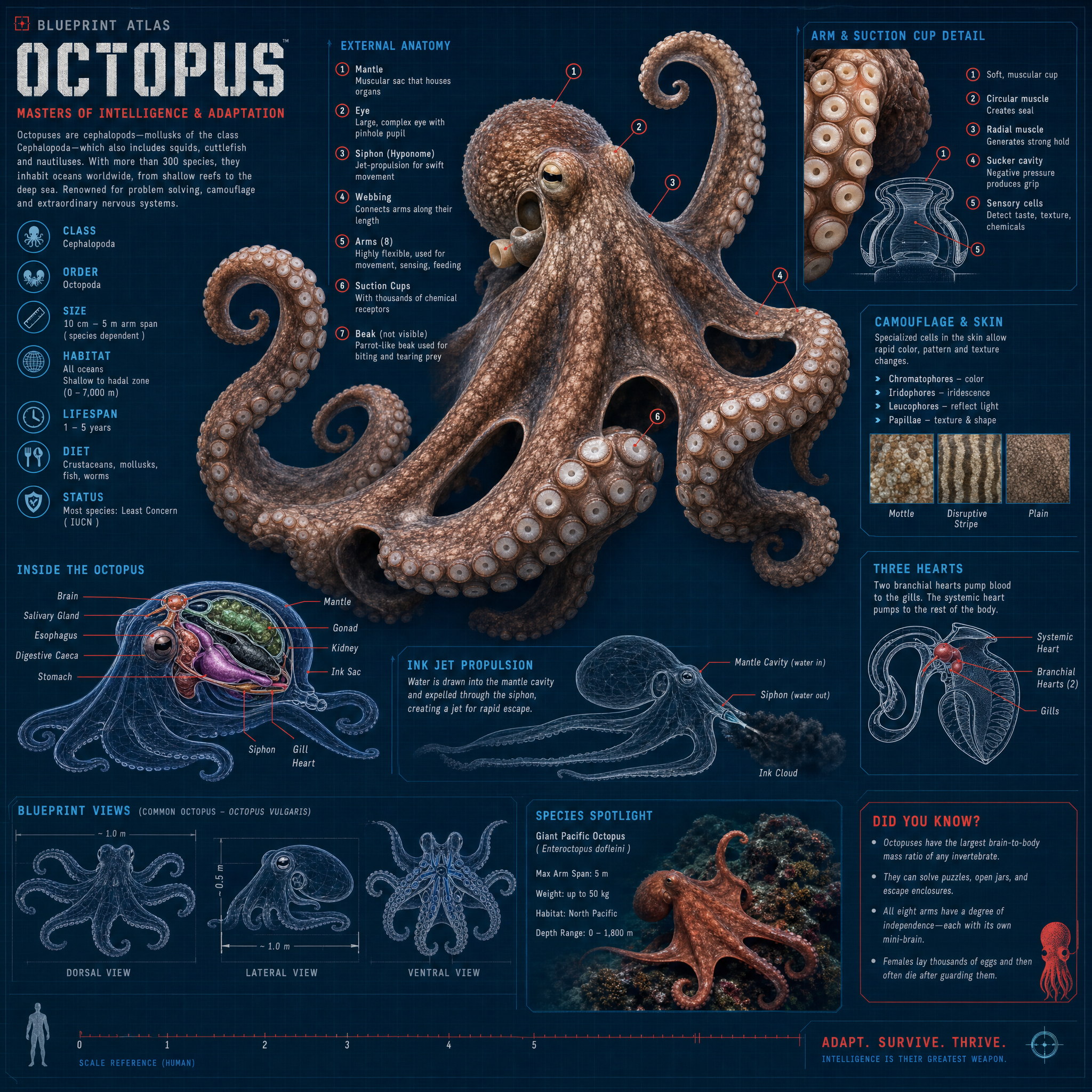
Sheet 009
Octopus
Two thirds of an octopus’s neurons live in its arms, each behaving semi-autonomously. Skin chromatophores change colour and texture in milliseconds — despite the fact that octopuses are colourblind.
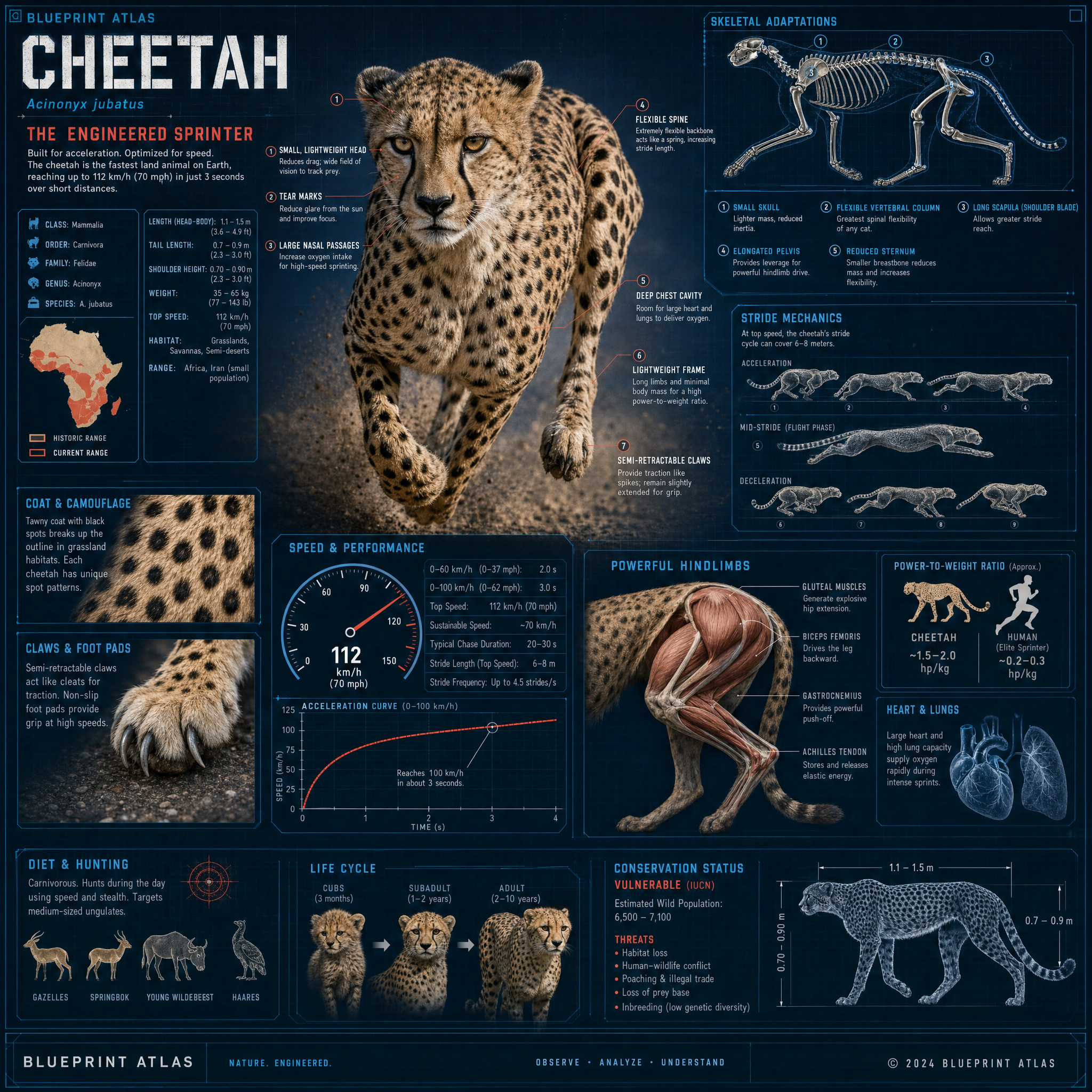
Sheet 010
Cheetah
A hyper-flexible spine acts as a spring between strides; oversized nasal passages and lungs feed oxygen to a heart that beats 250 times a minute at sprint. The tail steers like a rudder.