Revised 2026
Sheet 001
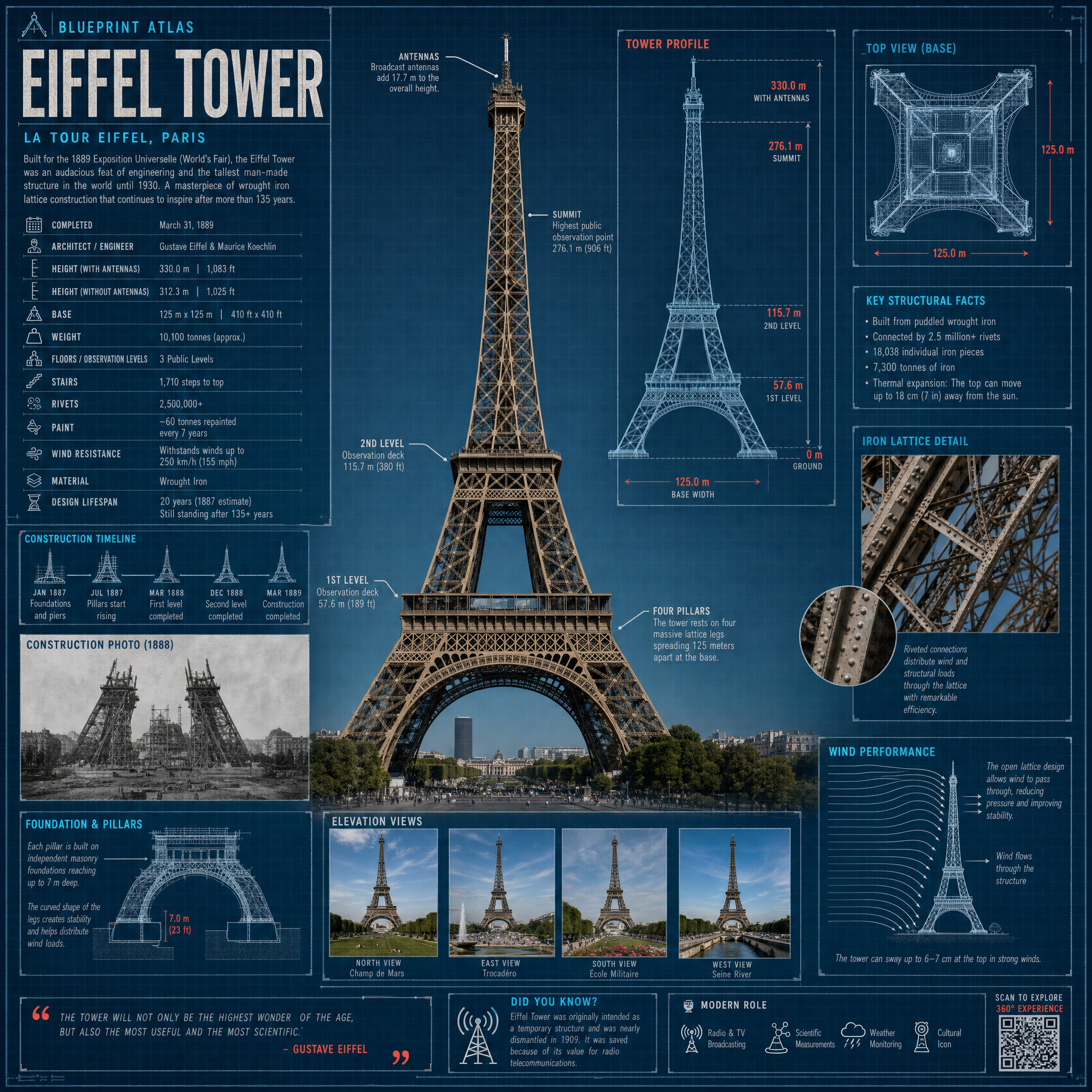
Eiffel Tower
A wrought-iron lattice tower on the Champ de Mars, designed by Gustave Eiffel for the 1889 World Fair. Its pin-jointed truss structure and curved legs distribute wind load gracefully to four cast-iron shoes.
Sheet 002
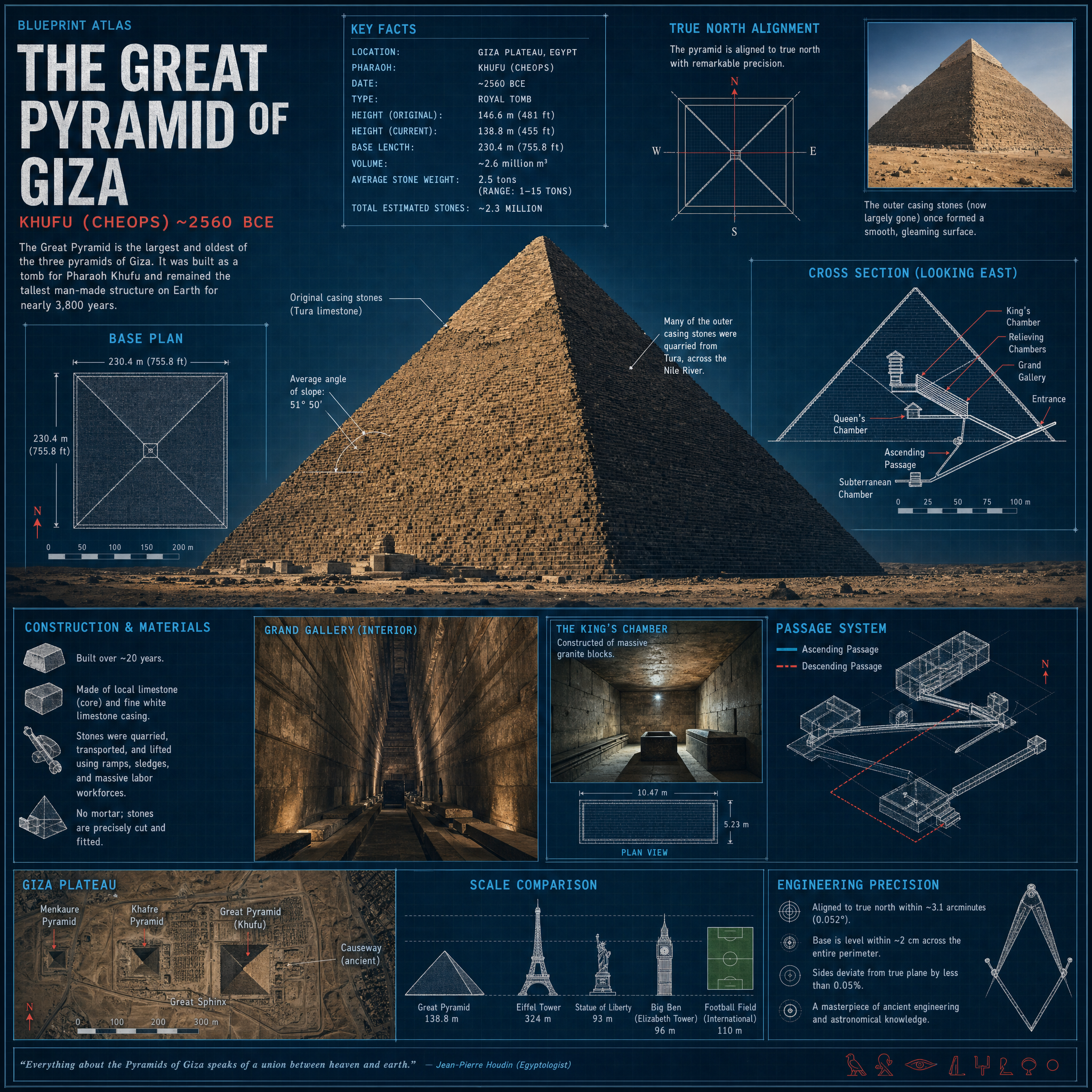
Great Pyramid of Giza
The oldest and largest of the three pyramids in the Giza complex, built as a tomb for Pharaoh Khufu. It was the tallest human-made structure for over 3,800 years and remains a marvel of ancient surveying.
Sheet 003
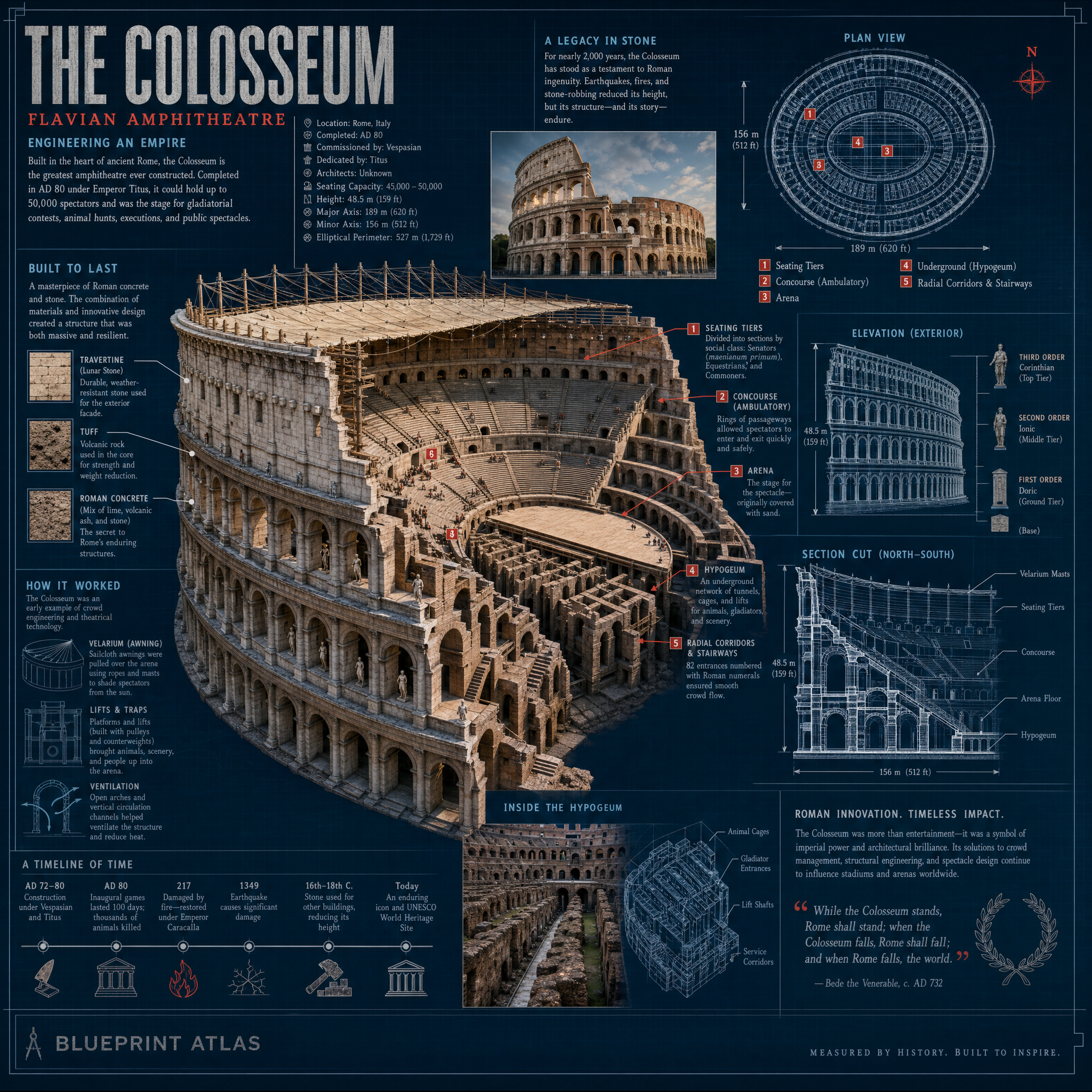
Colosseum
The largest amphitheatre ever built, an elliptical concrete-and-travertine icon of Imperial Rome. Its three tiers of arcades applied the Doric, Ionic, and Corinthian orders in sequence.
Sheet 004
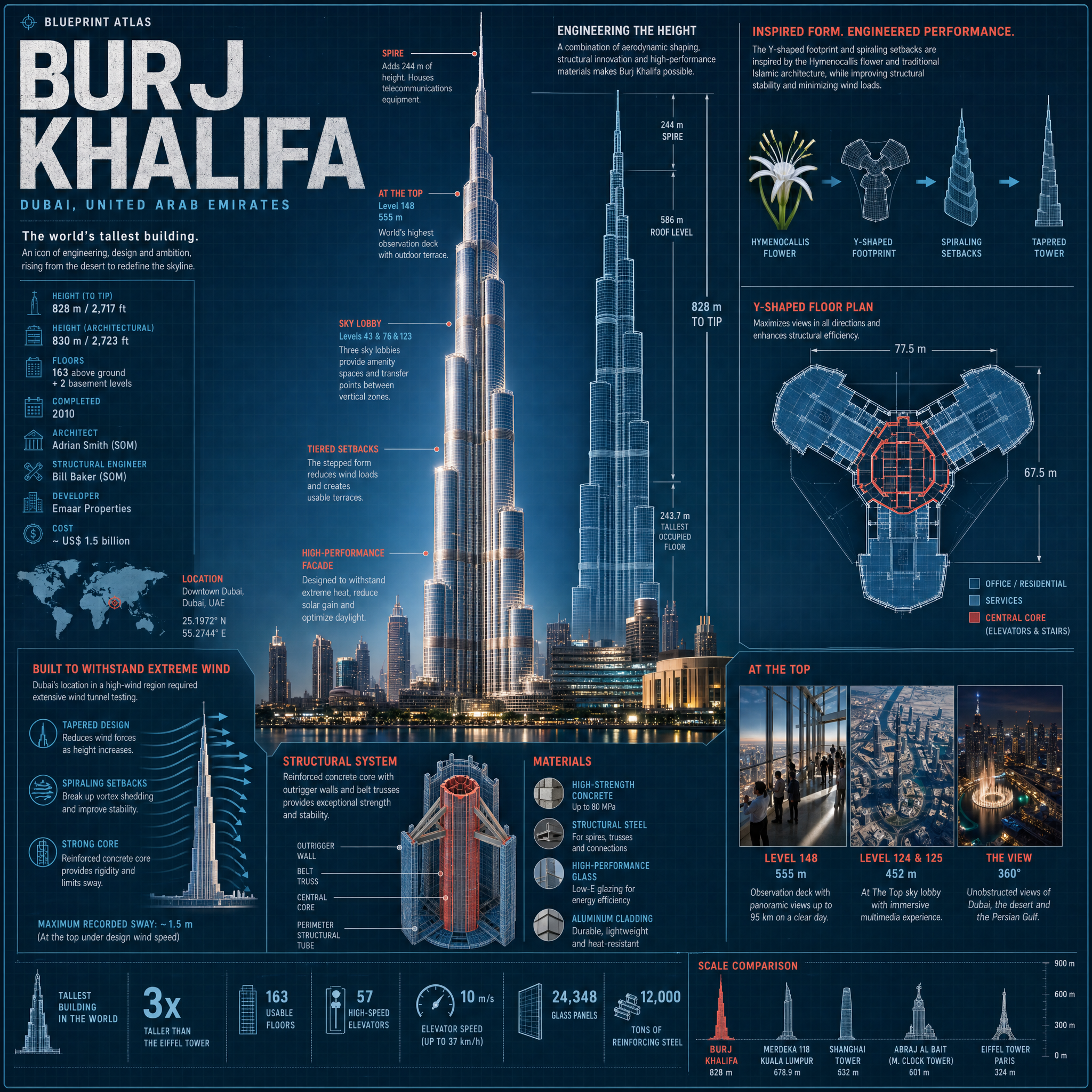
Burj Khalifa
The world’s tallest building, using a buttressed-core structural system and a Y-shaped footprint that resists wind and maximises views over the Dubai skyline.
Sheet 005
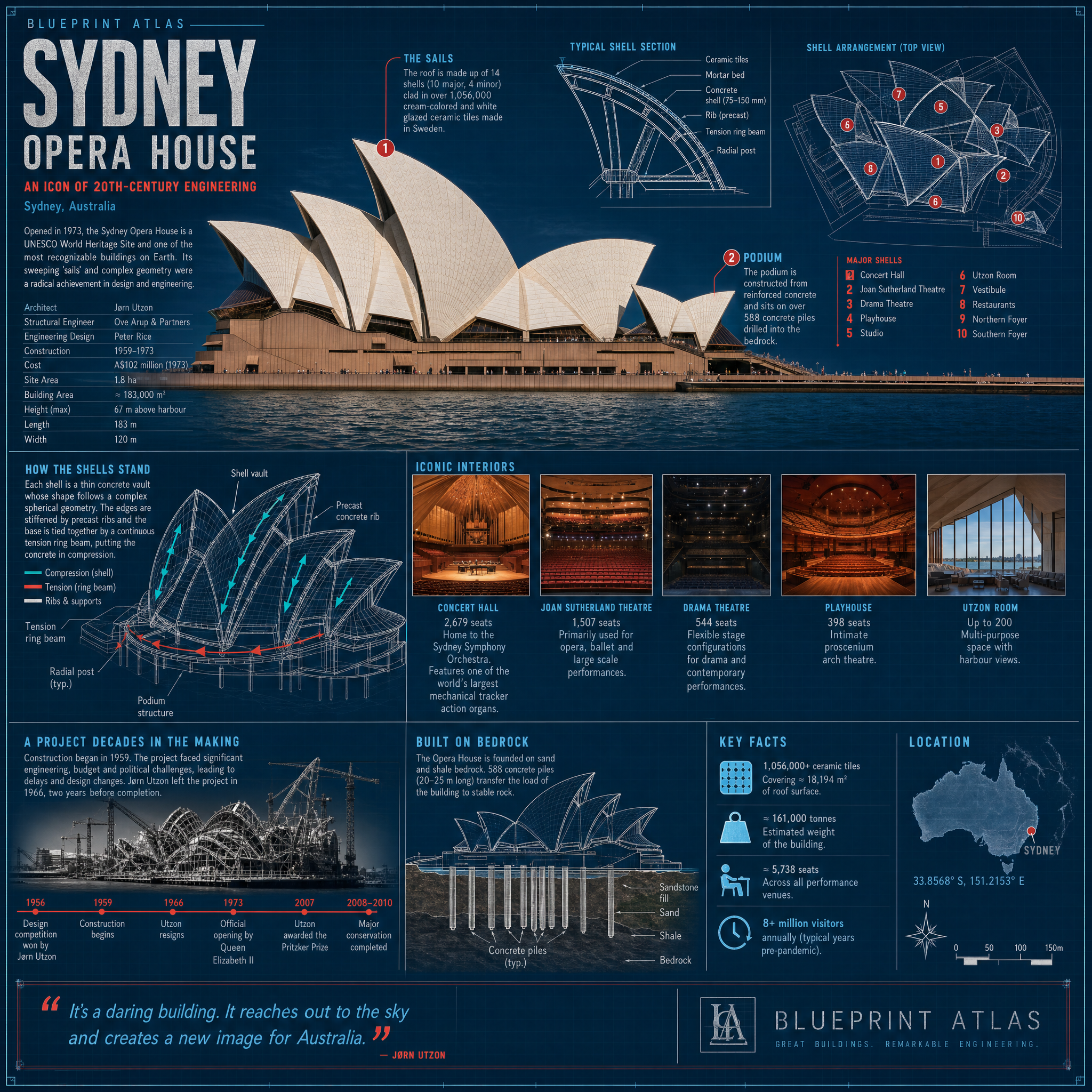
Sydney Opera House
An expressionist masterpiece by Jørn Utzon. Its iconic precast concrete shell roofs are all derived as sections of a single sphere — a geometric breakthrough that made construction possible.
Sheet 006
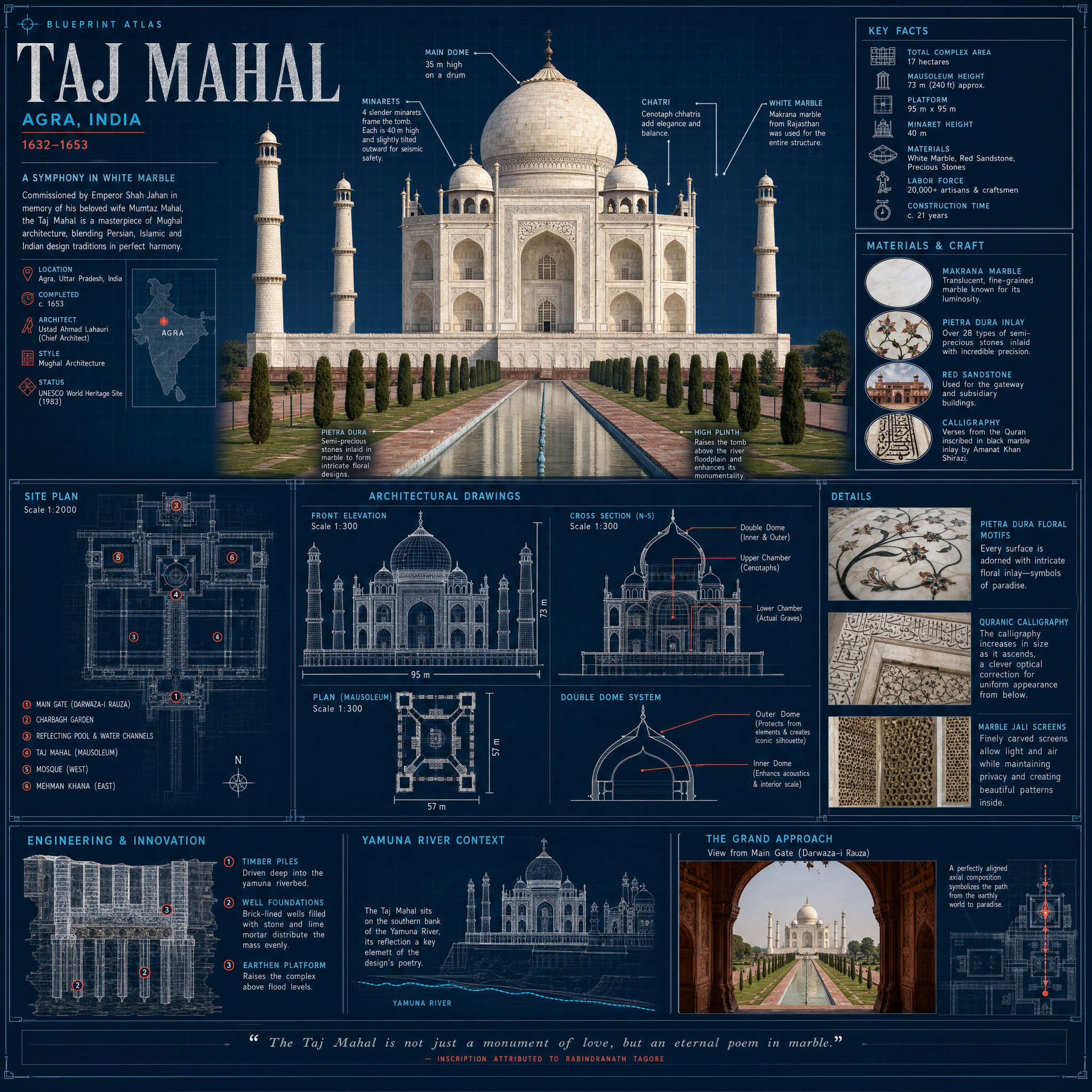
Taj Mahal
An ivory-white marble mausoleum commissioned by Mughal emperor Shah Jahan. Its symmetry, double-shell dome, and pietra dura inlay are among the finest examples of Indo-Islamic architecture.
Sheet 007
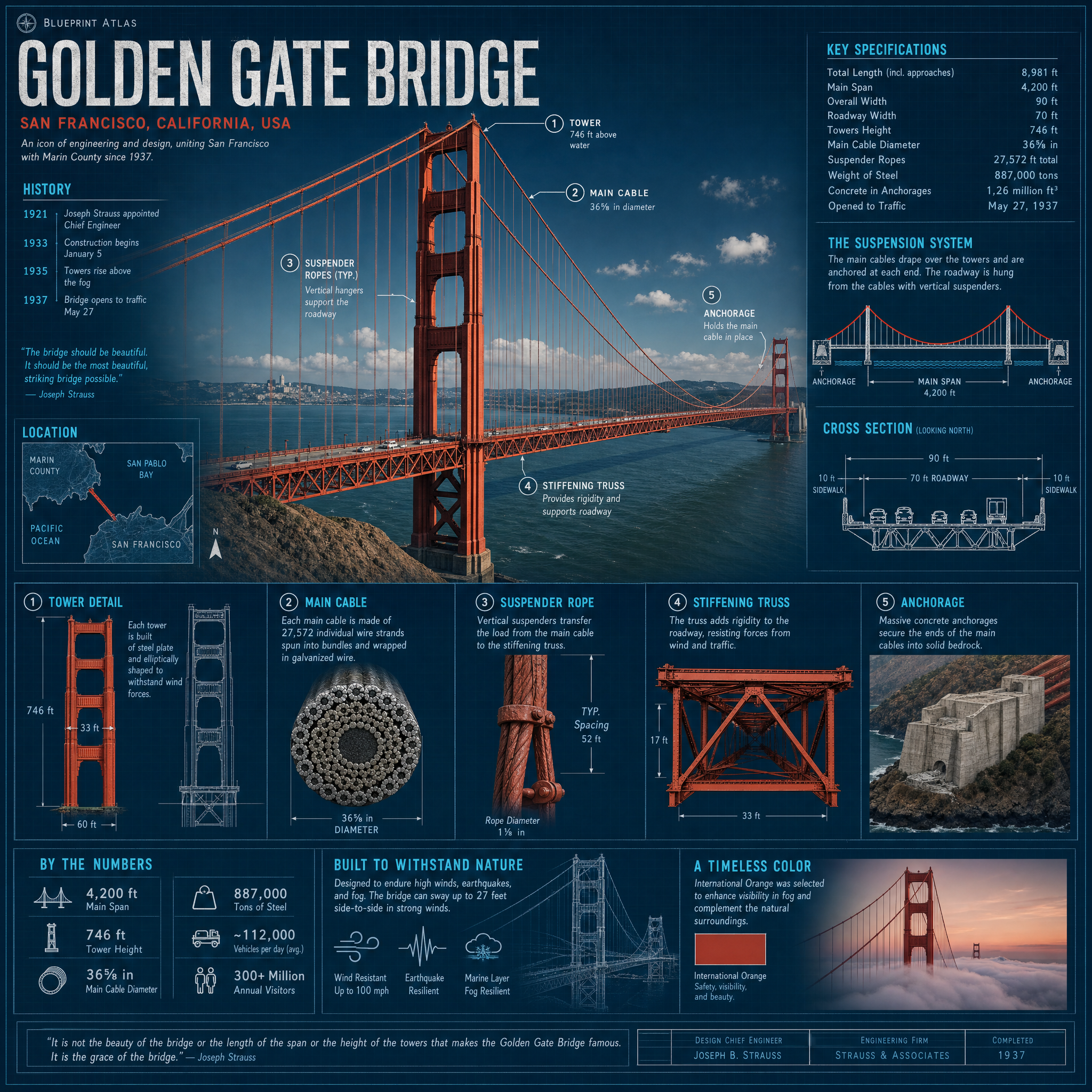
Golden Gate Bridge
A suspension bridge over the Golden Gate strait. Its art deco towers and vermilion paint were chosen to harmonise with natural surroundings and stay visible through coastal fog.
Sheet 008
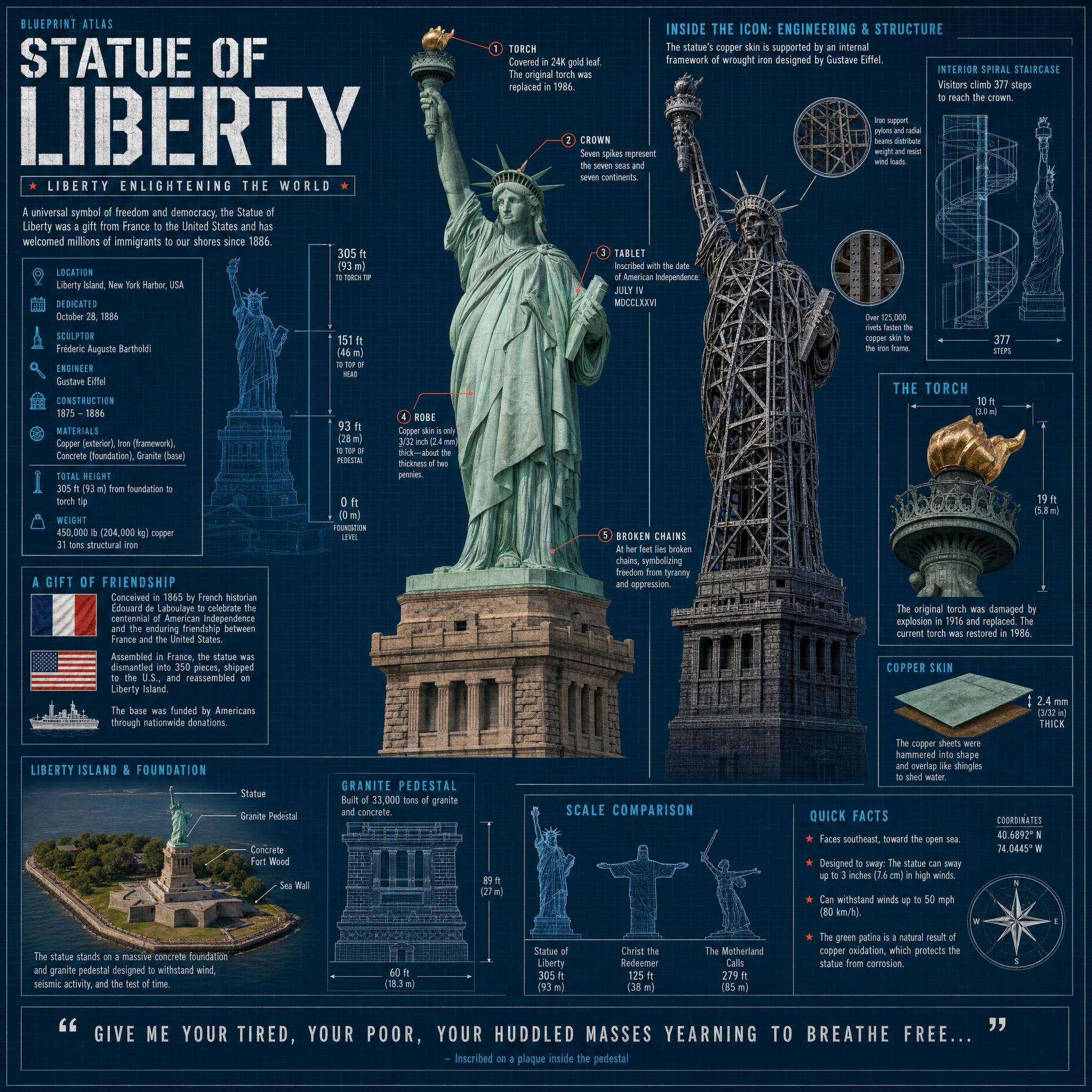
Statue of Liberty
A neoclassical copper statue designed by Bartholdi, with an inner wrought-iron armature by Gustave Eiffel that allows the skin to flex with temperature and wind independently of the frame.
Sheet 009
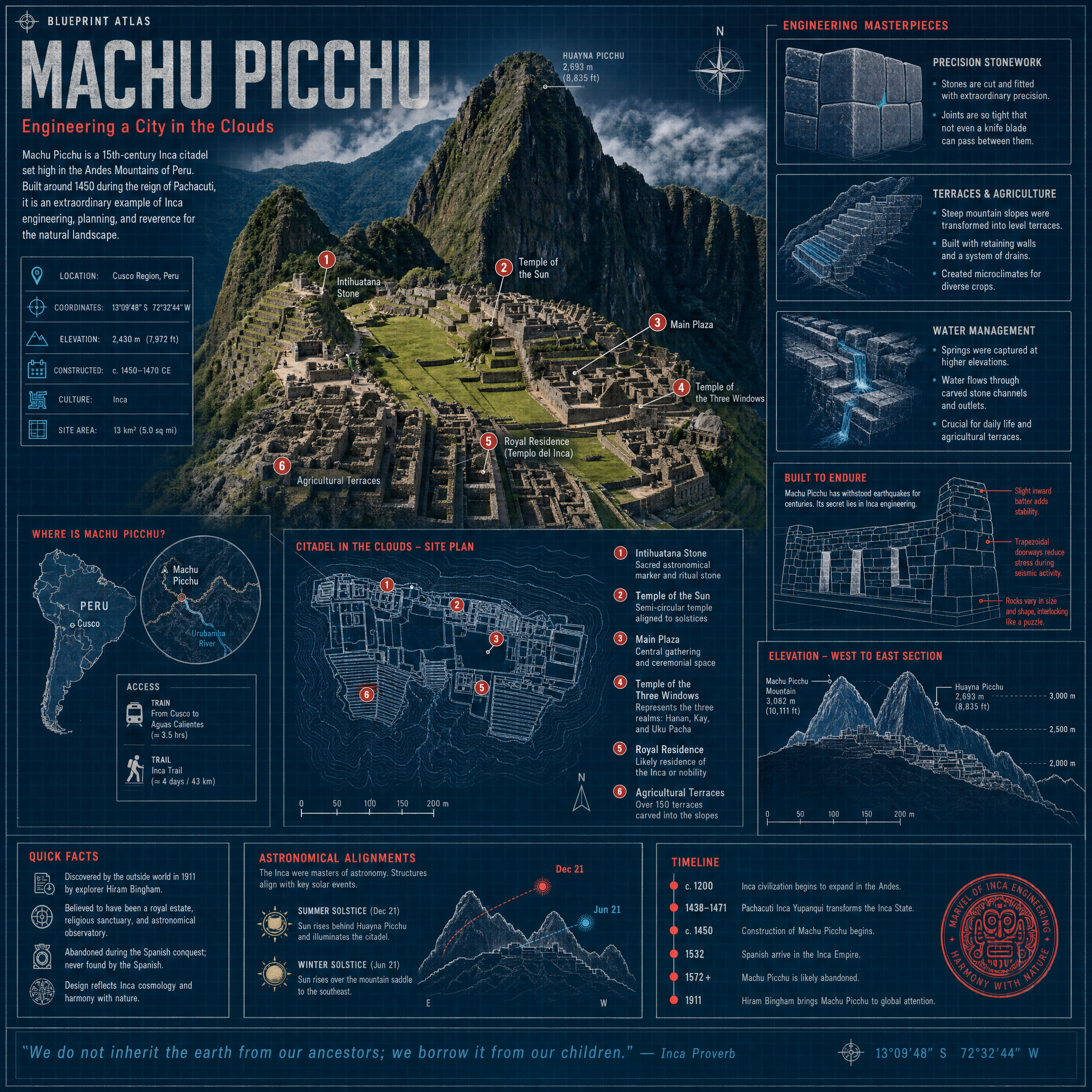
Machu Picchu
A 15th-century Inca citadel set on a mountain ridge above the Sacred Valley. Its dry-stone ashlar walls are fitted so precisely that no mortar is used — an engineering response to seismic activity.
Sheet 010
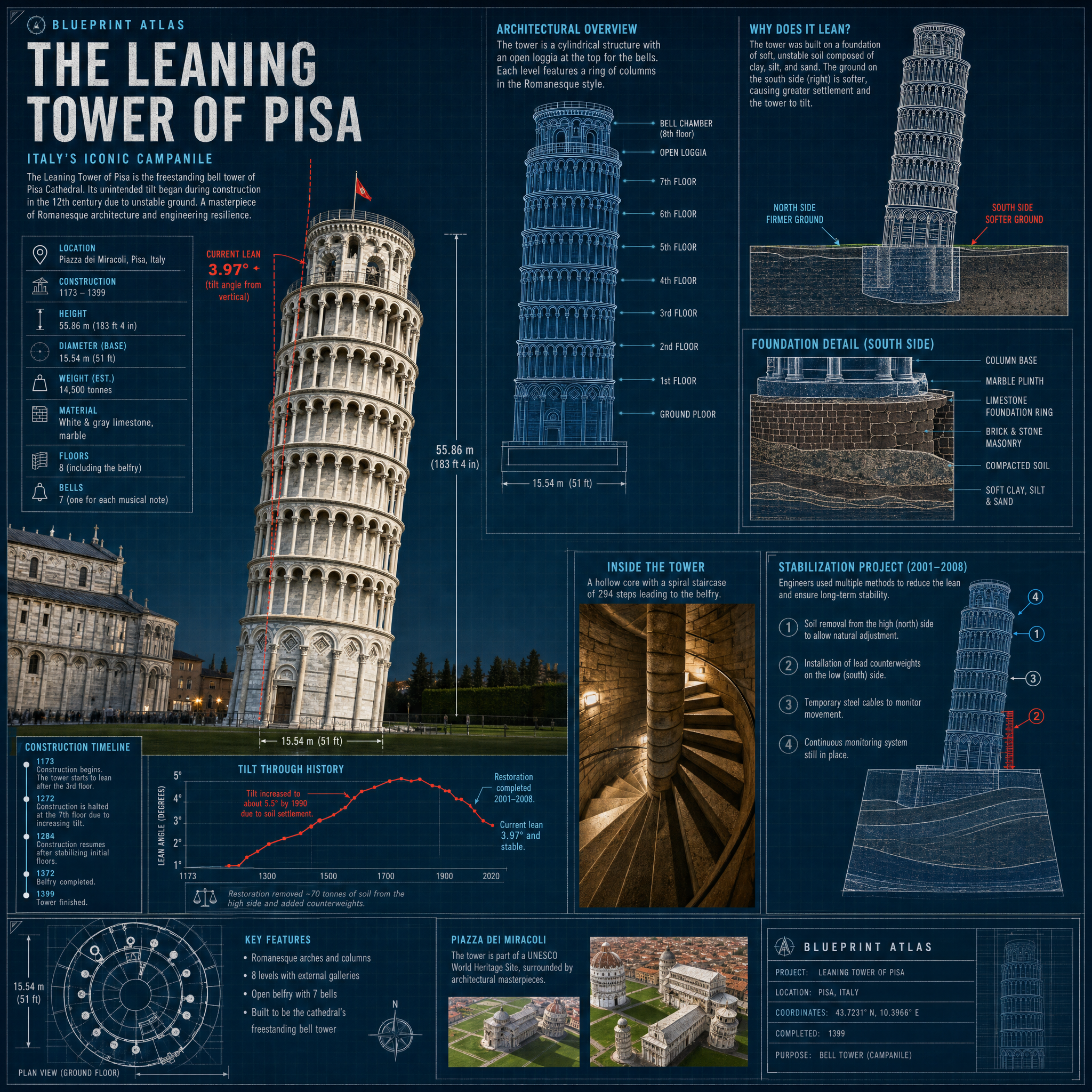
Leaning Tower of Pisa
The bell tower of Pisa’s cathedral, leaning since construction due to soft soil. A late 20th-century stabilisation project reduced the tilt by removing sub-soil from the high side.