Revised 2026
Sheet 001
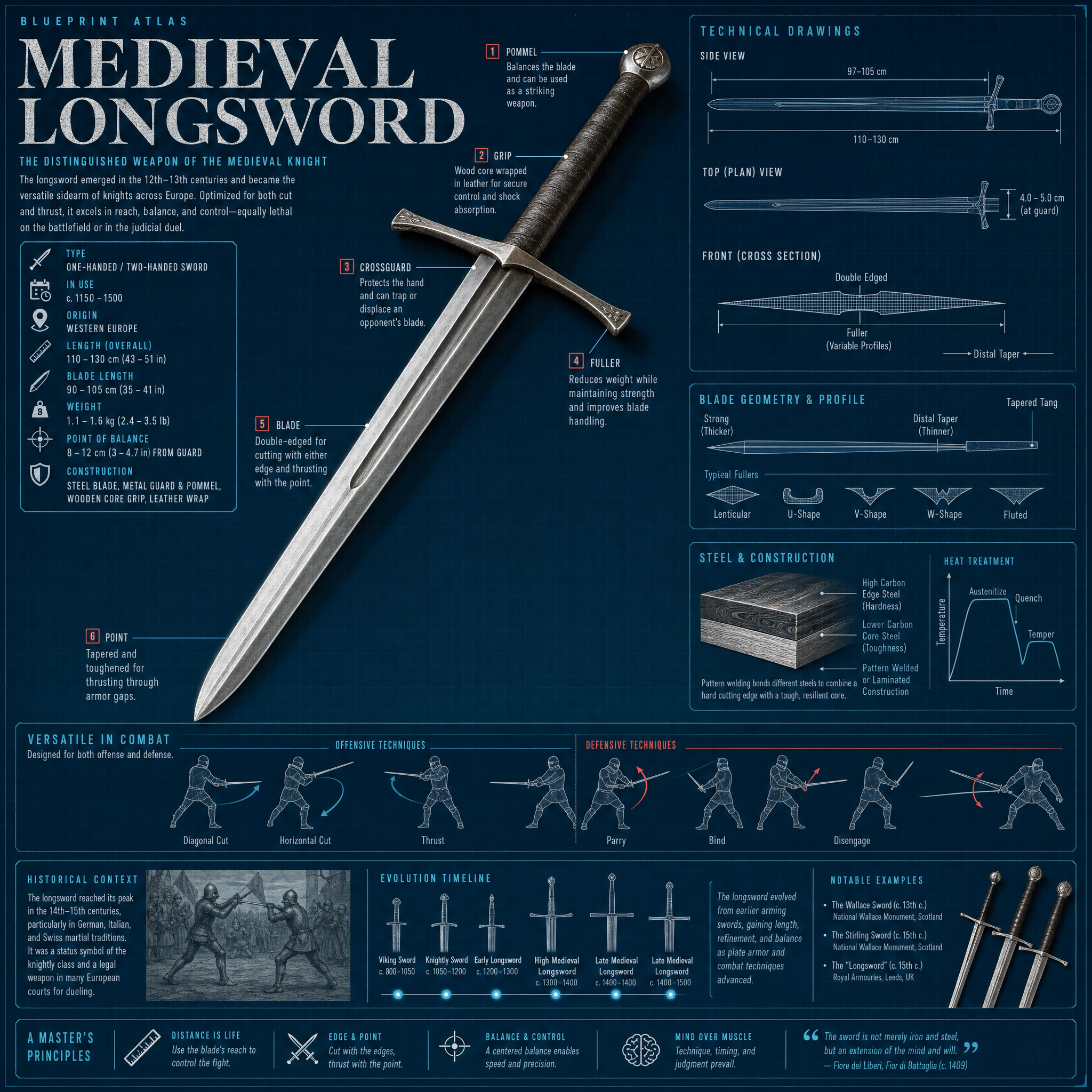
Medieval Longsword
A hilt long enough for two hands, a tapered double-edged blade, a pommel counter-weighted to keep the balance close to the grip. Treatises by Liechtenauer and Fiore describe every cut and thrust the weapon affords.
Sheet 002
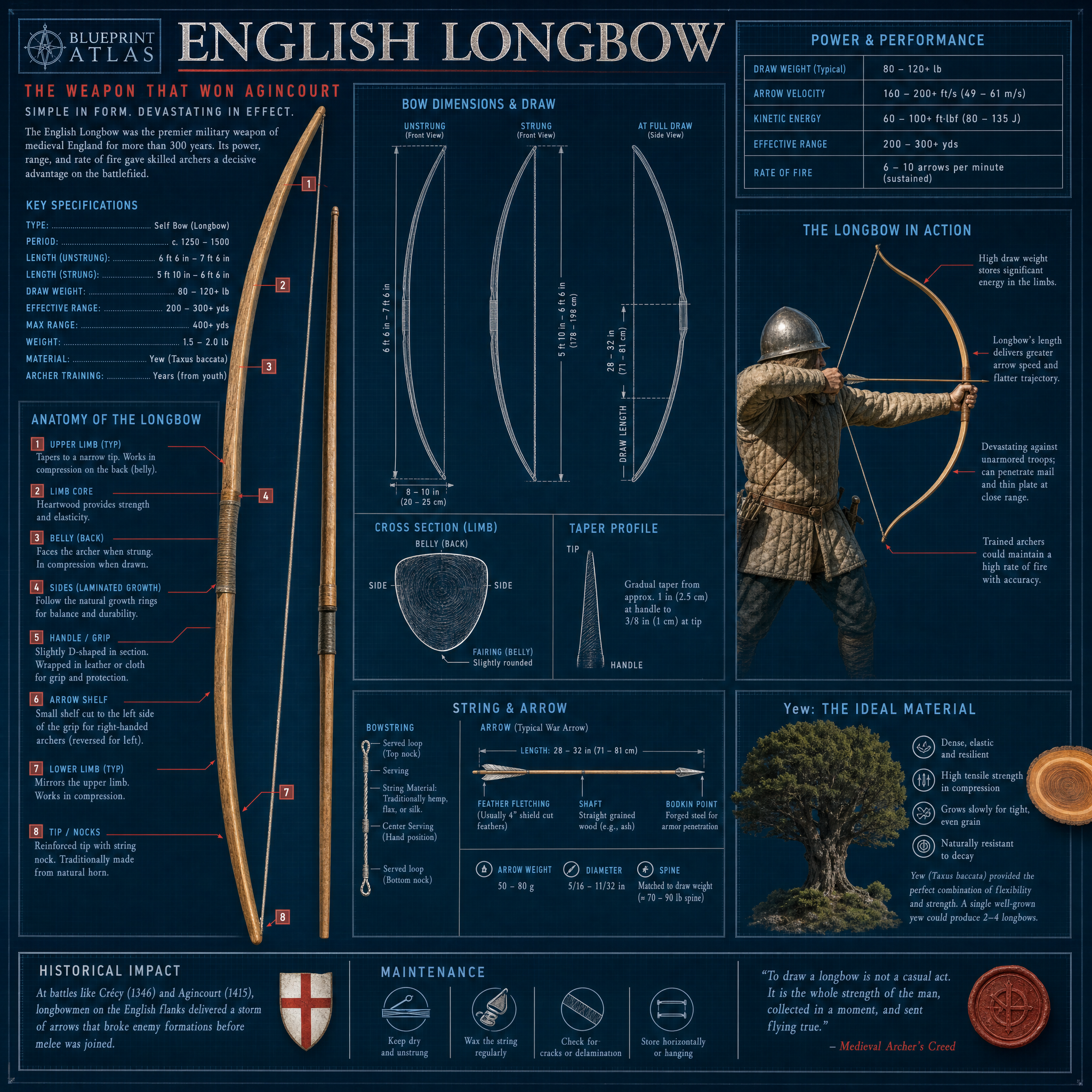
English Longbow
A single stave of yew with the natural heartwood/sapwood layering left intact — the sapwood stretches on the back, the heartwood compresses on the belly. A lifetime of training left archers with visibly deformed shoulders.
Sheet 003
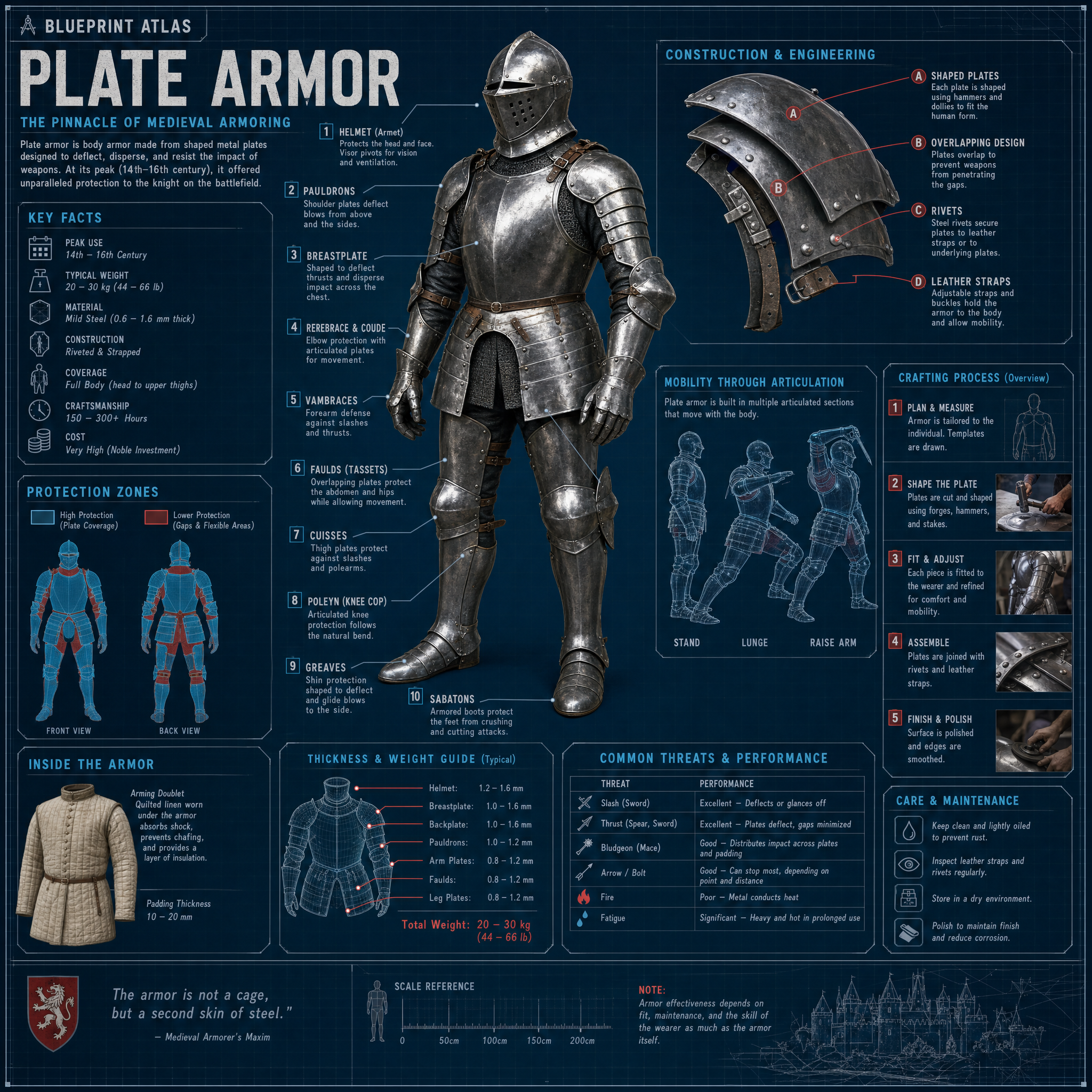
Plate Armor
Curved, differentially hardened plates deflect weapons rather than absorb them. Weight is distributed across the body, not hung from the shoulders — a trained knight could run, climb, and mount a horse unaided.
Sheet 004
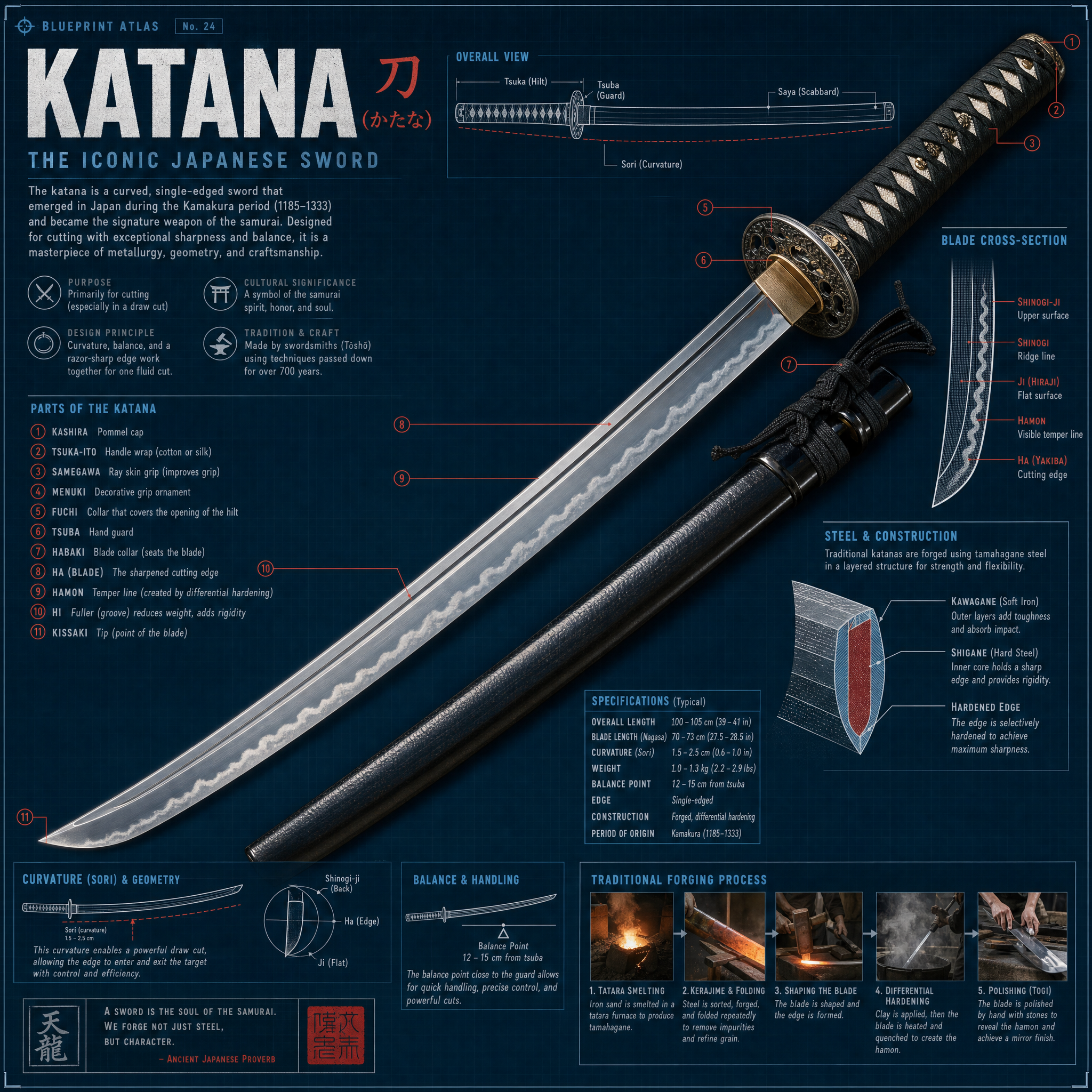
Katana
Clay-differential hardening draws a sharp boundary — the hamon — between a hard martensitic edge and a tough pearlitic spine. Each swordsmith’s hamon is a signature; each folded bloom of tamahagane, an argument about carbon.
Sheet 005
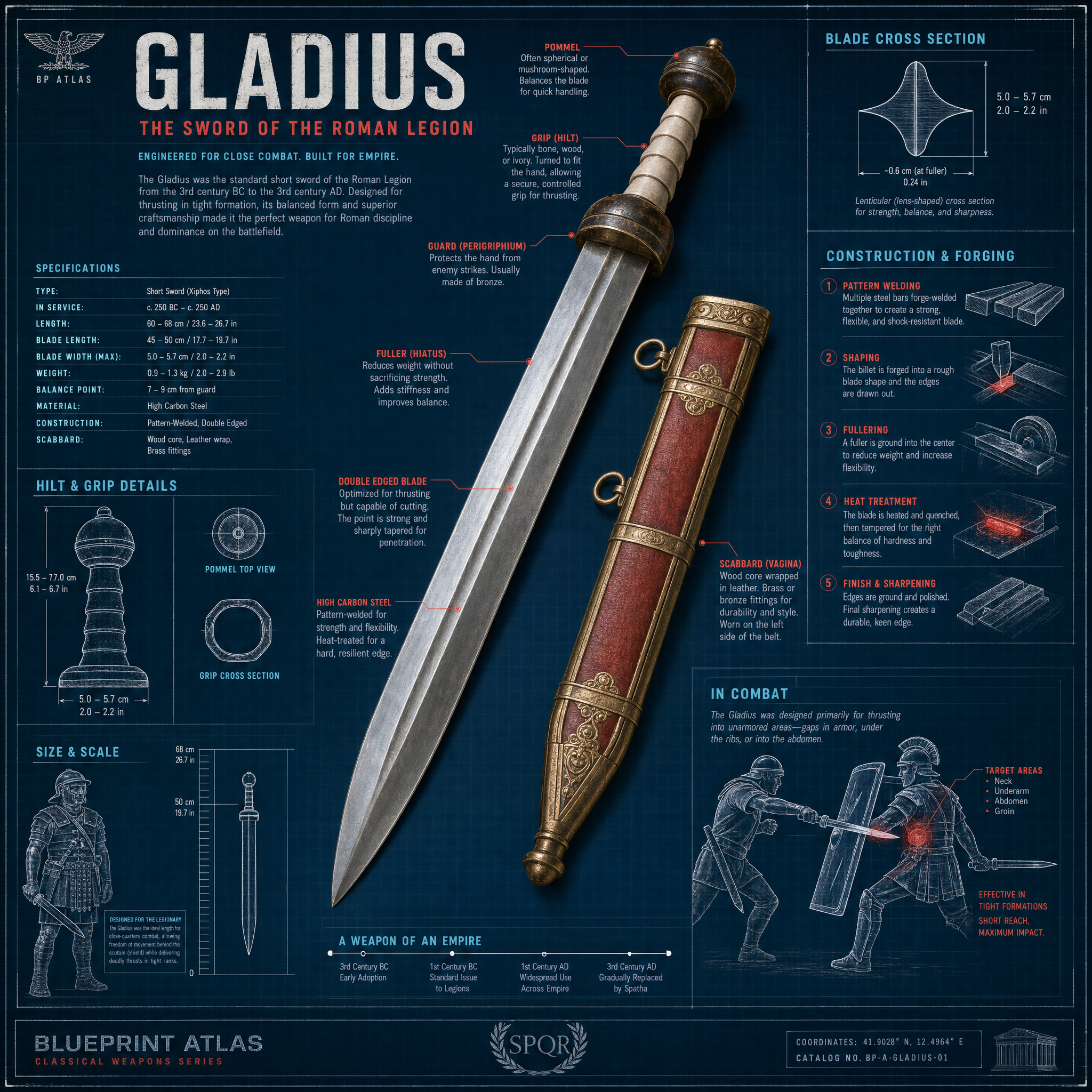
Roman Gladius
Short, stiff, point-first. Roman close-quarters doctrine relied on disciplined formations of shielded infantry stabbing in unison — a thrusting weapon was simpler to learn, kept soldiers behind their shield line, and proved devastatingly effective.
Sheet 006
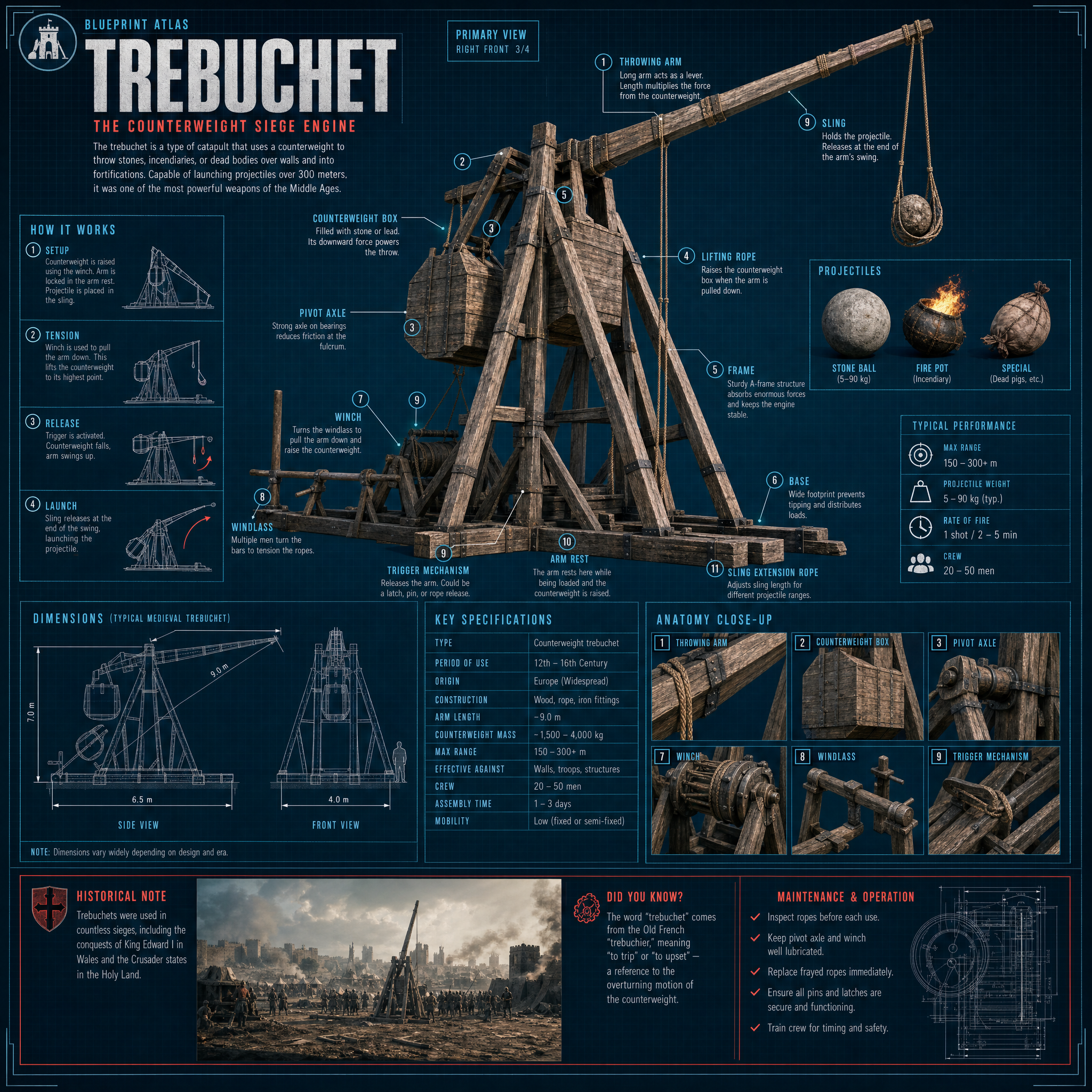
Trebuchet
Gravitational potential energy of a massive counterweight, traded for kinetic energy of a stone via a hinged arm and sling. A hundred and fifty years later, cannon would make the trebuchet obsolete overnight.
Sheet 007
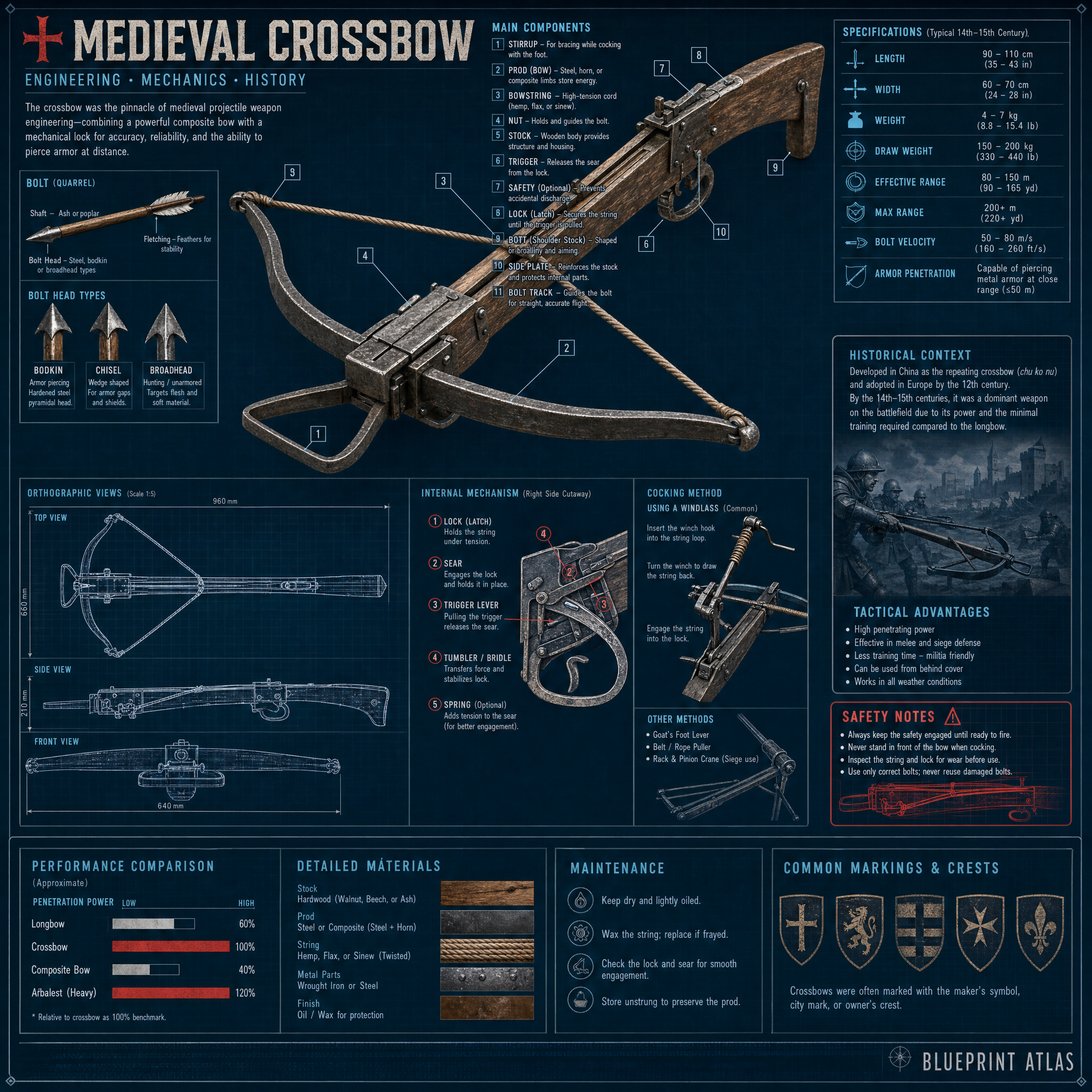
Medieval Crossbow
A rotating “nut” stores the drawn string’s force until a light trigger pull releases thousands of newtons. Papal councils tried — unsuccessfully — to ban the weapon, precisely because it made conscripts the equal of lifelong longbowmen.
Sheet 008
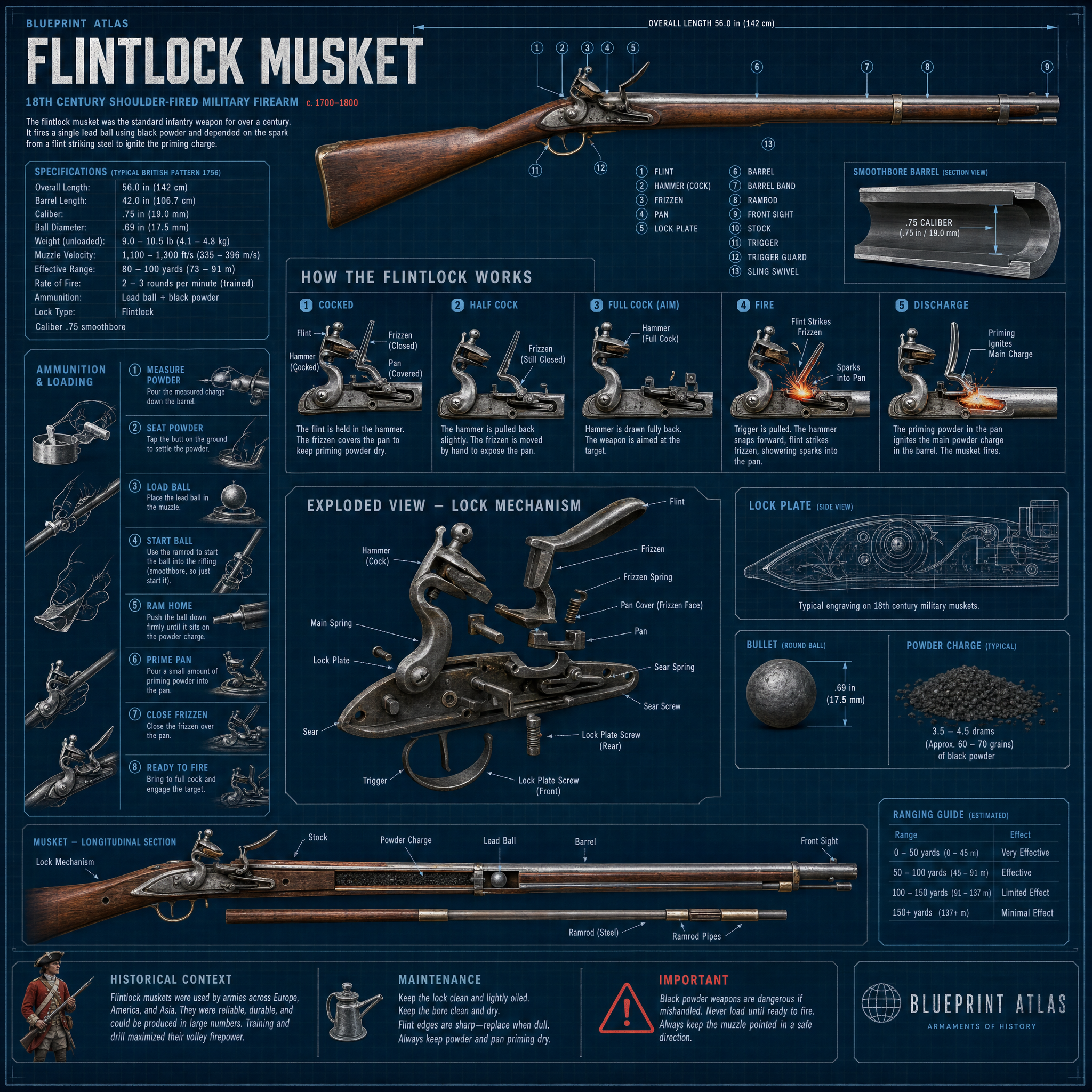
Flintlock Musket
Flint strikes frizzen, sparks fall into the priming pan, flame passes through the touch hole and lights the main charge. A century of linear tactics — volleys, bayonets, the hollow square — was built around this one mechanism.
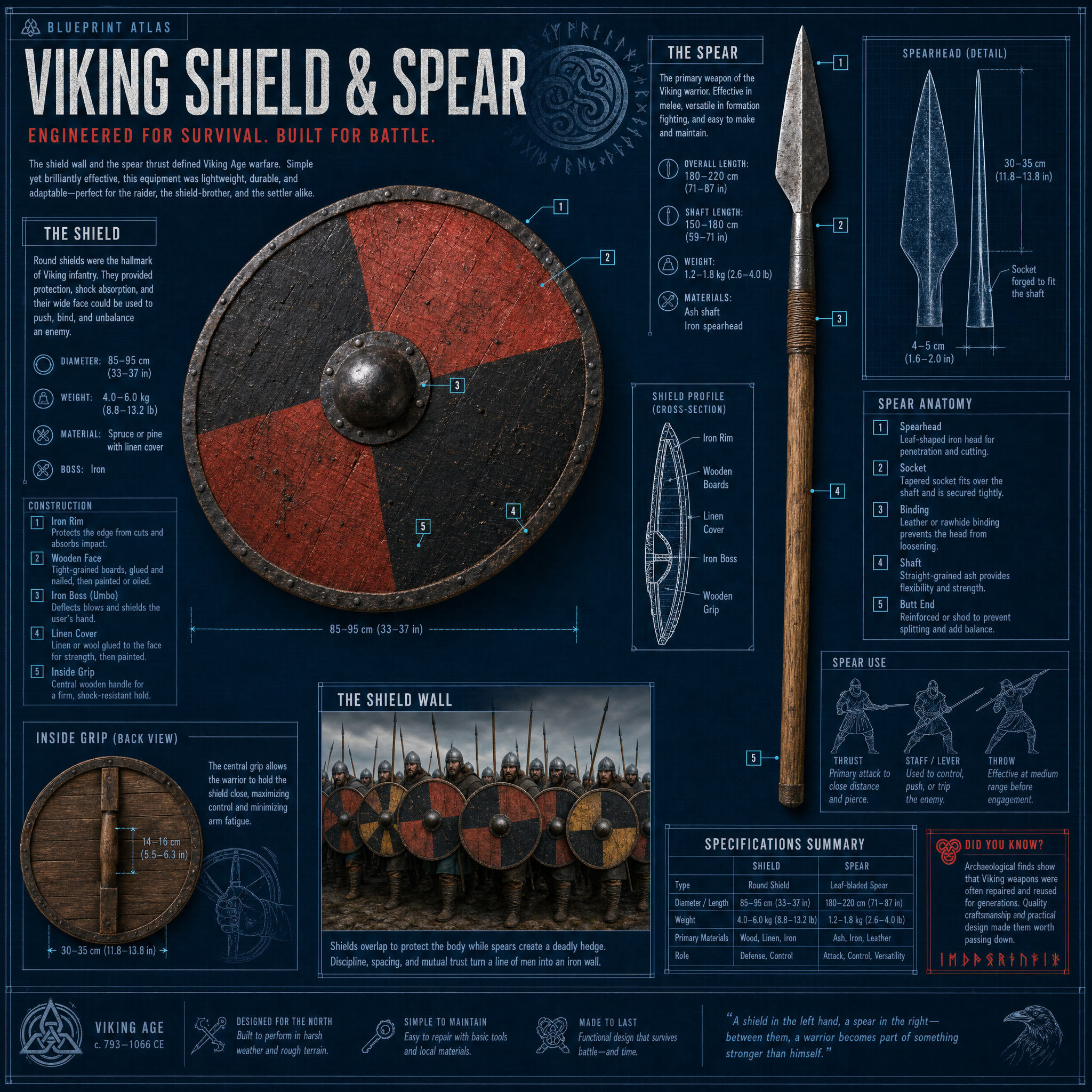
Sheet 009
Viking Shield & Spear
Legends fixate on axes and swords; the typical free Norseman carried a round plank shield and a broad-headed spear. Linked in a skjaldborg — shield wall — they were the main building block of Viking Age battle.
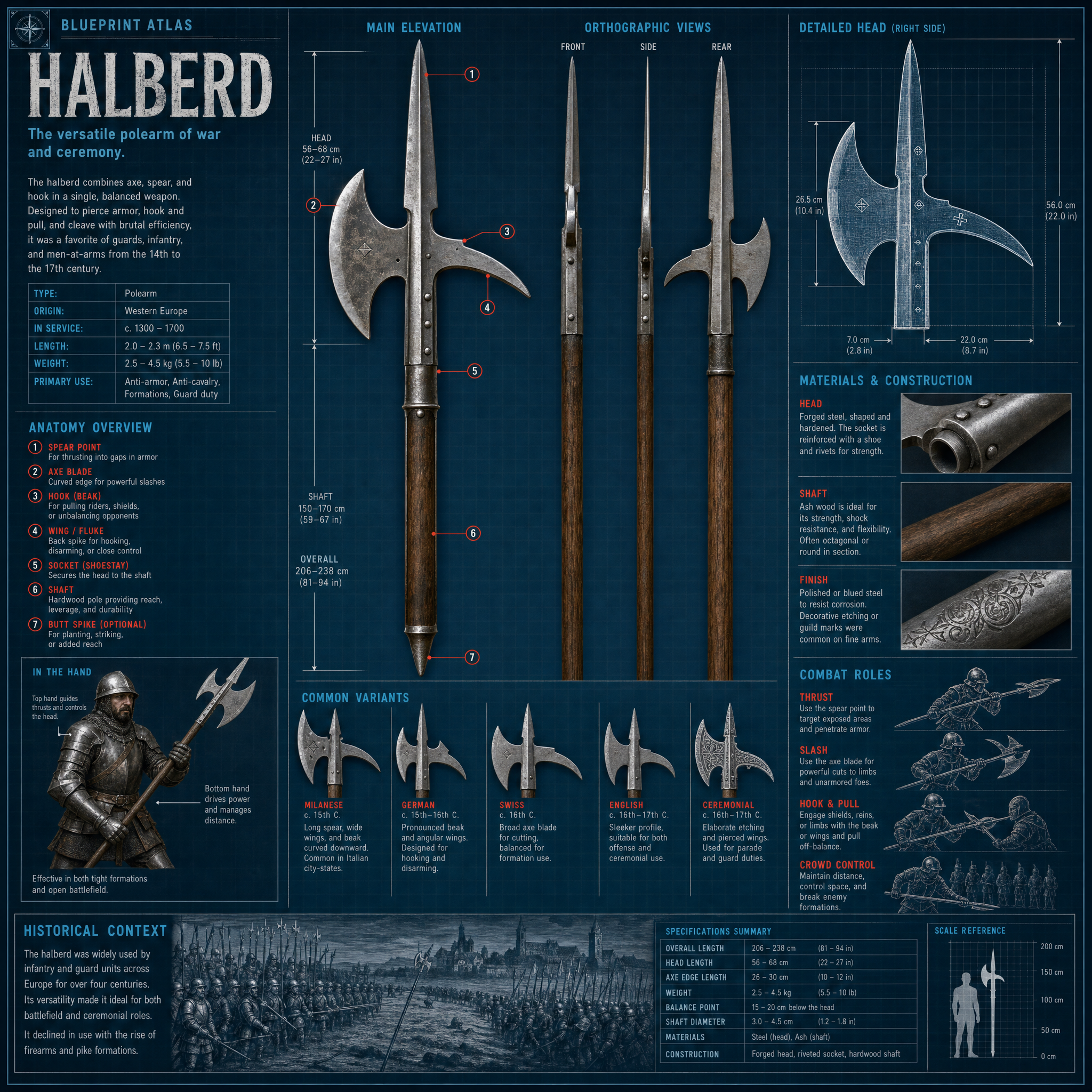
Sheet 010
Halberd
Three weapons in one: the spike thrusts, the axe chops, the rear beak hooks knights off their horses. Swiss confederate halberdiers defeated cavalry for two centuries, and today the Swiss Guard still carries one.