Revised 2026
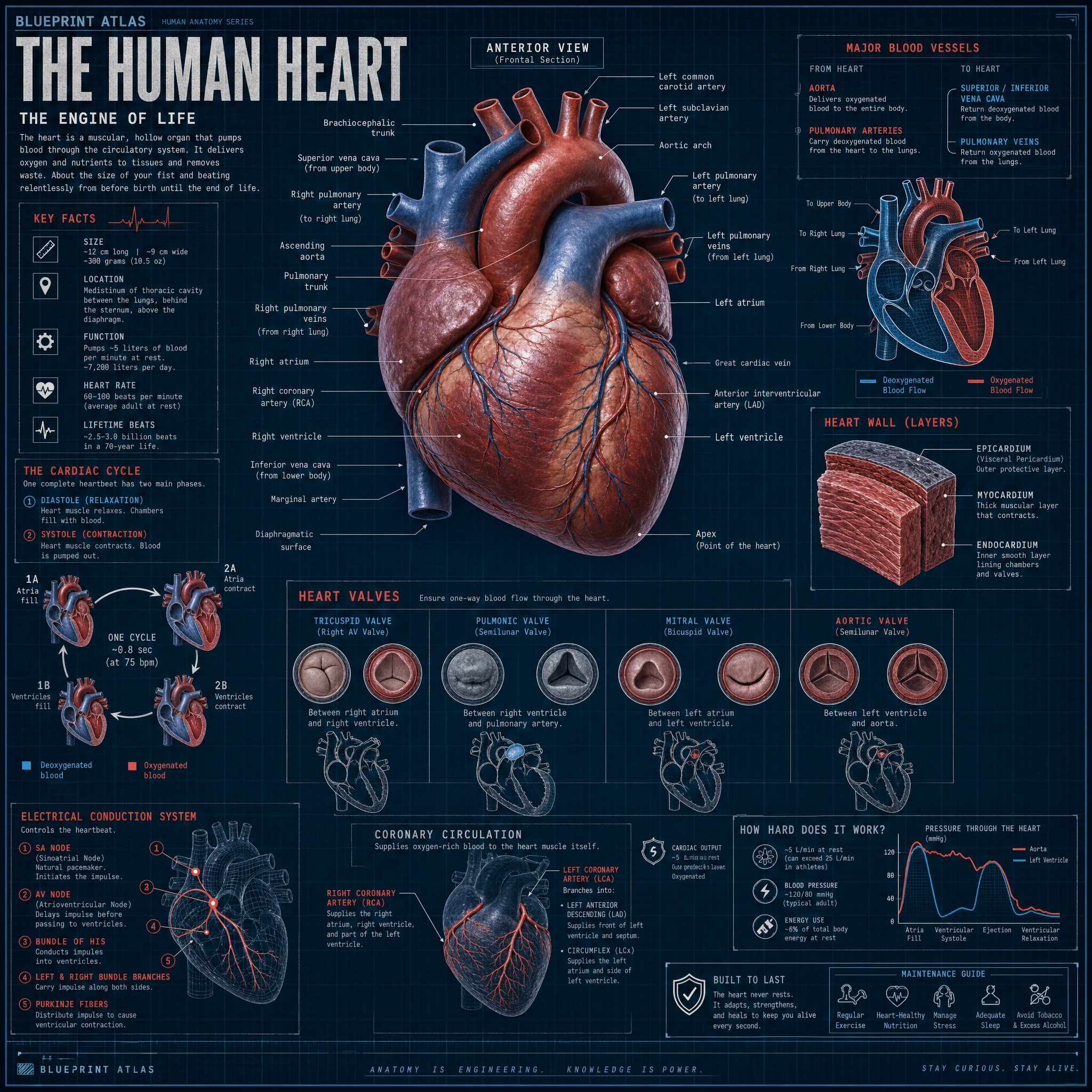
Sheet 001
Human Heart
A fist-sized muscular pump that drives pulmonary and systemic circulation. Its four chambers, four valves, and SA-node pacemaker keep blood moving every second of life.
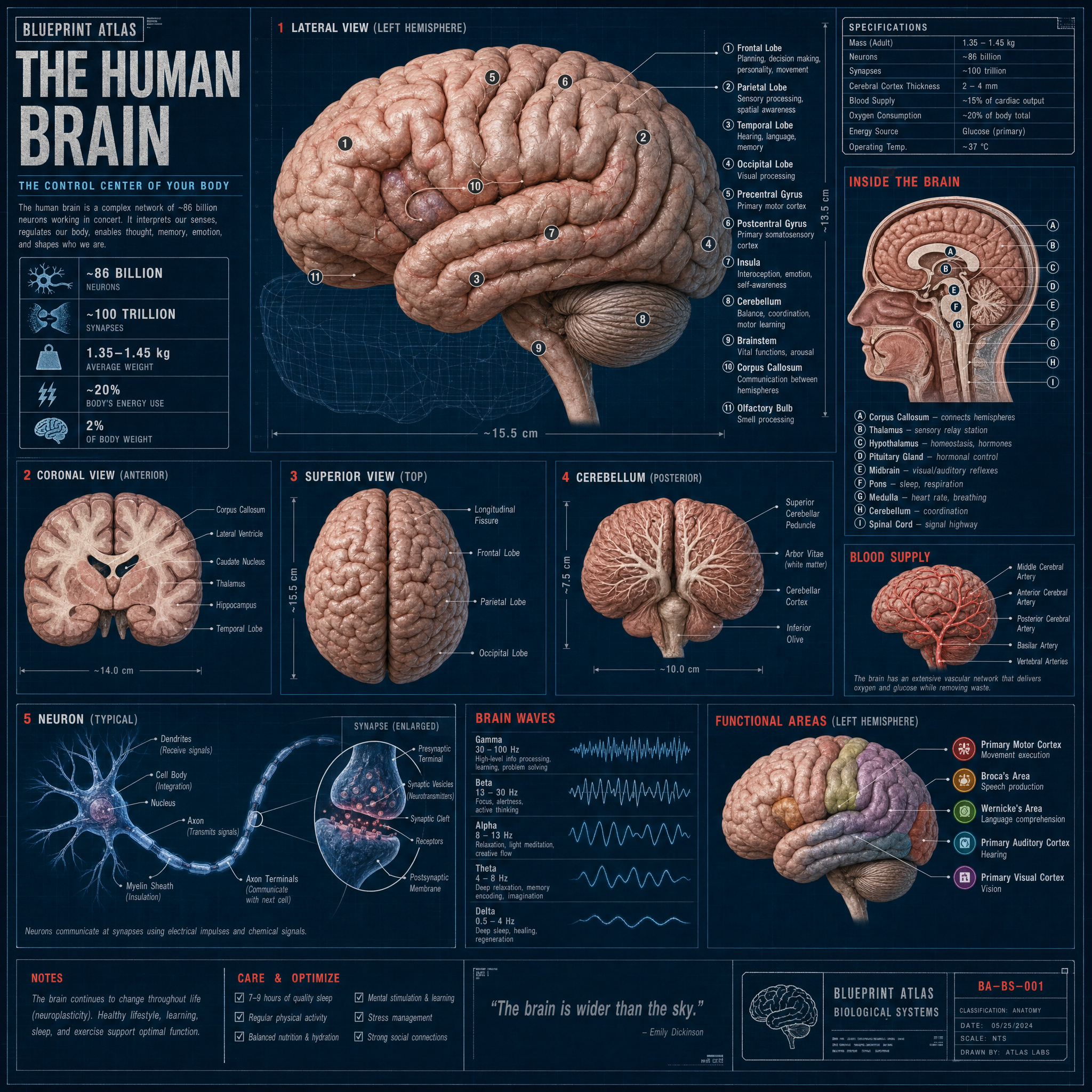
Sheet 002
Human Brain
The most complex organ known — 86 billion neurons wired into cortex, cerebellum, and brainstem. It processes sensation, memory, language, and every voluntary act.
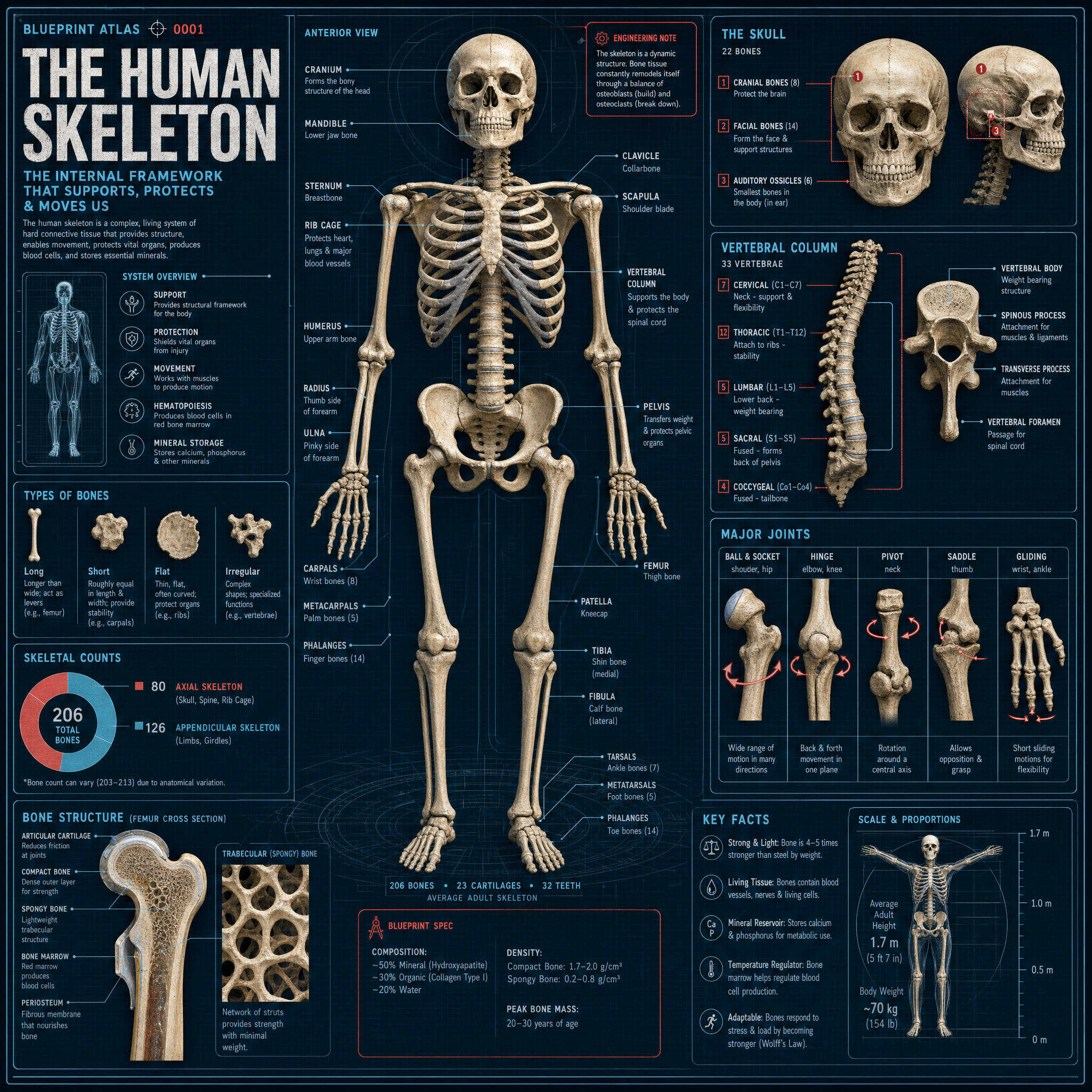
Sheet 003
Human Skeleton
The calcified scaffold that supports, protects, and levers the body. Axial and appendicular divisions, 360-plus joints, and bone marrow that makes new blood every day.
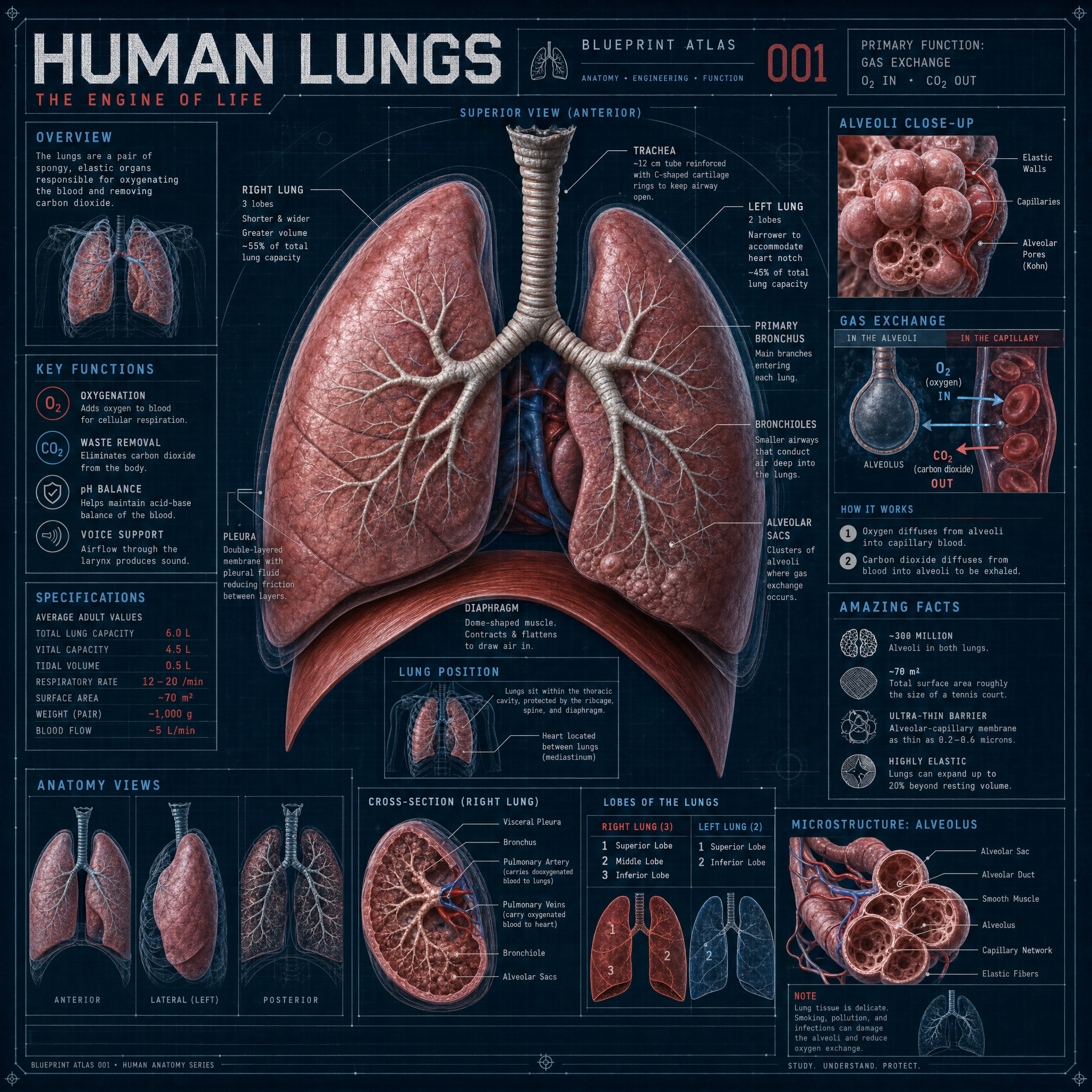
Sheet 004
Human Lungs
Two spongy lobed organs that oxygenate blood through 300 million alveoli. Their combined gas-exchange surface, spread flat, would cover half a tennis court.
Sheet 005
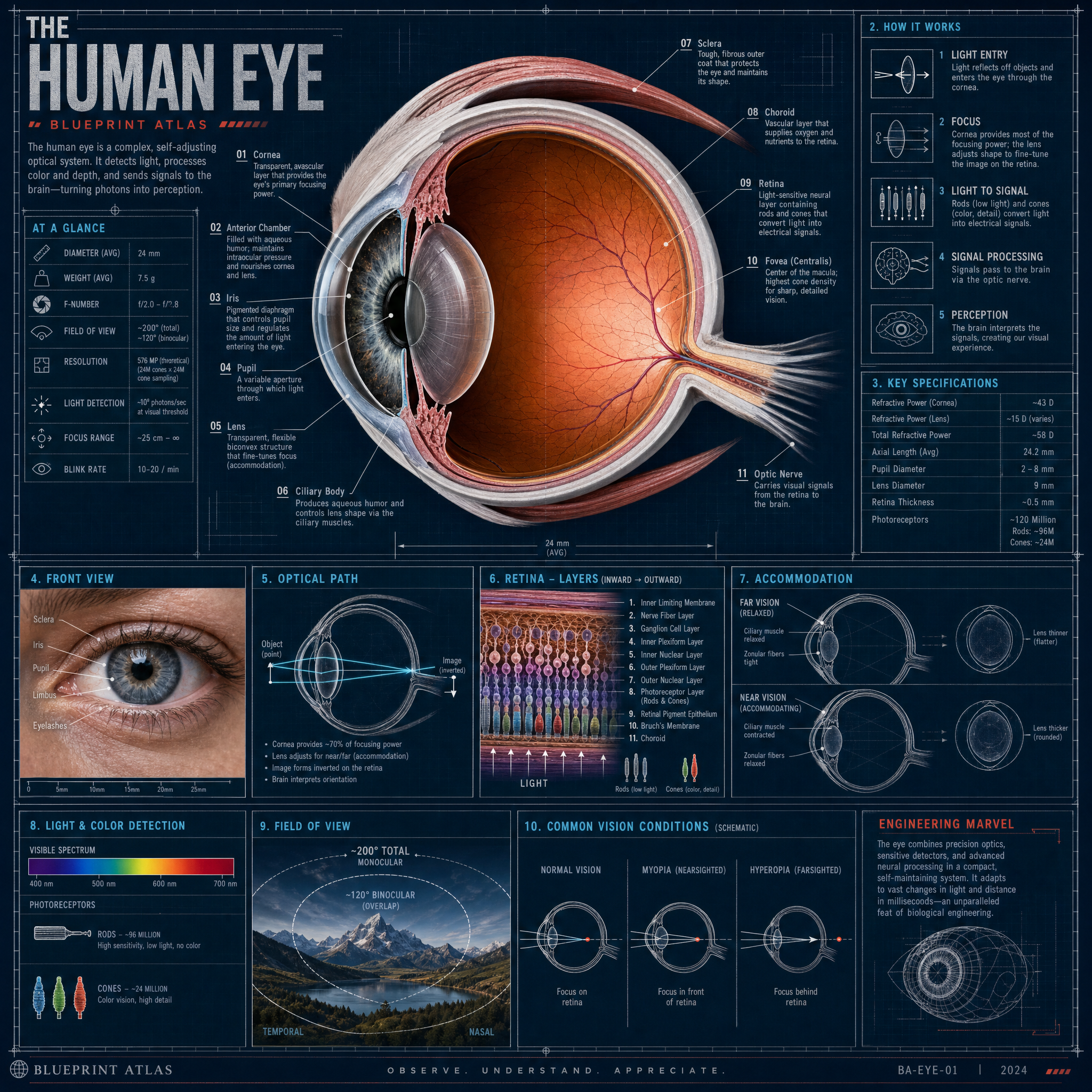
Human Eye
A living camera with an autofocus lens, variable aperture, and a curved retina wired directly to the visual cortex. 126 million photoreceptors sample the world 60+ times a second.
Sheet 006
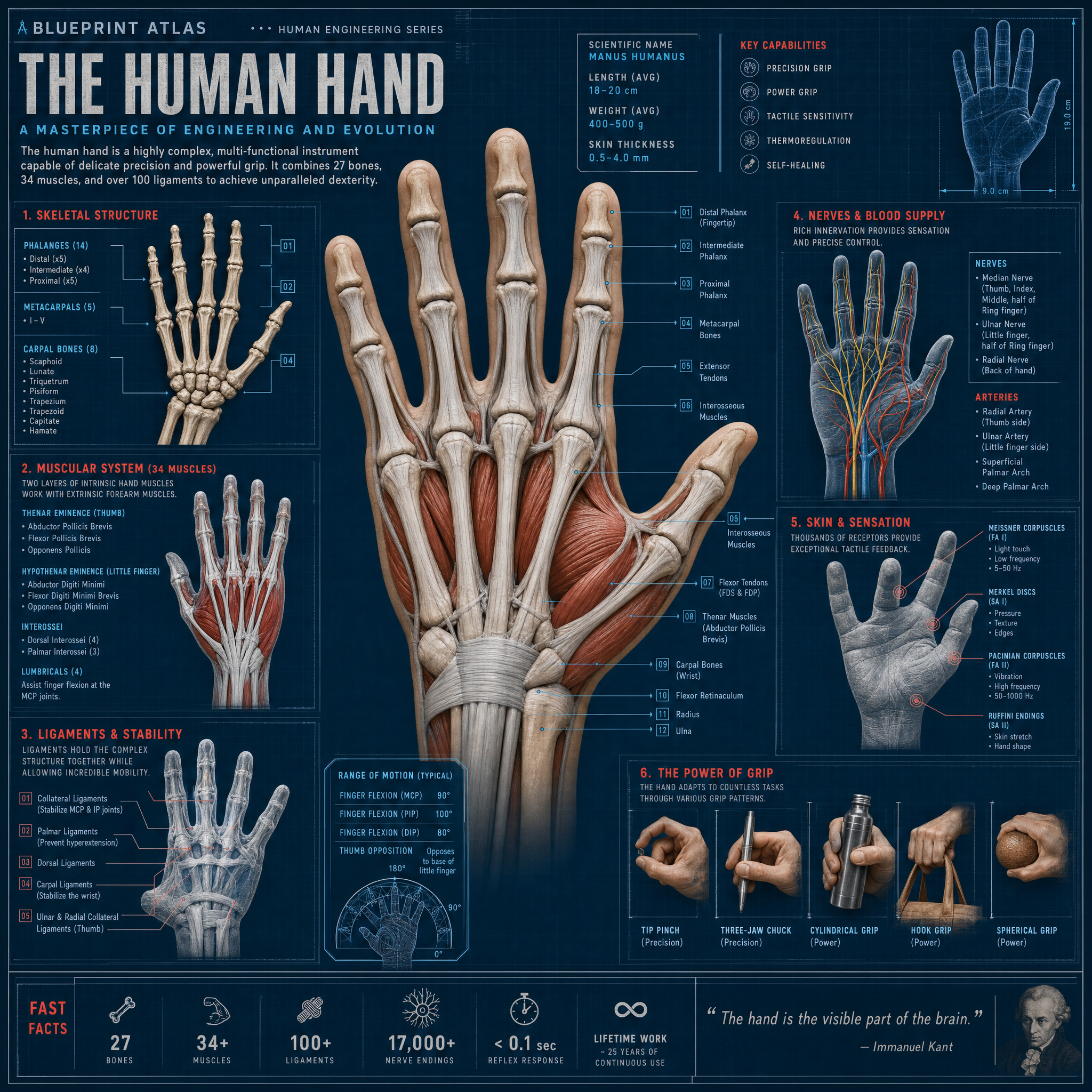
Human Hand
The evolutionary marvel that made tool use possible. 27 bones and 34 muscles, all coordinated by the motor cortex, deliver both power grip and micrometer-level precision.
Sheet 007
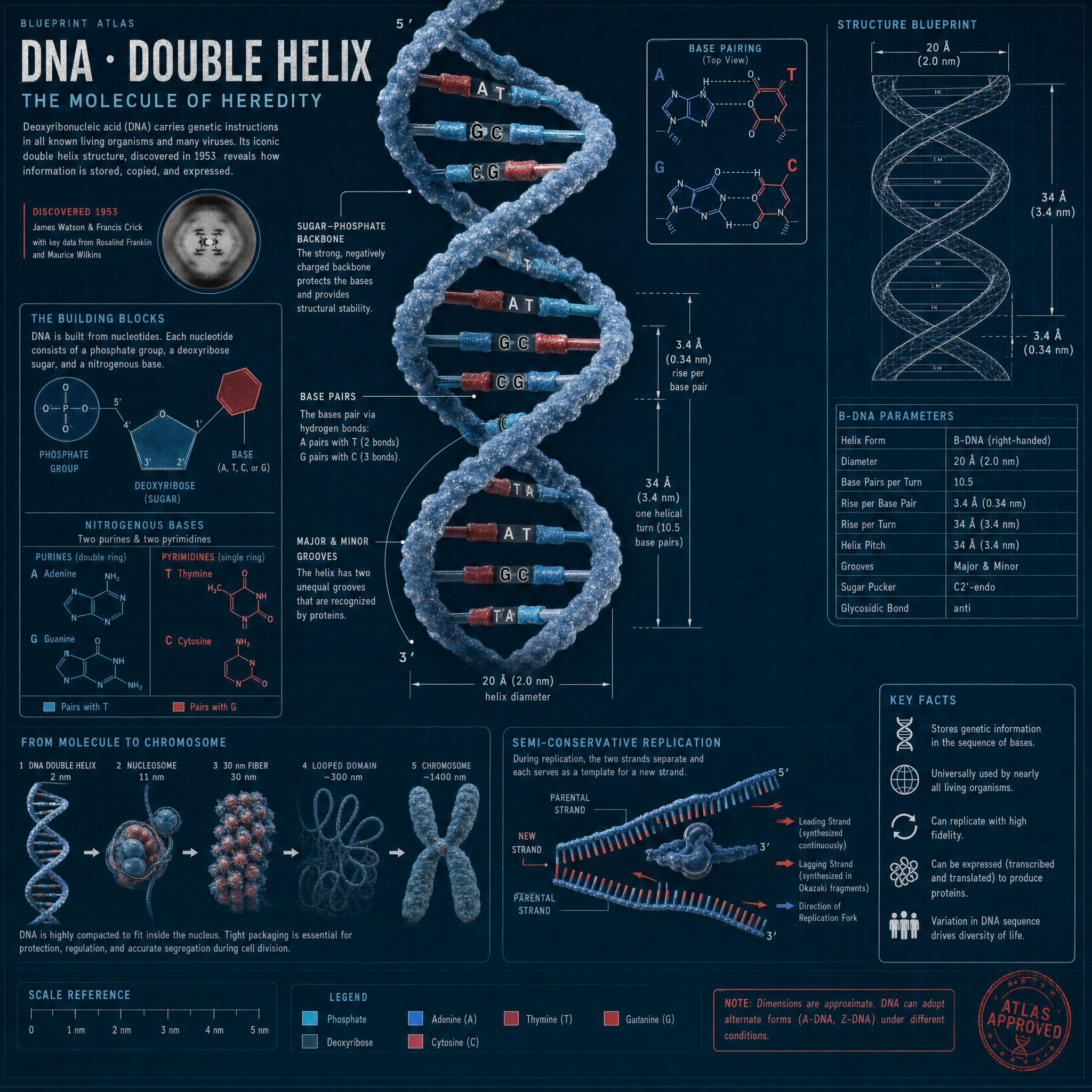
DNA · Double Helix
A 2-metre coiled polymer inside every cell. Four letters — A, T, G, C — paired along a sugar-phosphate backbone encode the instructions for building and running a human.
Sheet 008
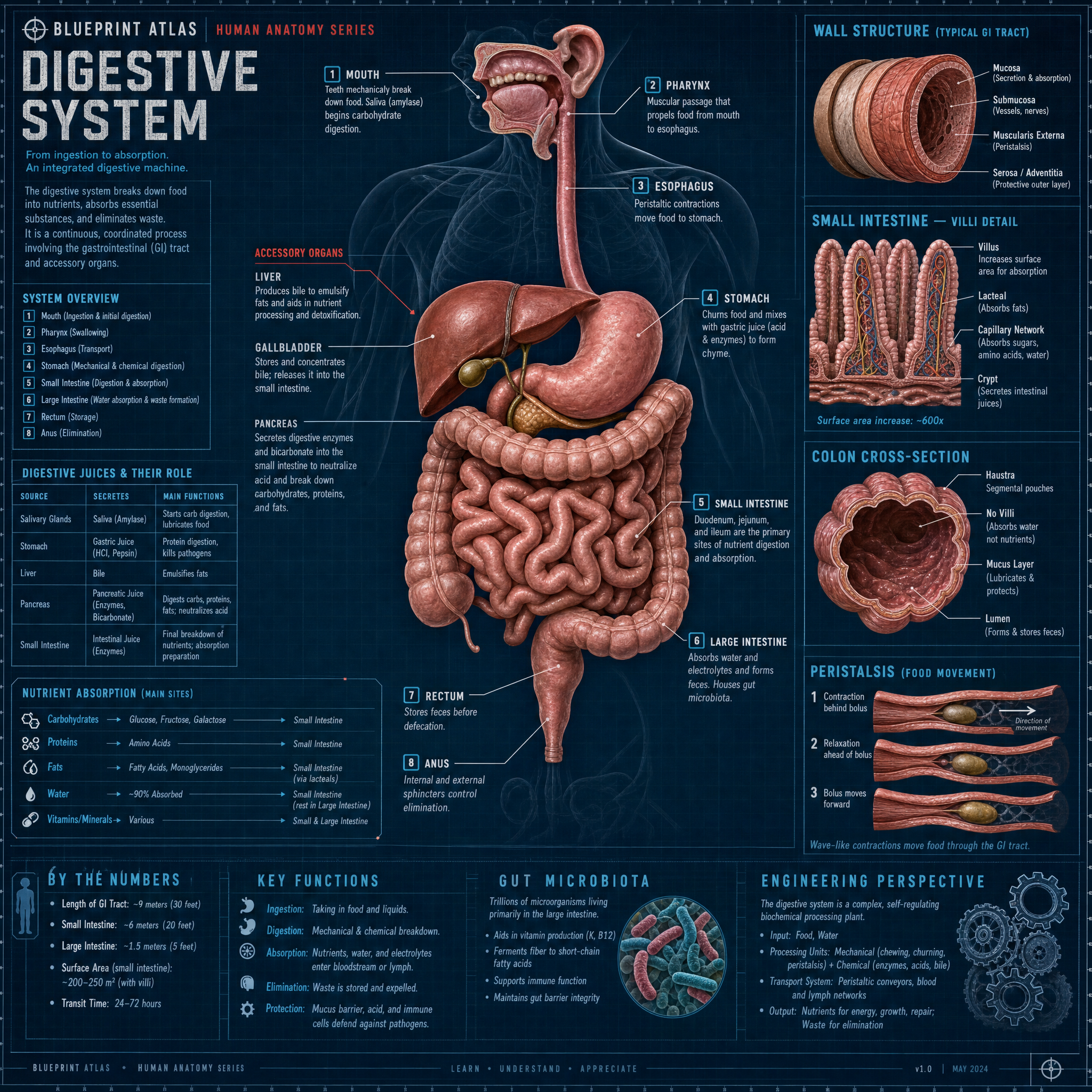
Digestive System
Nine metres of muscular tube plus liver, pancreas, and gallbladder. Mechanical and enzymatic digestion break food down; absorptive villi extract nutrients over hours.
Sheet 009
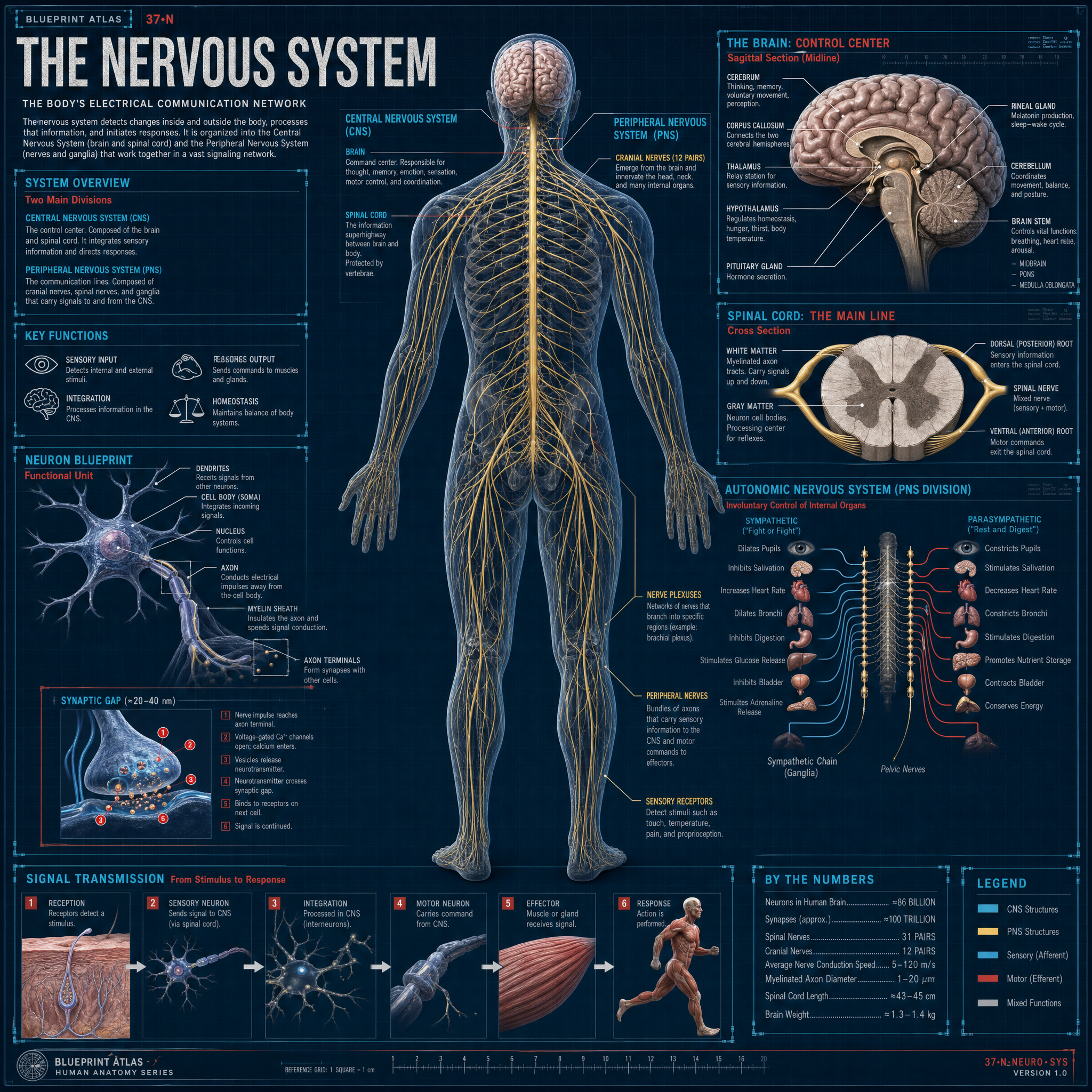
Nervous System
The body’s real-time signalling network. CNS (brain + spinal cord) and PNS (cranial, spinal, autonomic nerves) run together to sense, decide, and act — often in milliseconds.
Sheet 010
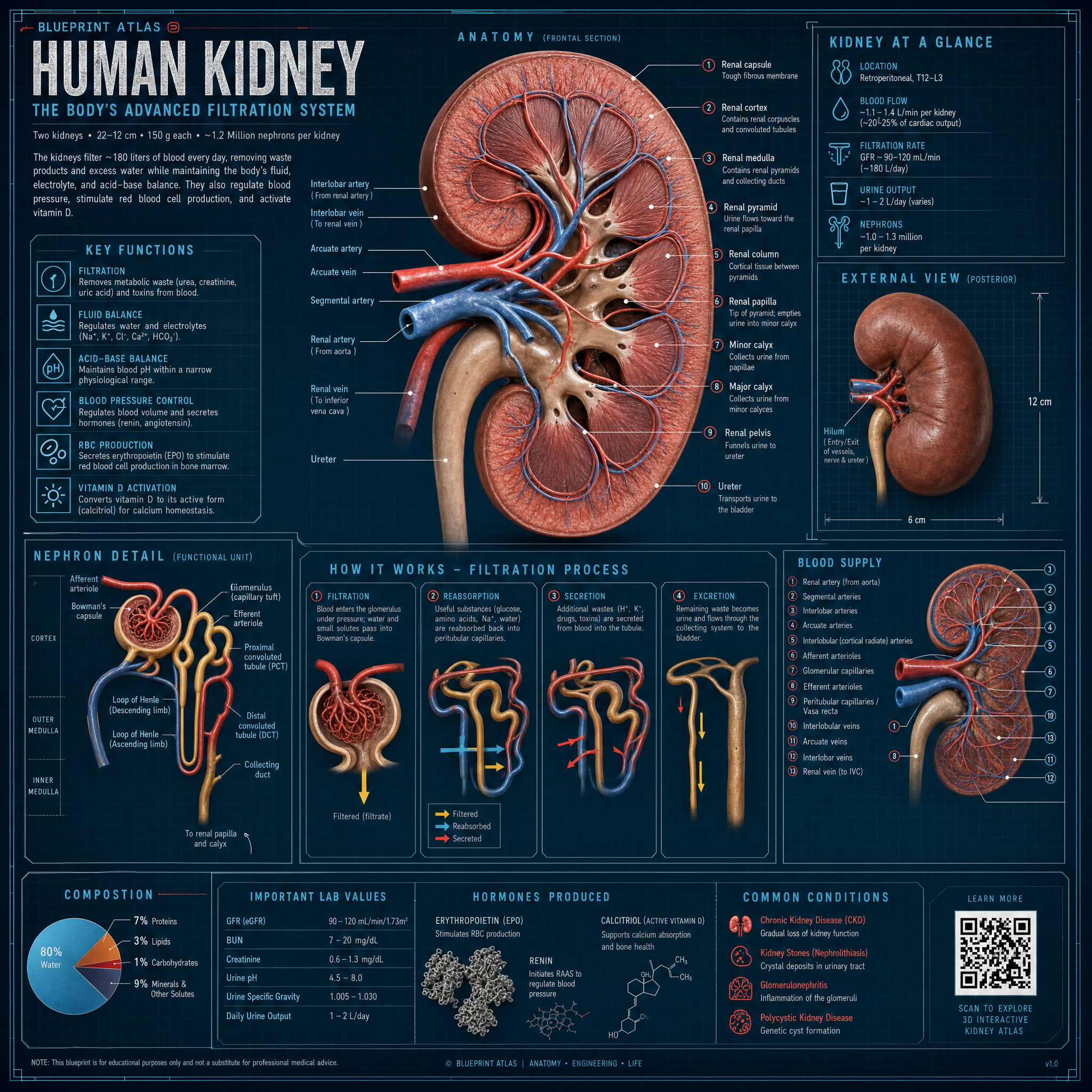
Human Kidney
Two bean-shaped filters that process the entire blood volume ~40 times a day. A million nephrons per kidney regulate water, electrolytes, blood pressure, and pH.
Sheet 011
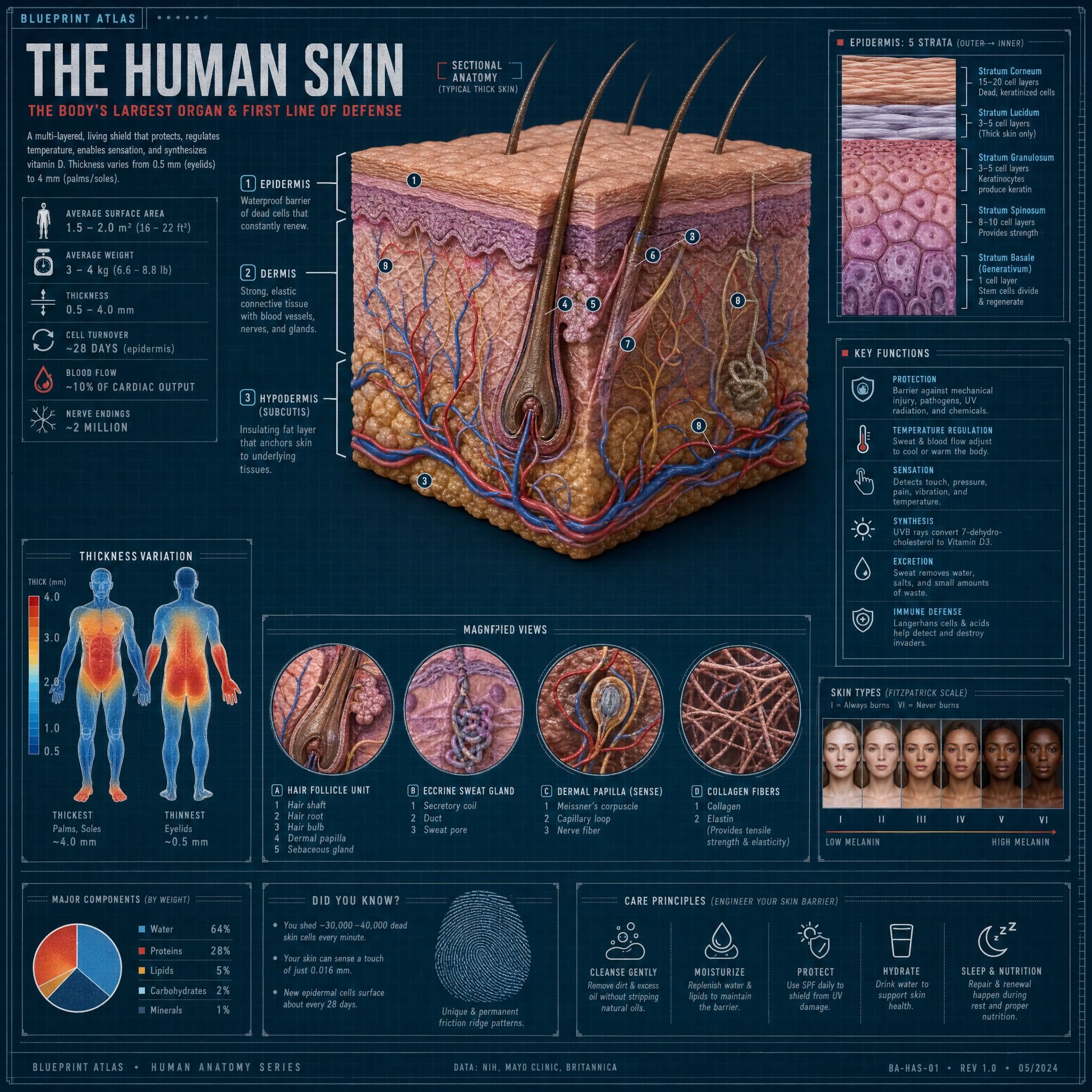
Human Skin
The body’s largest organ and first line of defence. Three layers — epidermis, dermis, hypodermis — regulate temperature, block pathogens, and sense touch, pressure, and pain.