Revised 2026
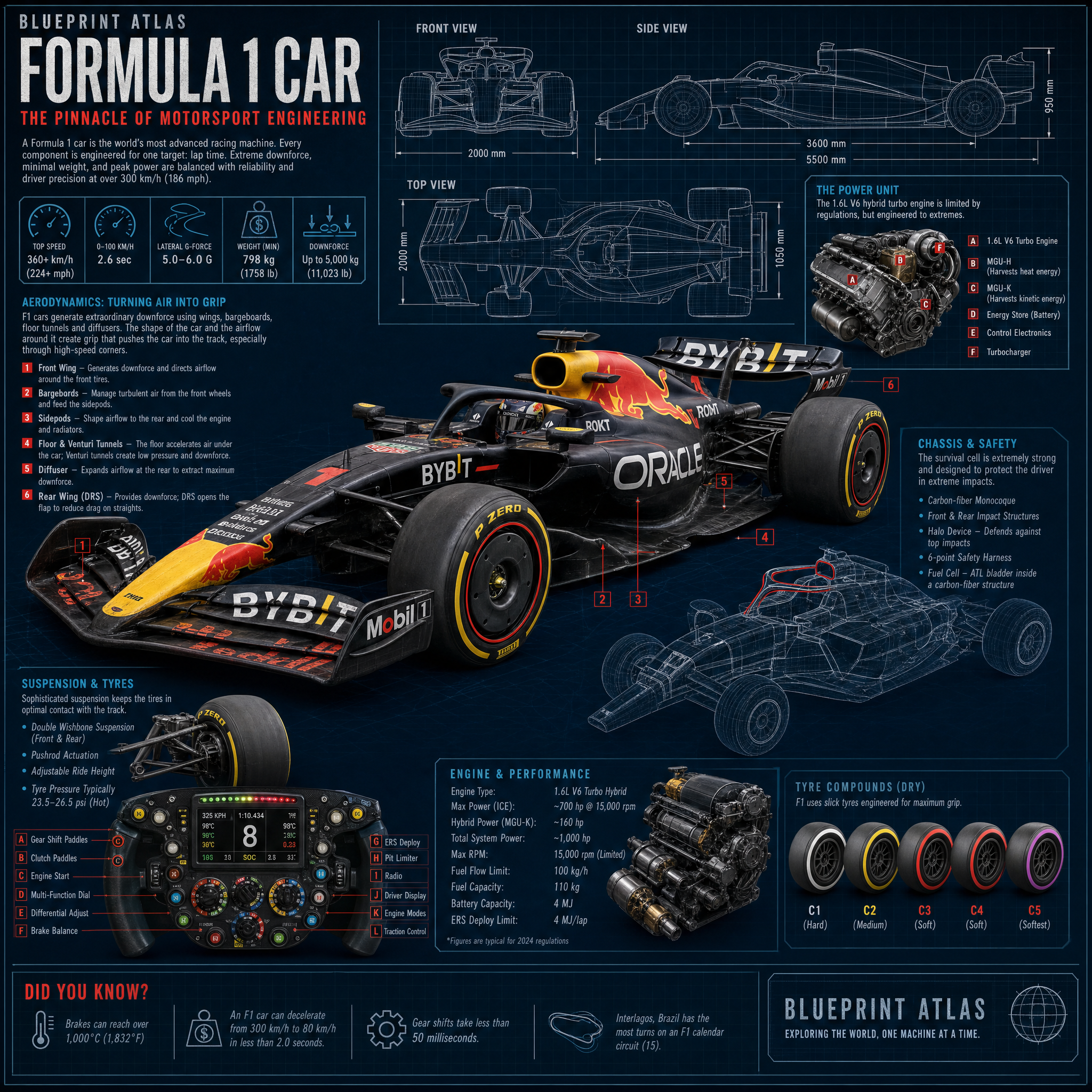
Sheet 001
Formula 1 Car
Above 130 km/h, an F1 car generates more downforce than its own weight — it could drive on a ceiling. Everything else, from the 1.6 L V6 turbo-hybrid to the carbon monocoque, serves that one aerodynamic fact.
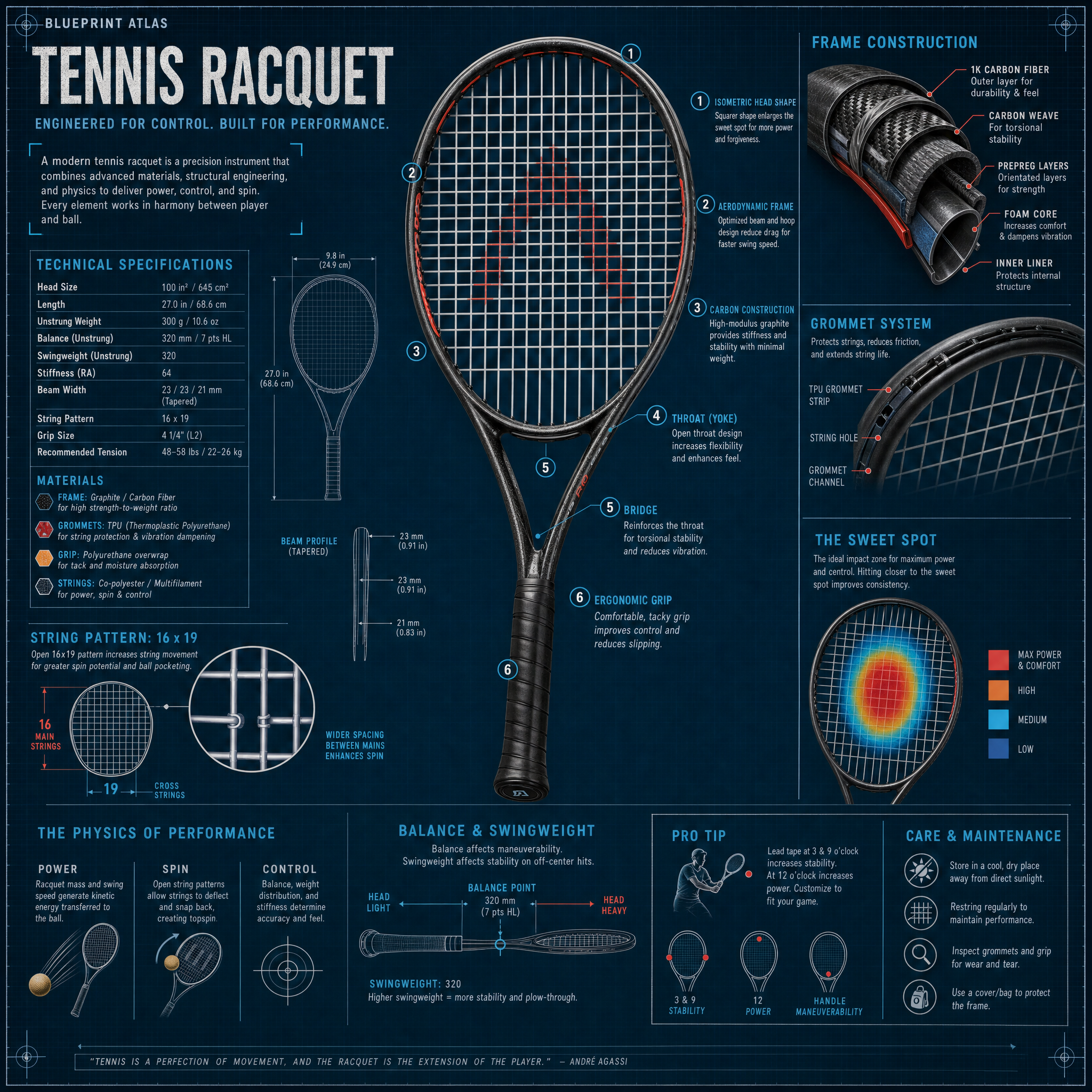
Sheet 002
Tennis Racquet
A hollow carbon-fibre frame, a stringbed tensioned in the dozens of kilograms, and a sweet spot barely the size of a coaster. Lower tensions spring the ball back with power; higher tensions clamp it for control.
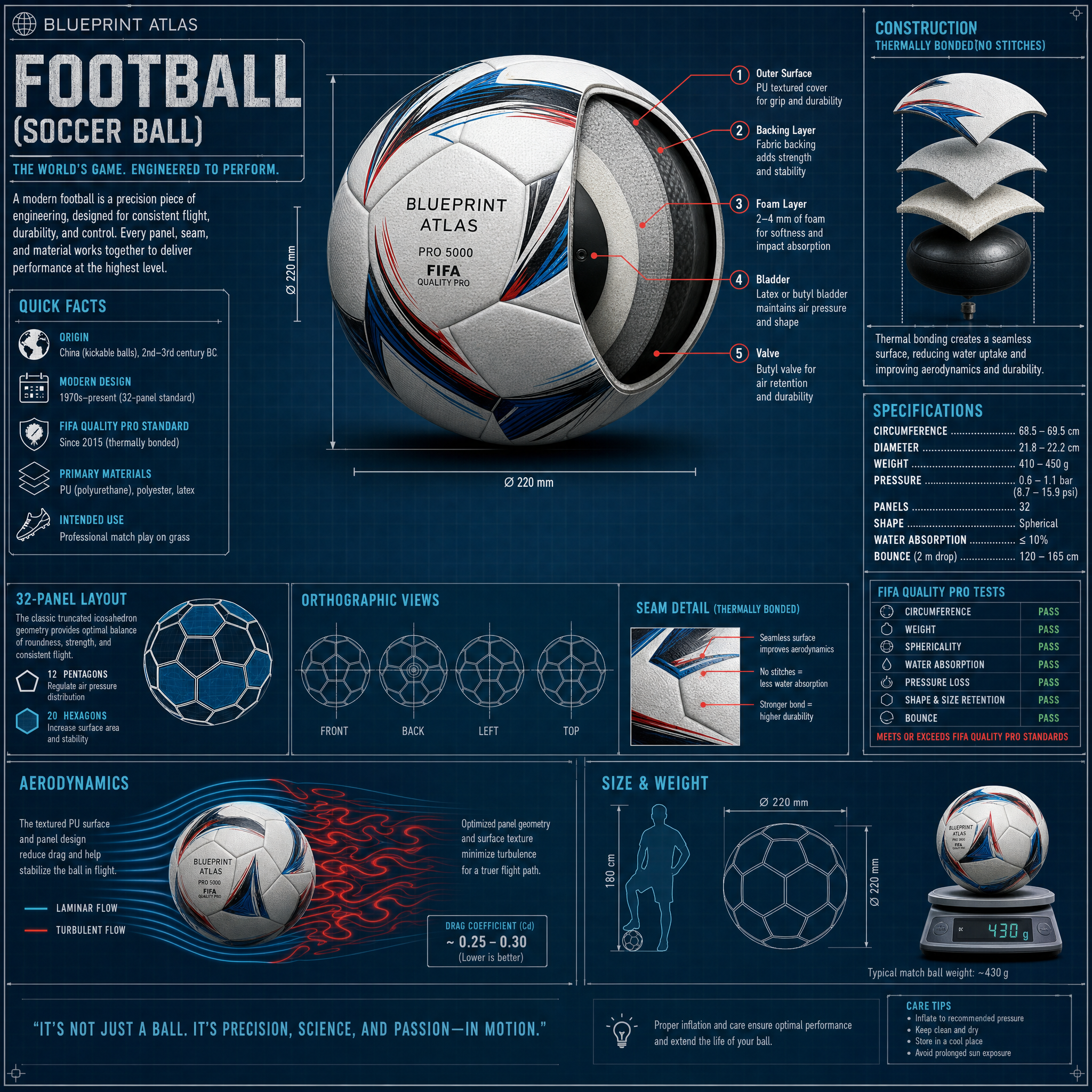
Sheet 003
Football (Soccer Ball)
The classic 32-panel pattern — 20 hexagons, 12 pentagons — approximates a sphere. Modern balls are thermally bonded from 6 panels for a truer surface. Add spin and the Magnus effect bends the ball around the wall.
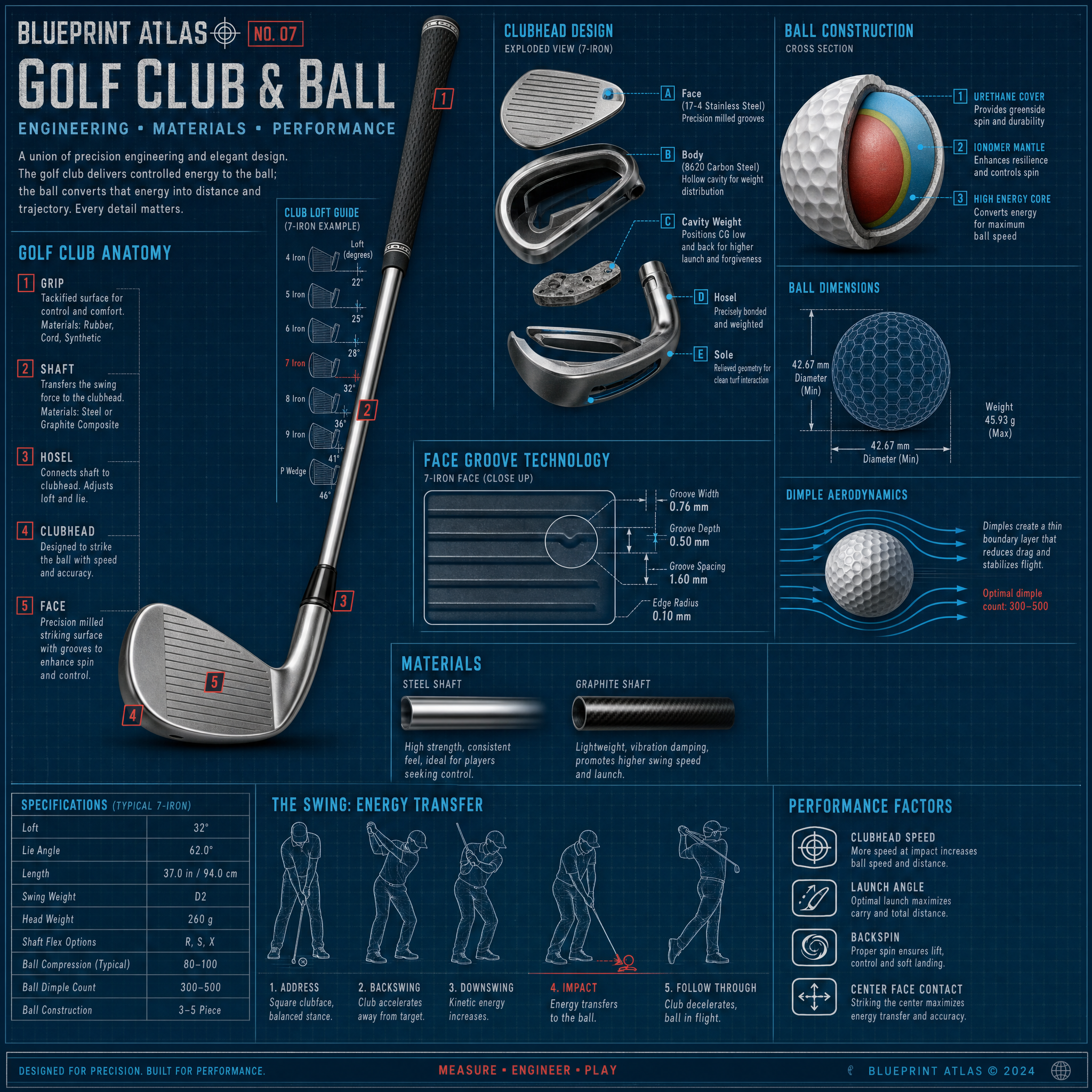
Sheet 004
Golf Club & Ball
The dimples turn smooth-flow drag into turbulent-flow drag — counter-intuitively a big reduction — nearly doubling a ball’s carry. The titanium driver’s face is a tuned spring, capped by the USGA at 0.830 COR.
Sheet 005
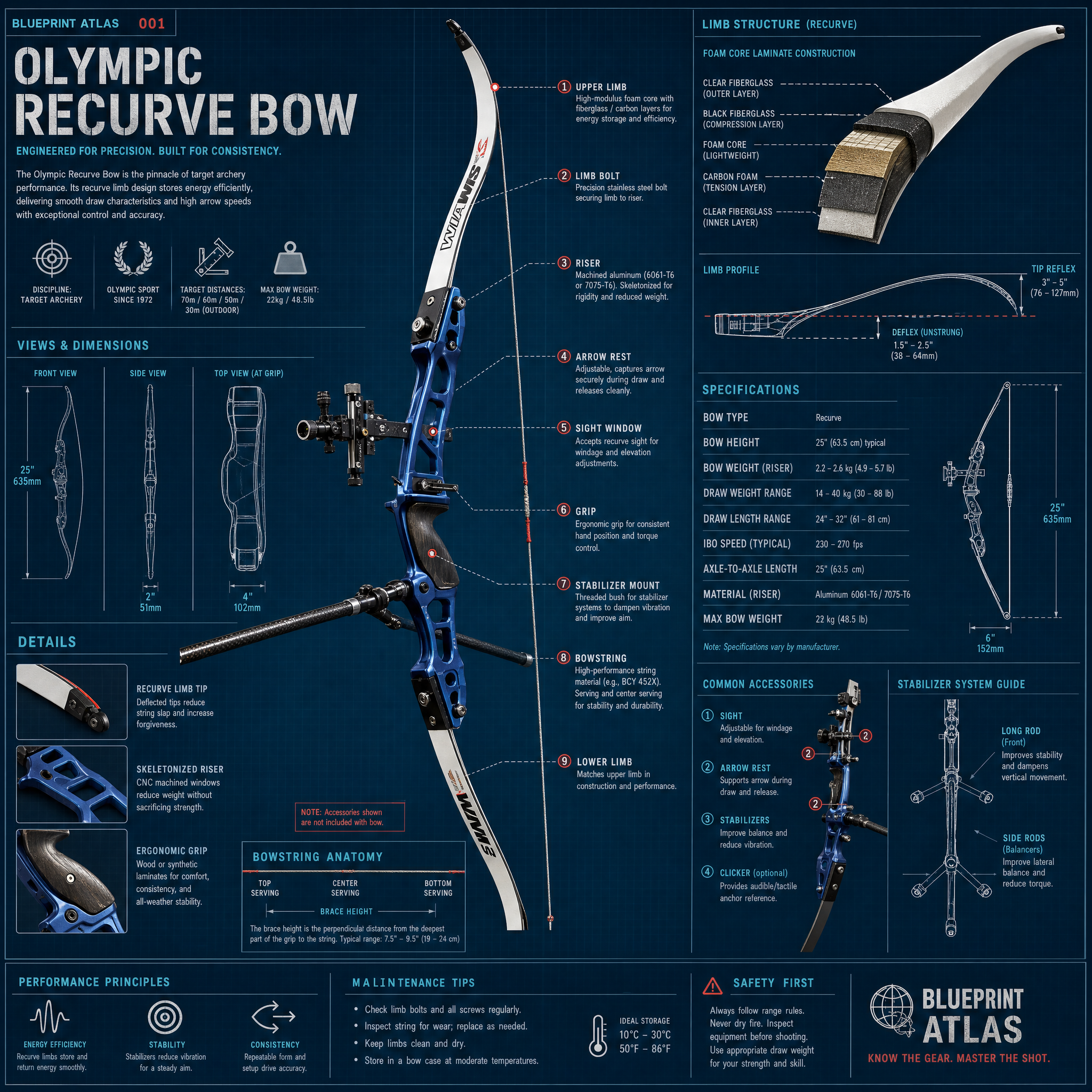
Olympic Recurve Bow
Limb tips curve forward, storing extra energy for release speed. Stabilizer bars dampen the torque the moment the arrow leaves; a mechanical clicker signals the exact draw length. Everything is tuned around repeatability.
Sheet 006
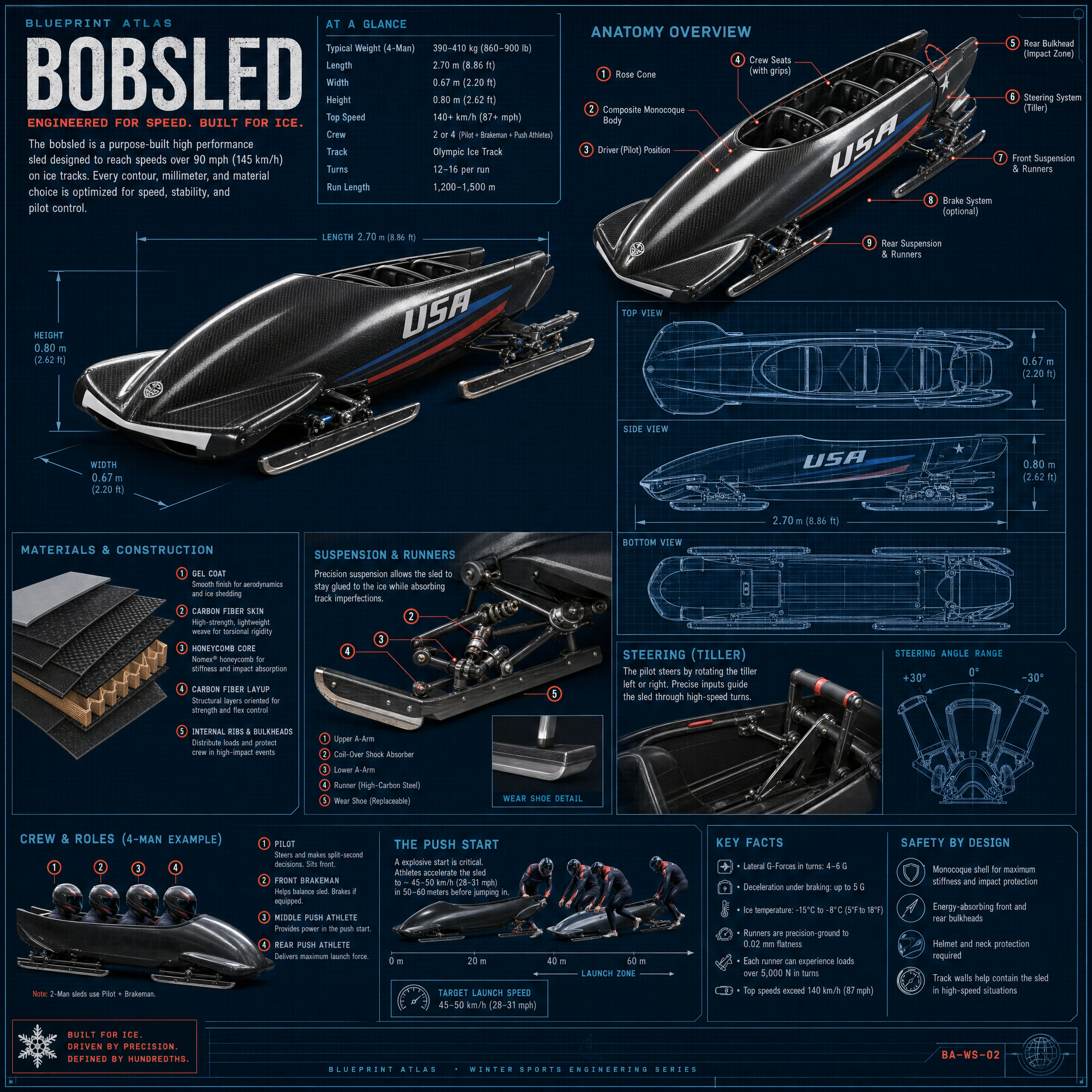
Bobsled
A streamlined composite shell hides four runners on polished steel blades and one pilot steering with two rope pulls. Pit a fraction of a second per run against five-G corner loads and you’re designing a bobsled.
Sheet 007
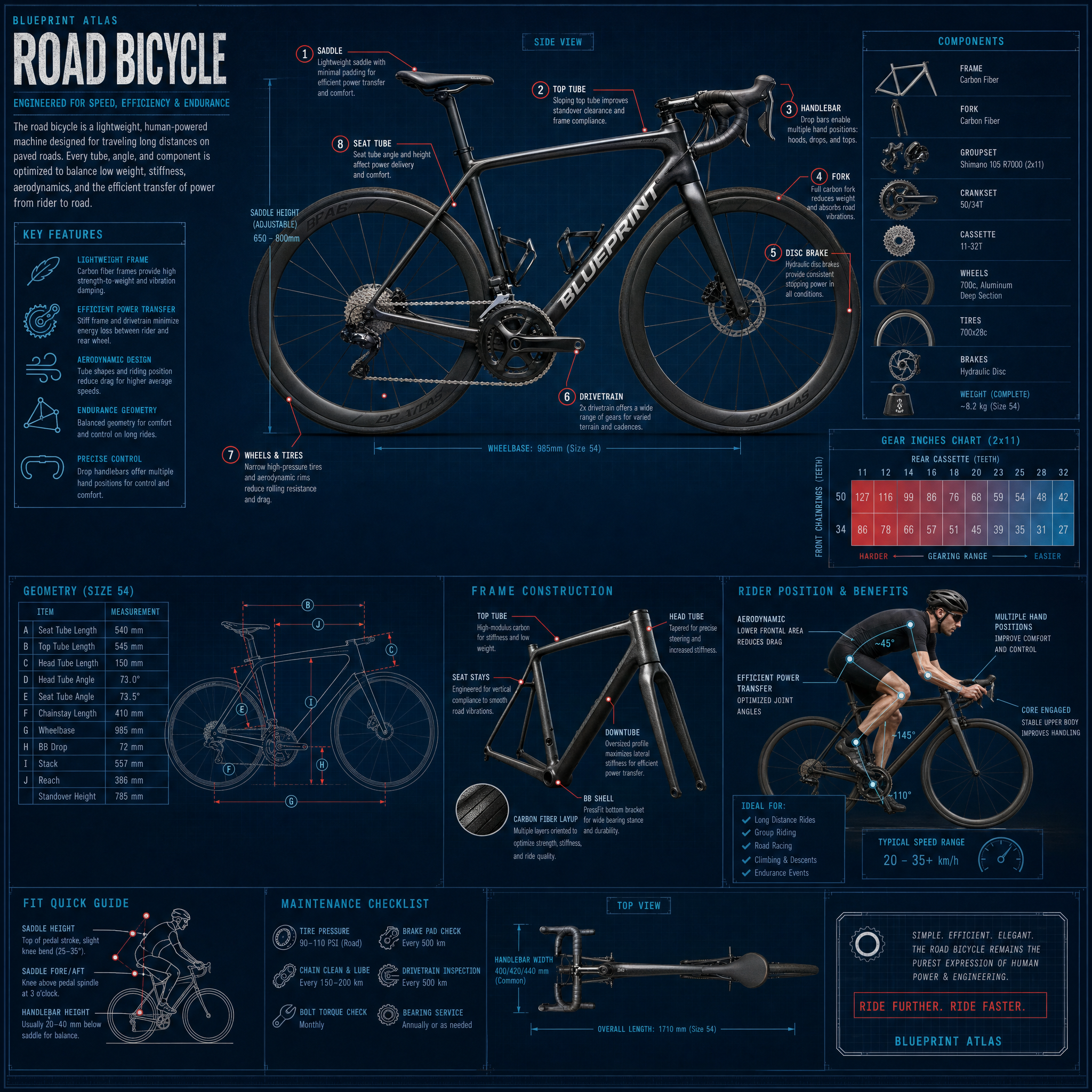
Road Bicycle
Monocoque carbon frames, integrated cockpits, deep-section wheels — at race speeds, around 85% of a rider’s power fights the air. Every tube shape and every sock is chosen to buy back watts.
Sheet 008
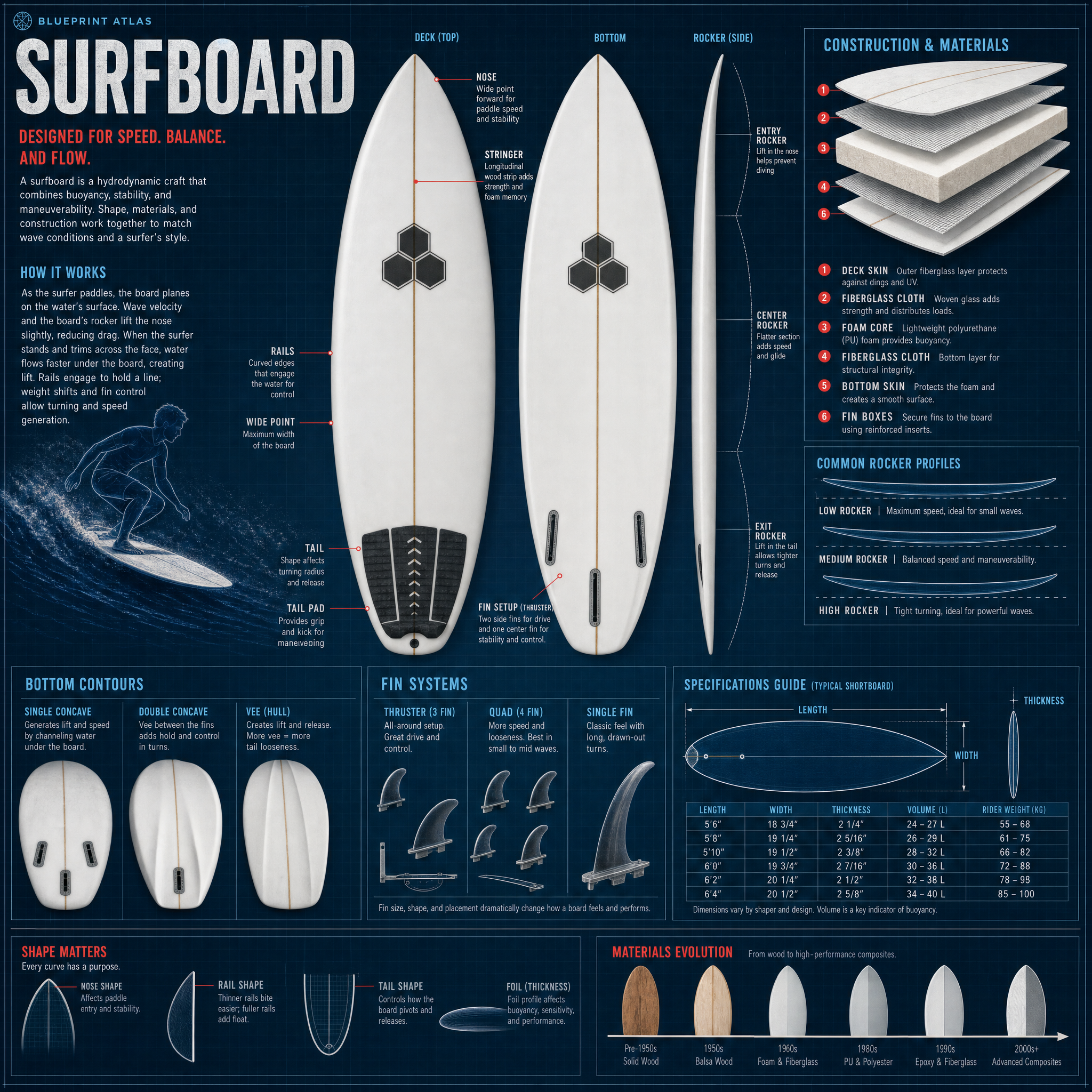
Surfboard
A foam core wrapped in fiberglass or carbon, with a wooden stringer for stiffness and three fins for control. Rocker, rails, and volume together define how the board rides each type of wave.
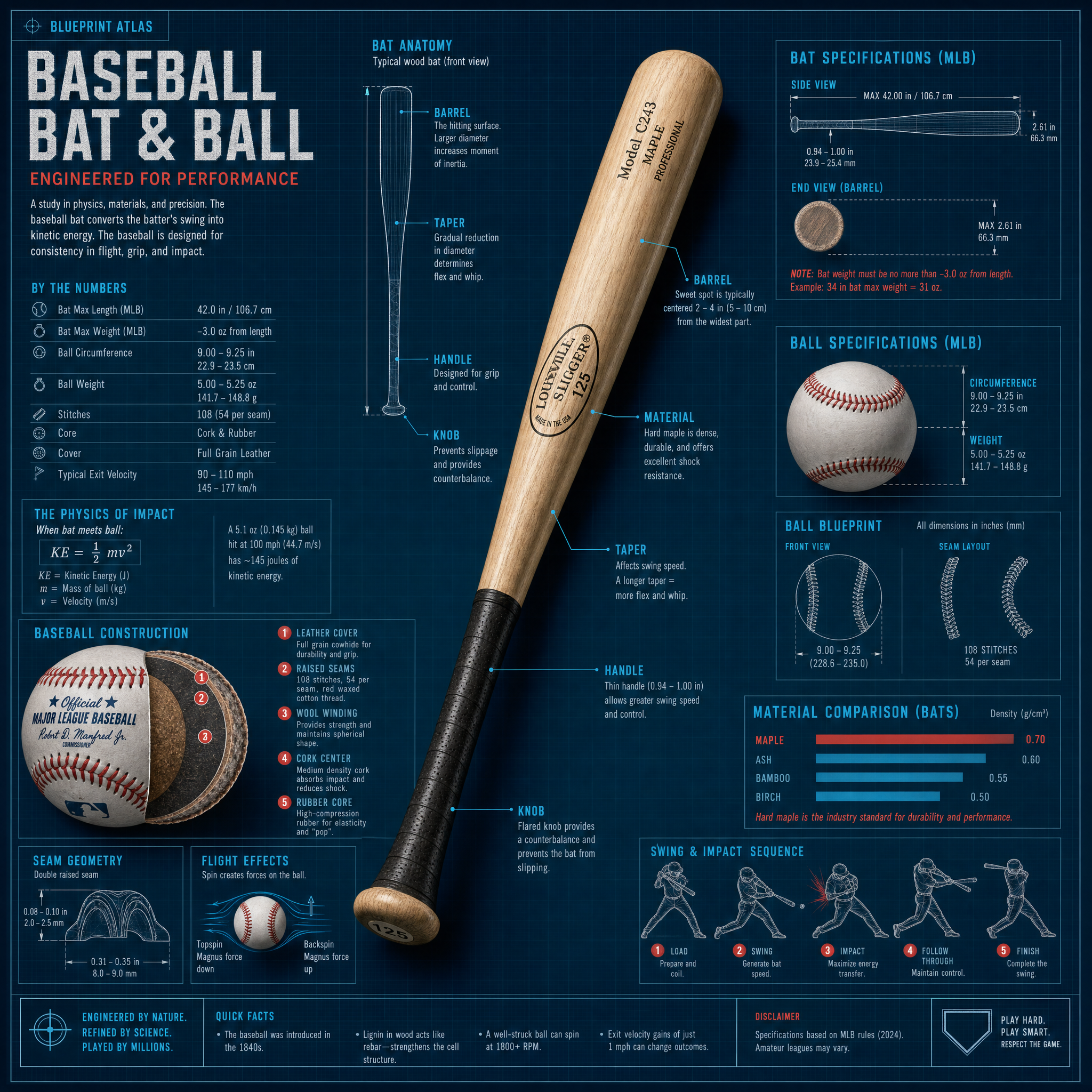
Sheet 009
Baseball Bat & Ball
MLB rules require one solid piece of wood. The sweet spot — the first vibrational node of the bat — is where the ball meets no sting and maximum exit velocity. A 160 km/h fastball can leave as a 180 km/h homer.
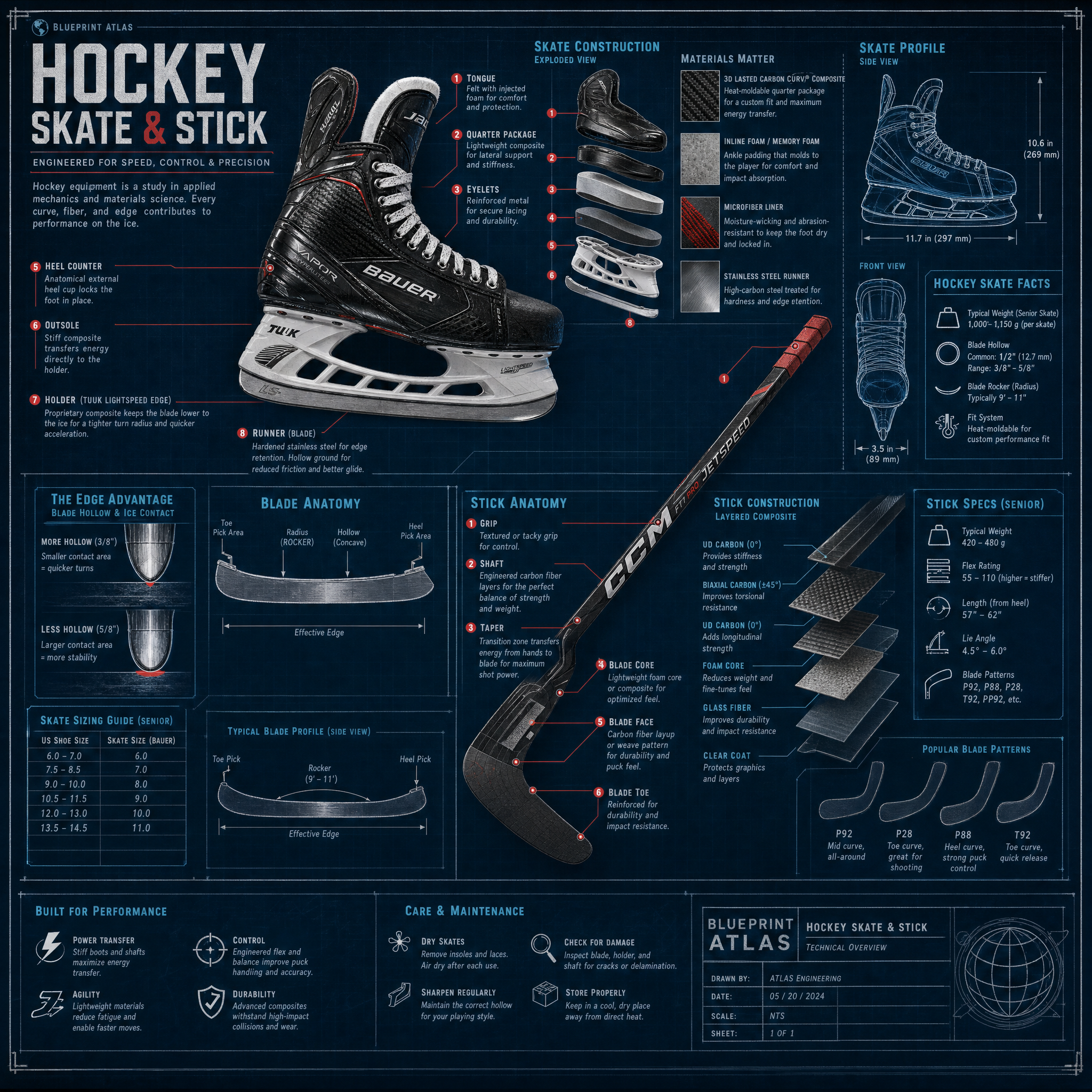
Sheet 010
Hockey Skate & Stick
A hollow-ground skate blade carries two sharp edges that bite into ice at the right lean. A one-piece composite stick has a kick point — flex it at the loading zone of a slap shot and it releases like a whip.