Revised 2026
Sheet 001
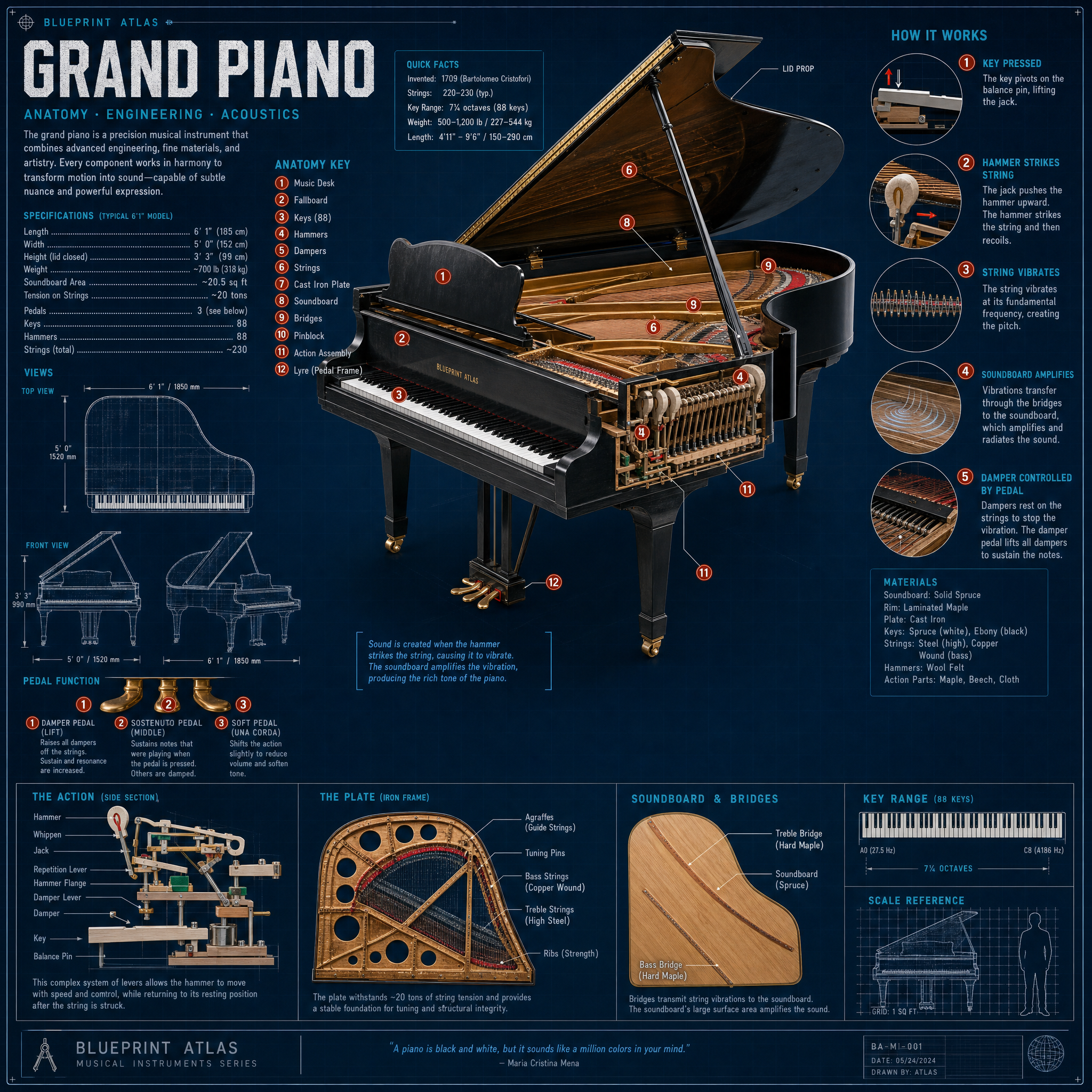
Grand Piano
A mechanical marvel. Each keypress drives a felt hammer through a double-escapement action to strike up to three strings, the vibrations amplified by a spruce soundboard stretched over a cast iron frame.
Sheet 002
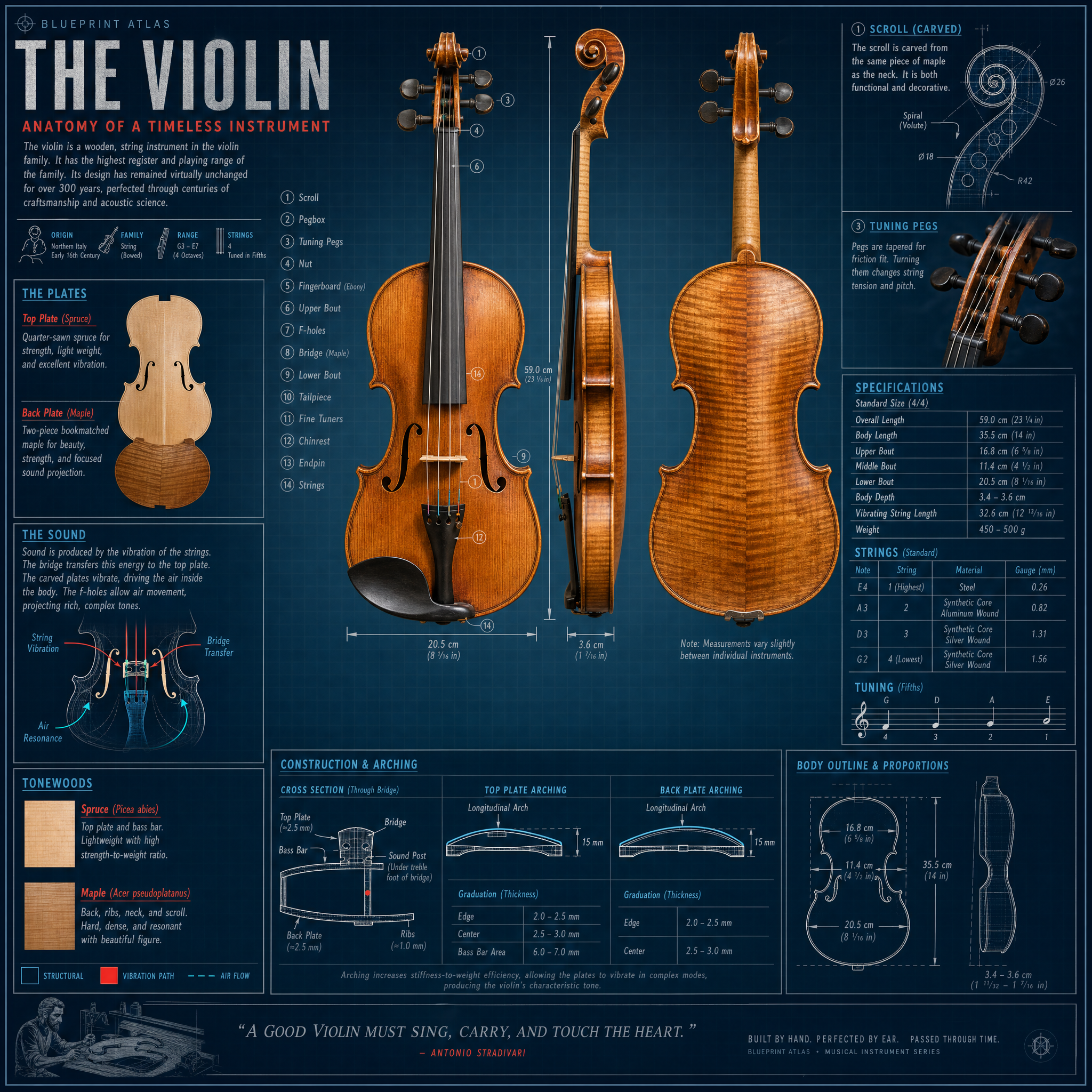
Violin
Four strings stretched across a bridge transmit vibration into a hollow spruce-and-maple box. Two hundred years of luthiery — Stradivari, Guarneri, Amati — tuned these dimensions to the human voice.
Sheet 003
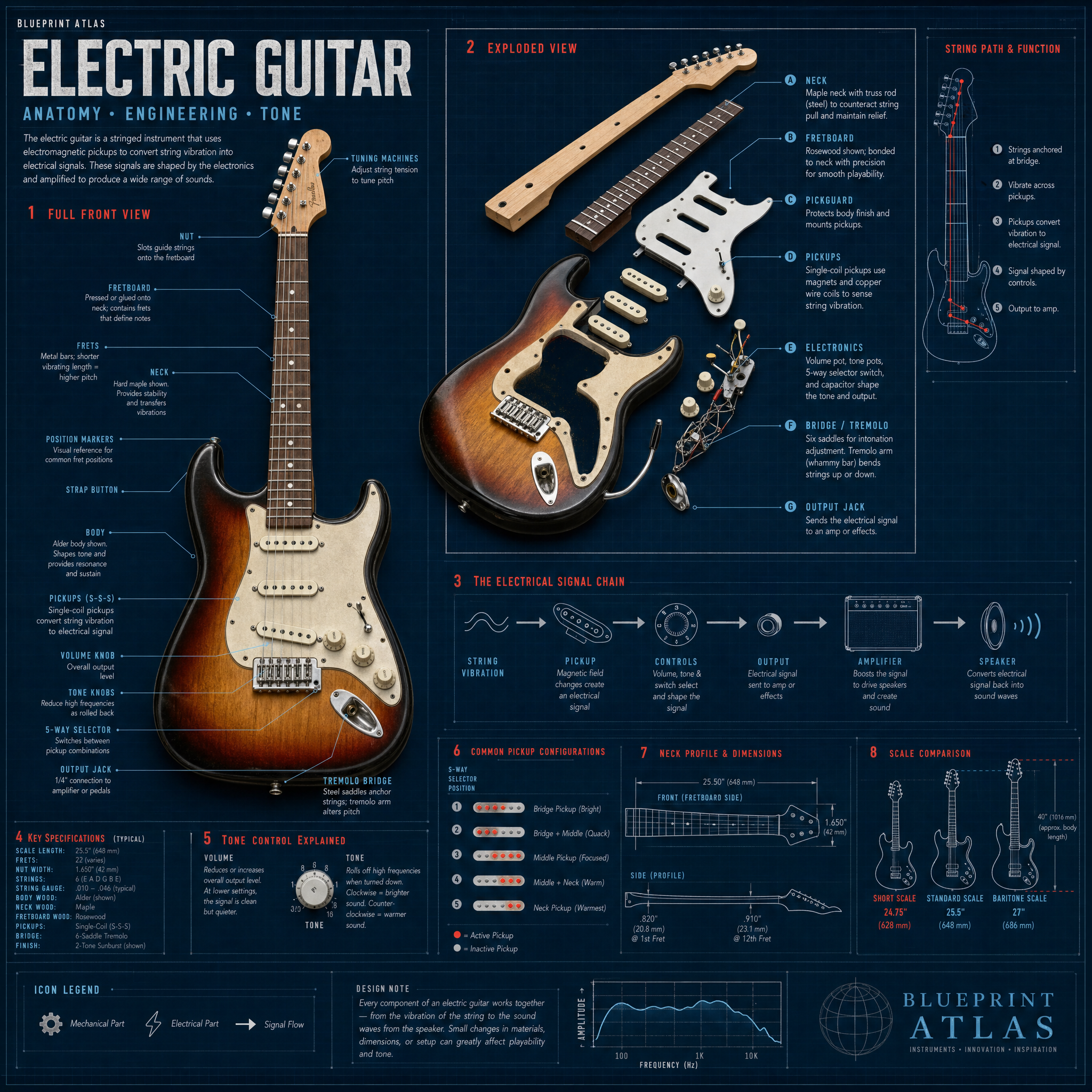
Electric Guitar
Leo Fender’s Stratocaster turned the guitar into an electronic instrument. Magnetic pickups sense string vibration as current, a 5-way selector blends their voices, and the synchronized tremolo bends pitch under the player’s hand.
Sheet 004
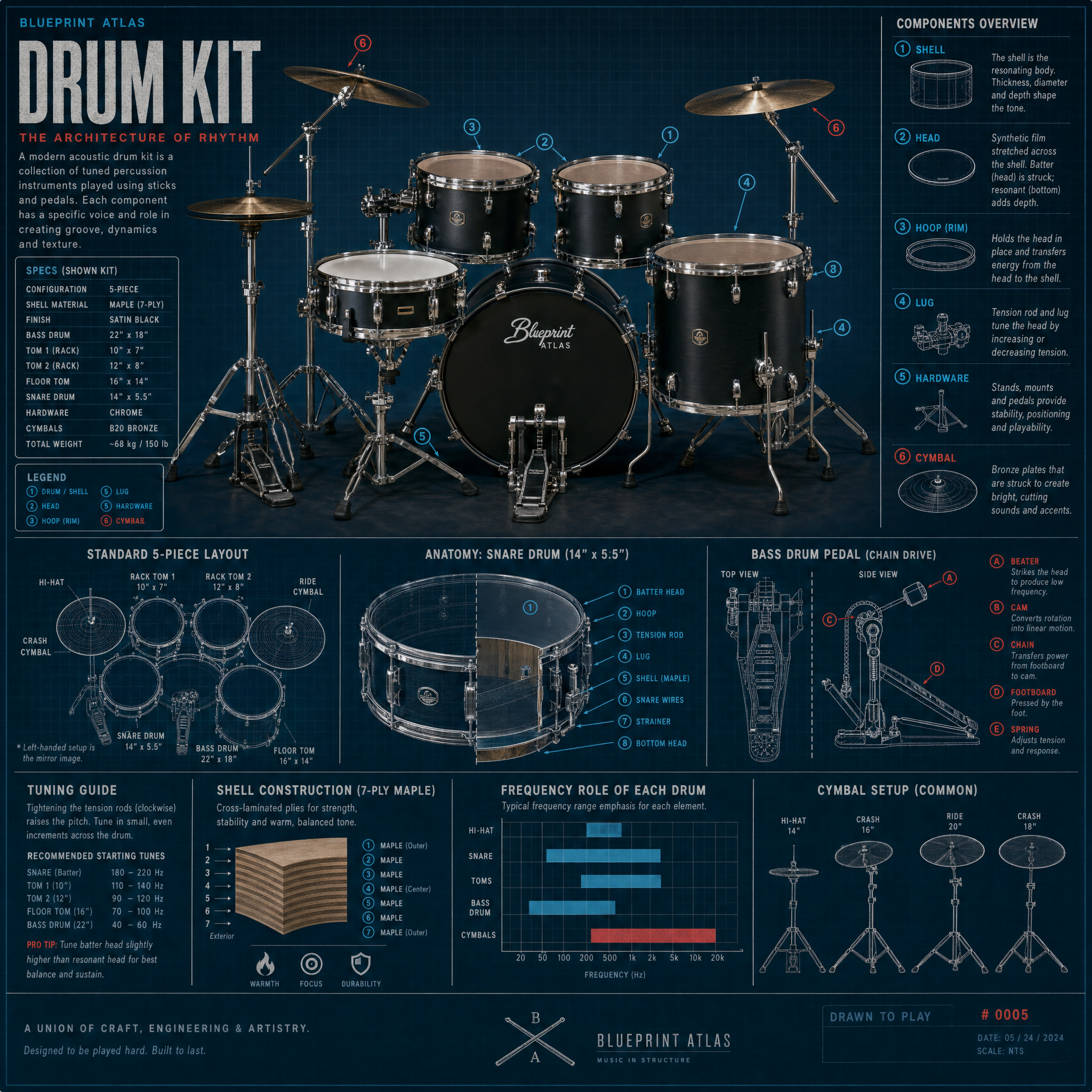
Drum Kit
A portable percussion orchestra. Each shell and membrane is tuned to a different frequency band; the bass pedal, hi-hat, and cymbal stands consolidate what was once a section of players into the reach of one.
Sheet 005
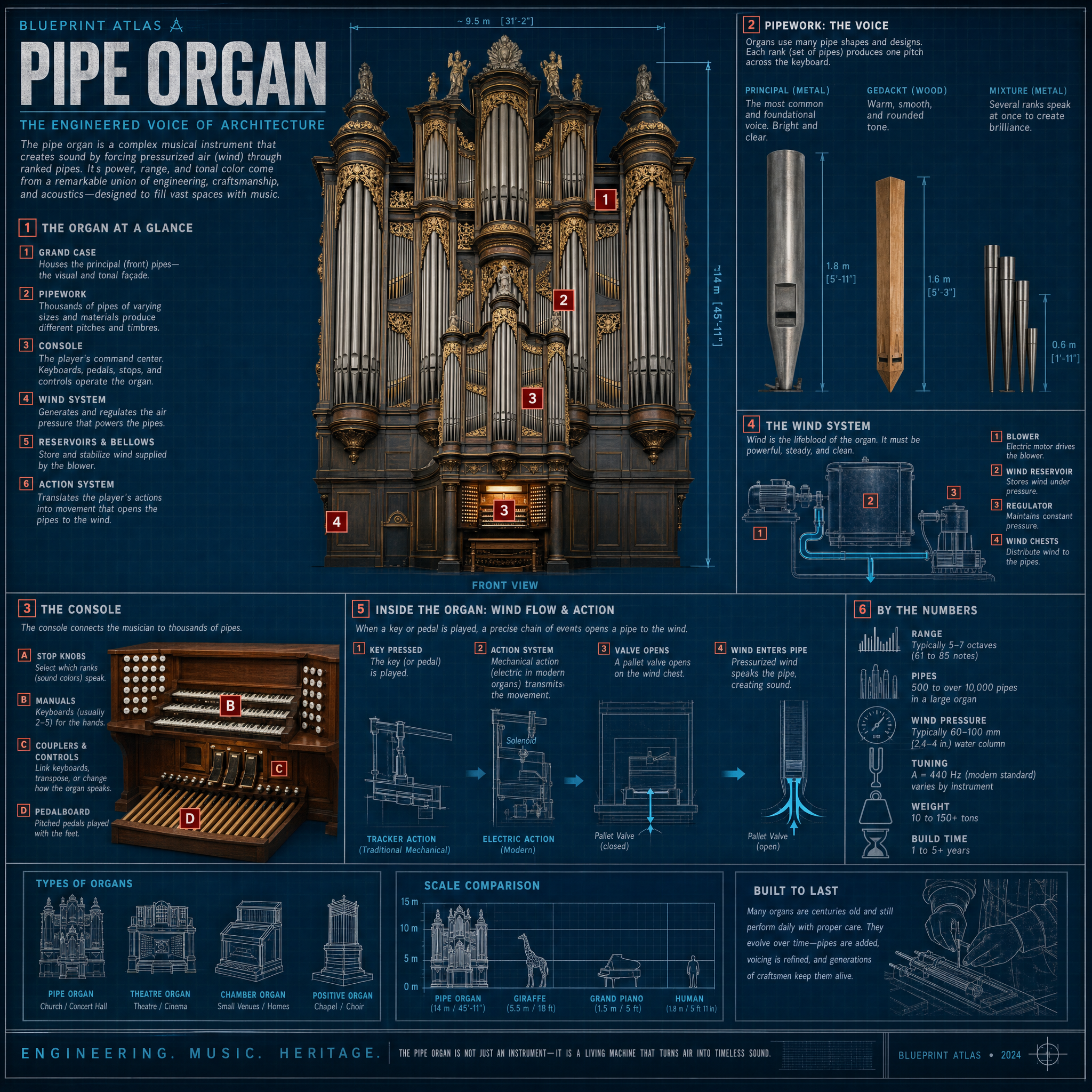
Pipe Organ
The king of instruments. A blower feeds pressurized air to a windchest; stops open ranks of flue or reed pipes tuned from rumbling 32-foot sub-bass to needle-thin 2-inch trebles, all controlled by key and pedal linkage.
Sheet 006
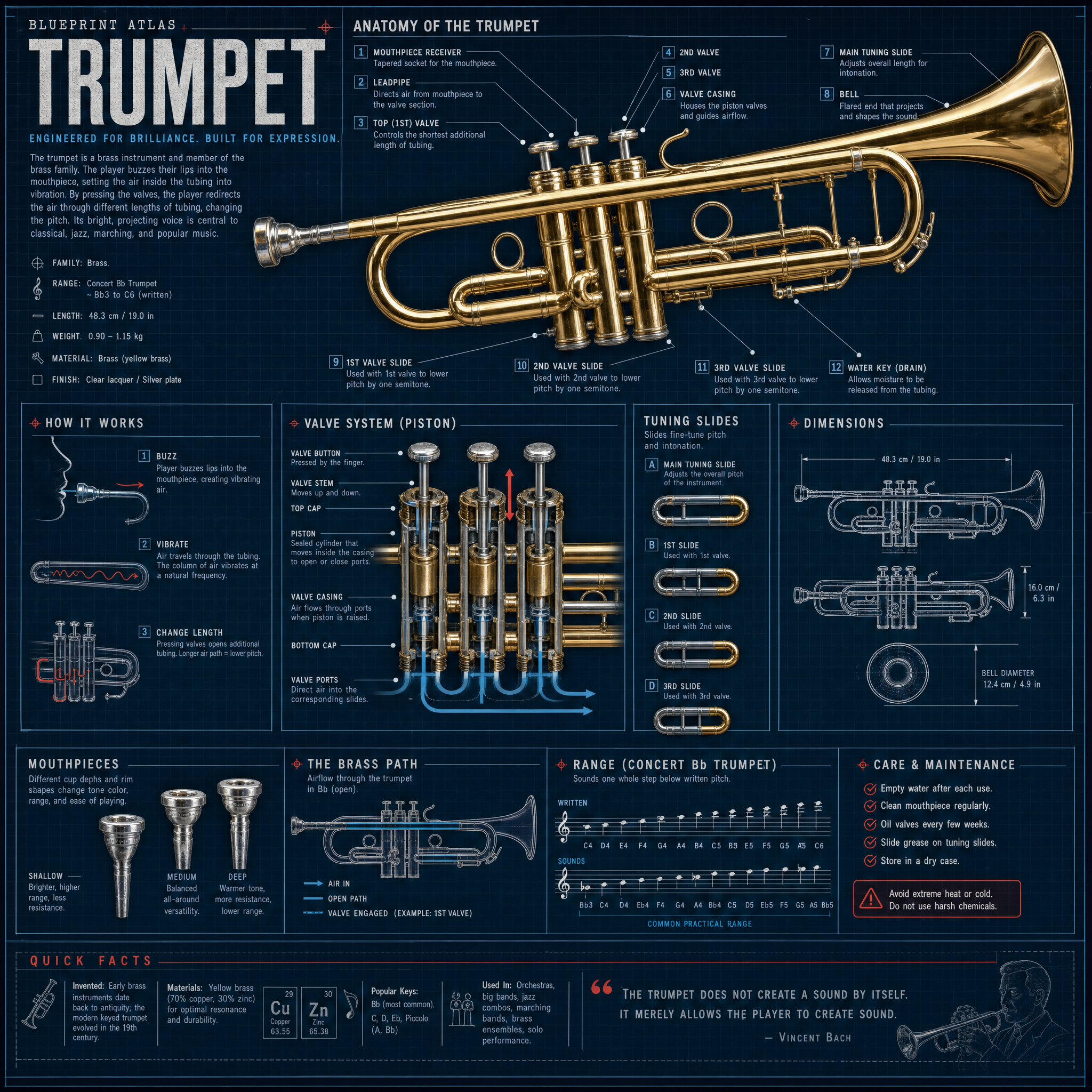
Trumpet
Buzzing lips excite a conical brass tube; three piston valves reroute the airstream through extra lengths of pipe to drop the pitch by two, one, or three semitones, unlocking every note of the chromatic scale.
Sheet 007
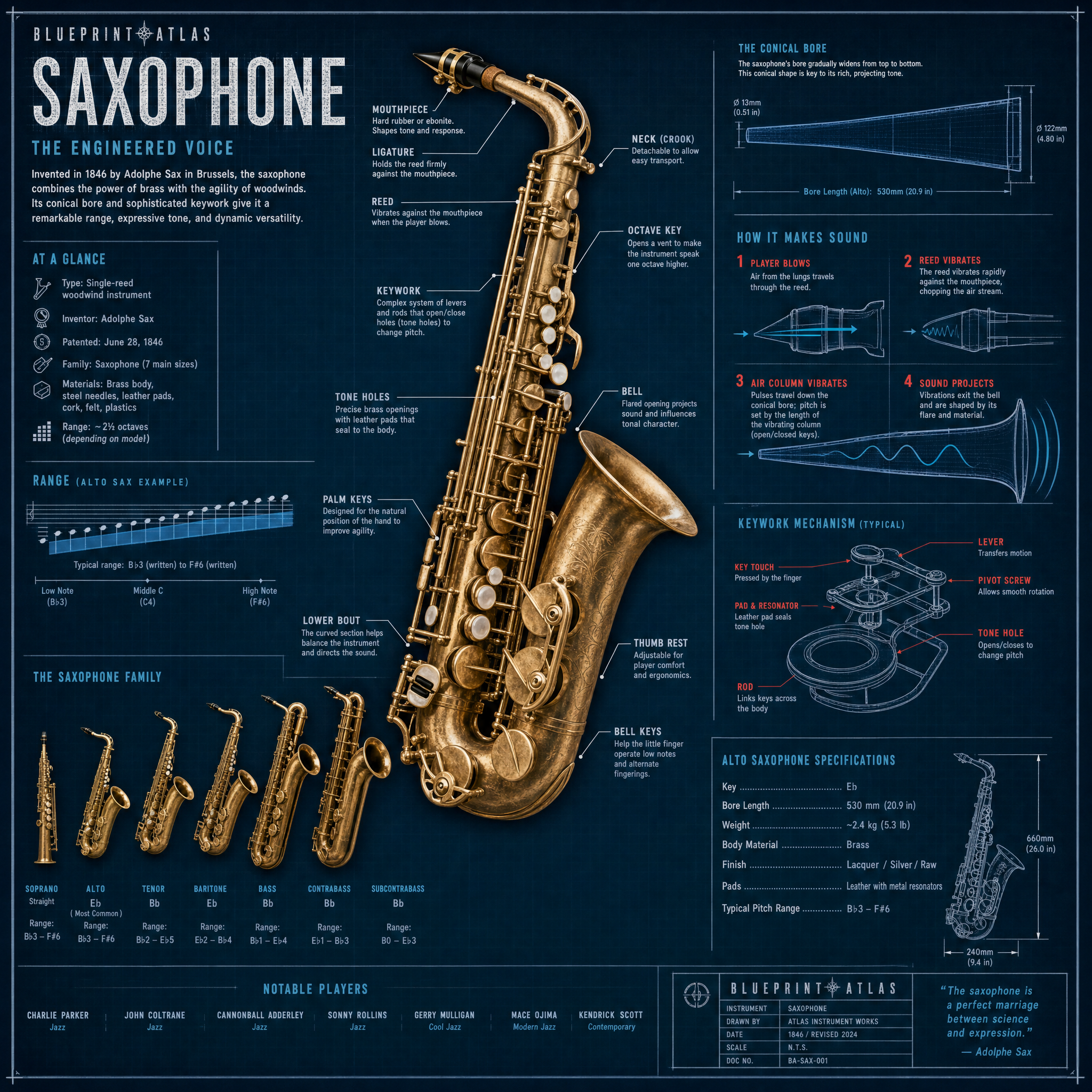
Saxophone
Adolphe Sax’s hybrid — a brass body with a conical bore, driven by a single clarinet-style reed. The result sits between the woodwinds and brass, equally at home in orchestras, marching bands, and jazz.
Sheet 008
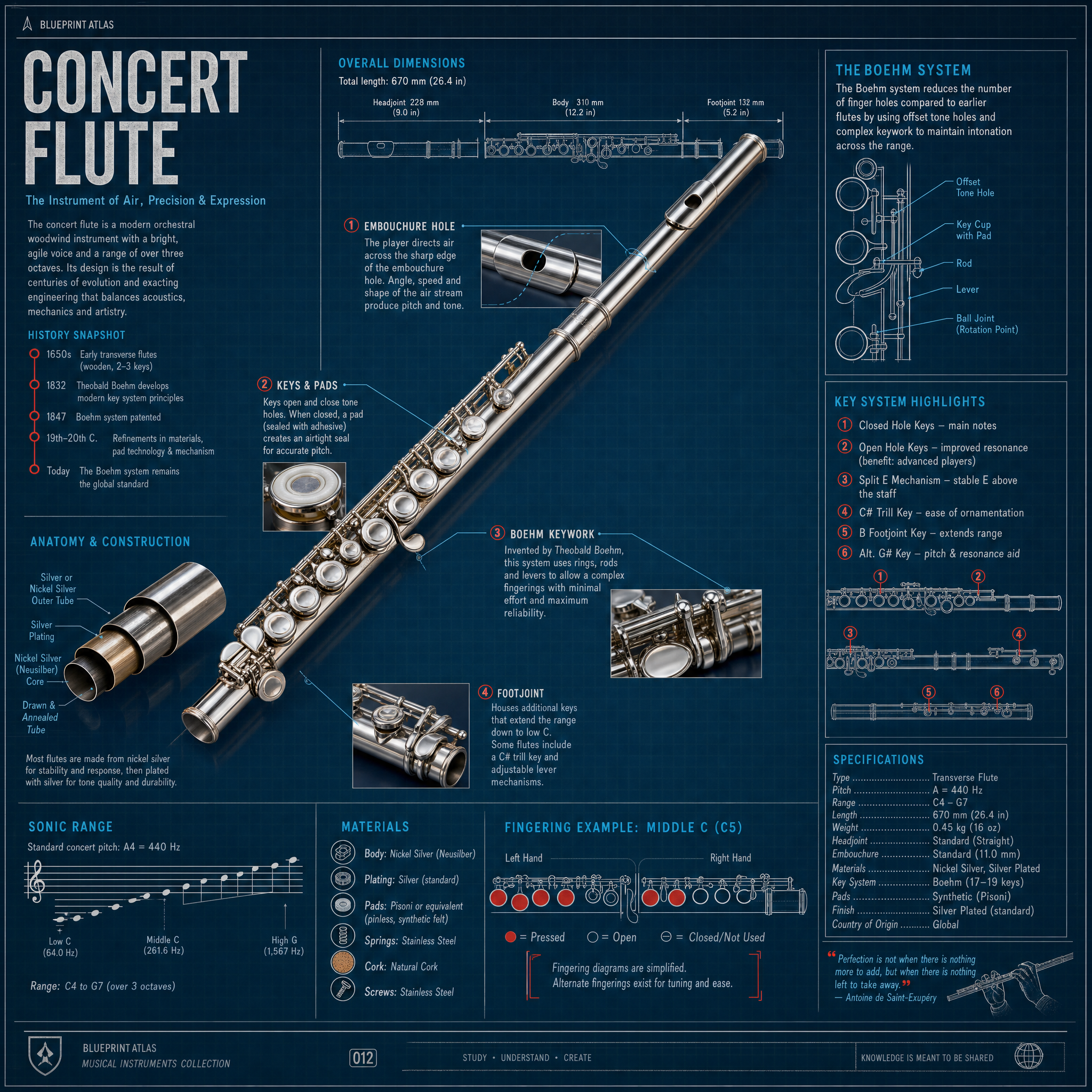
Concert Flute
No reed — the flutist splits their own breath on the edge of the embouchure hole, setting up an air-reed oscillation inside a precisely bored silver tube. Theobald Boehm’s 1847 keywork brought it into the modern era.
Sheet 009
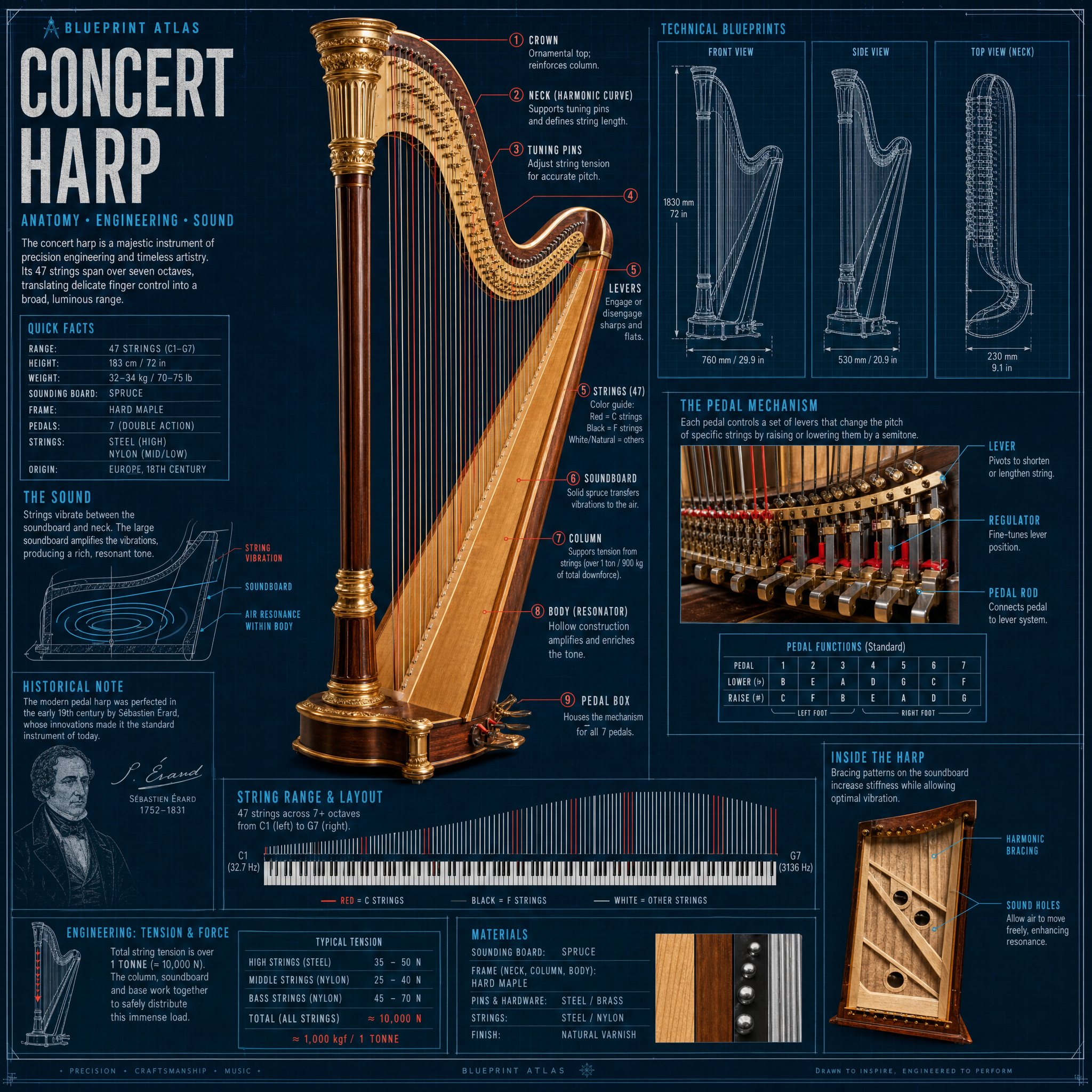
Concert Harp
Sébastien Érard’s double-action pedals route through the hollow column to spin disks on the neck, retuning each string chromatically without the player’s hands ever leaving the strings.
Sheet 010
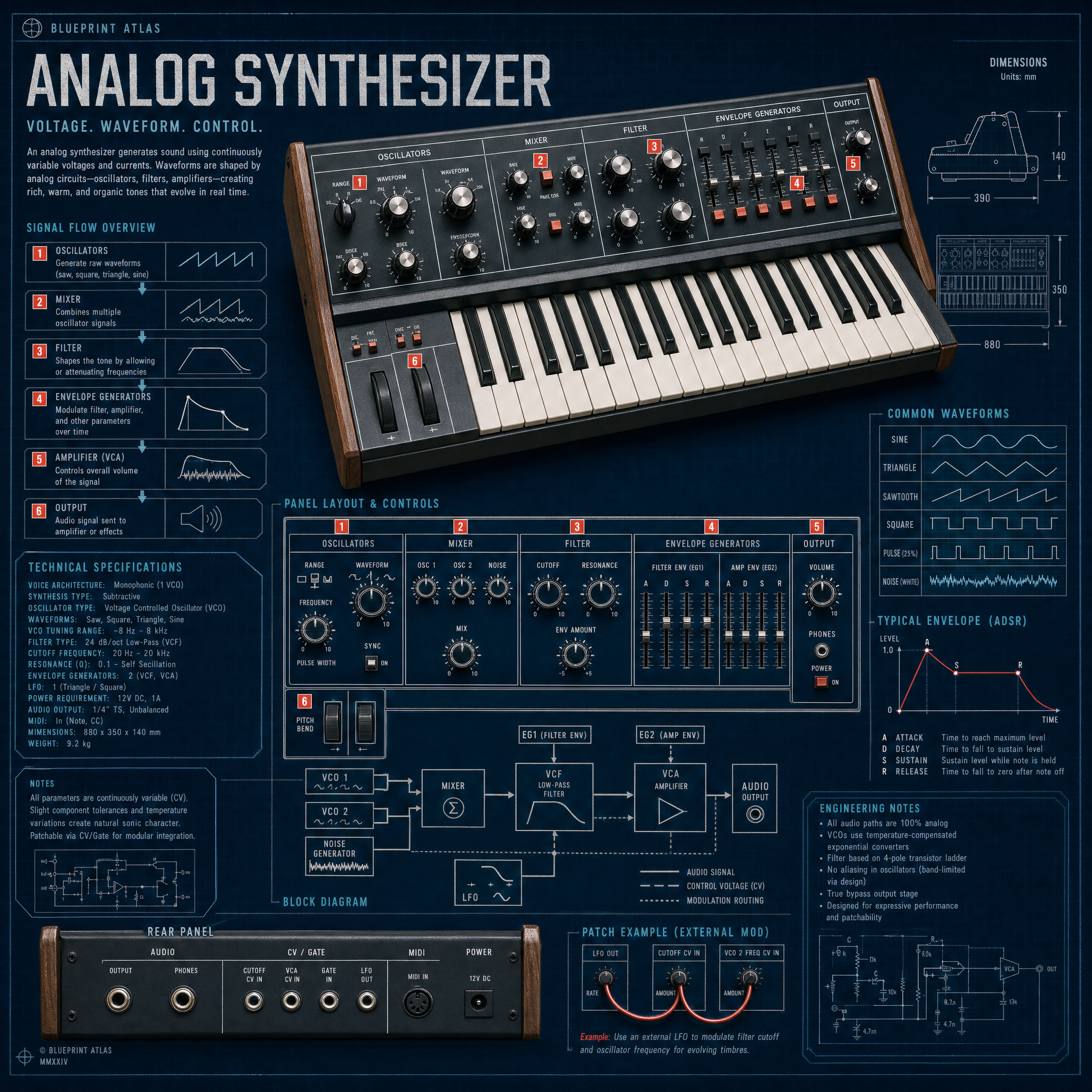
Analog Synthesizer
Voltage-controlled oscillators generate raw sawtooth and square waves; the famous Moog ladder filter sculpts their harmonics; envelopes and LFOs animate the whole thing. The sound of electronic music after 1967.